


When we think about politics, most think about Washington, D.C., President Trump, and Congress. National politics has become so mainstream that it now overtakes our lives.
In some way or another, politics affects us all. Some examples include the “Big, Beautiful Bill,” tariffs, and much more. While politics at the federal level can be eye-catching, state politics is often overlooked.
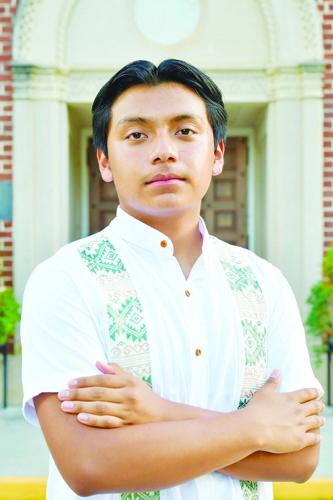
My interest in state politics began when I served as a page for then-Gov. Roy Cooper. Two specific instances piqued my curiosity about state politics; they are but a few examples of why state politics matters.
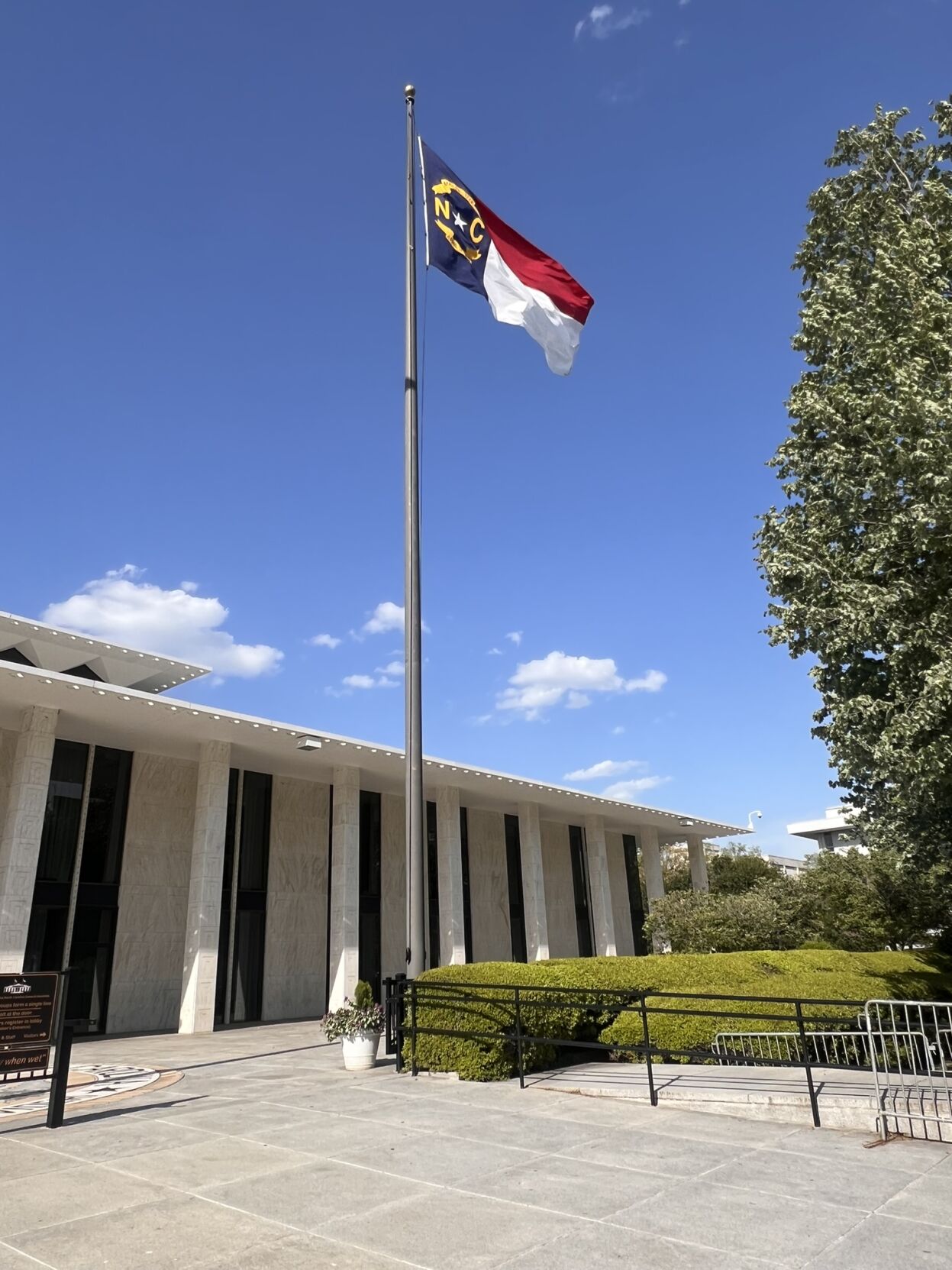
The first instance occurred when I served as a page. The N.C. General Assembly (NCGA) was debating Helene relief; a fairly straightforward bill committed to helping rebuild Western North Carolina.
However, the Republican-controlled General Assembly added provisions to the bill to shift political appointments and other powers from the Governor to the legislature.
The bill was put to a vote in the Senate, and I had the intention of watching the debate from the gallery. However, the North Carolina Democratic Party and other organizations arrived en masse to protest the bill.
Eventually, when the protesters shouted from the gallery, then-Lt. Gov. Mark Robinson ordered the gallery to be cleared, forcing everyone out.
The Senate eventually passed the bill, but Gov. Cooper vetoed it, saying it was a “sham” and a blatant power grab. Since Republicans, at the time, had a supermajority in both chambers, they overturned his veto.
Another issue that grabbed my attention was the contested State Supreme Court seat. For over six months, Republican Jefferson Griffin contested the votes of thousands of absentee ballots cast by military personnel, overseas voters, and more.
In early May, a federal judge ordered that the State Board of Elections certify Allison Riggs, the Democratic candidate, as the legitimate winner of the race.
Jefferson conceded the race after six months of political limbo. Although the State Supreme Court is still in Republican hands, Democrats celebrated the victory as a win for democracy.
These two instances show why state politics matters to all of North Carolina and Burke County. The Helene bill affects all of Burke County but also sets a precedent for future power grabs.
The state Supreme Court is critical to ending gerrymandering in our state, which handed a supermajority to the GOP in the legislature in 2022. Although Gov. Stein’s veto is currently safe, the GOP is only one seat shy of a supermajority in the House and currently holds a supermajority in the Senate.
In the 2024 State Senate elections, 50.165% of voters cast their ballots for Democratic candidates and 47.986% for Republican candidates. Naturally, one would expect the Senate to be balanced.
Due to gerrymandering, however, Republicans hold 60% of the seats, and Democrats only 40%. The same issue can be seen in the state House, 51.197% of voters voted for Democrats, 47.513% voted for Republicans.
Republicans, once again, hold 59.17% of the seats, Democrats only 40.83%.
State politics is critical to the day-to-day lives of North Carolinians. I cannot emphasize this enough. One of the books I checked off my list this year is “Anatomy of a Purple State: A North Carolina Politics Primer” by Christopher A. Cooper, a Professor of Political Science and Public Affairs and Director of the Haire Institute for Public Policy at Western Carolina University.
From gerrymandering to the importance of local politics, Cooper highlights the intricate nature of North Carolina politics. From the start of the book, Cooper shows the reader why North Carolina politics matters.
He says, “Politics as practiced in Washington D.C. may monopolize the attention of many in the Tar Heel state, but State politics has the most important and long-term effects for most North Carolinians.
Raleigh, not Washington, is home to the people who manipulate the key levers of power that determine abortion rights, state tax rates, higher education funding, Medicaid expansion, marijuana laws, curriculum and instruction in high schools, economic development incentives, and a host of issues that sit at that critical point where the rubber meets the road in American politics.”
As North Carolinians, we have a responsibility to stay engaged in all levels of politics: federal, state, and local. It is our responsibility as American citizens. We cannot let our representatives make decisions without our input.
Burke County is represented by Rep. Hugh Blackwell; his office can be contacted at 919-733-5805. Sen. Warren Daniel also represents us; his office can be contacted at 919-715-7823.
I strongly encourage all North Carolinians to read “Anatomy of a Purple State: A North Carolina Politics Primer,” keep an eye on bills that might affect our county, and always raise concerns when needed. We must stay engaged; if not, who will watch the watchers?





















(0) comments
Welcome to the discussion.
Log In
Keep it Clean. Please avoid obscene, vulgar, lewd, racist or sexually-oriented language.
PLEASE TURN OFF YOUR CAPS LOCK.
Don't Threaten. Threats of harming another person will not be tolerated.
Be Truthful. Don't knowingly lie about anyone or anything.
Be Nice. No racism, sexism or any sort of -ism that is degrading to another person.
Be Proactive. Use the 'Report' link on each comment to let us know of abusive posts.
Share with Us. We'd love to hear eyewitness accounts, the history behind an article.