

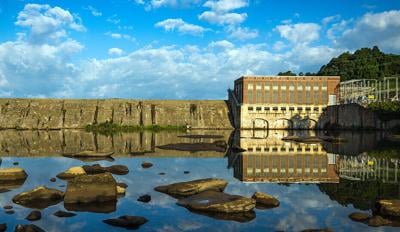


Drought conditions have improved along the Catawba-Wateree River system, which includes Lake James in Burke County and Lake Rhodhiss in Burke and Caldwell counties.
The Catawba-Wateree Drought Management Advisory Group announced that the basin has moved from Stage 2 to Stage 1 under its Low Inflow Protocol, allowing major water suppliers to lift mandatory water-use restrictions.
The change has local significance because communities in both Burke and Caldwell counties depend on the Catawba River system for water. Morganton, Valdese, Granite Falls, and Lenoir are among the municipal systems that withdraw water directly from the Catawba River or its tributaries in the Lake Rhodhiss drainage area.
Recent rainfall has increased water storage in Duke Energy’s 11 reservoirs and improved stream flows throughout the basin.
The basin first entered Stage 1 on April 16 and moved to Stage 2 on May 1 after dry weather and months of below-average rainfall reduced reservoir storage and left stream flows well below normal.
Under Stage 2, water suppliers were required to impose limits on certain nonessential water uses. Duke Energy also adjusted hydroelectric operations to preserve lake storage.
Stage 1 is the second of five drought stages, which range from Stage 0 to Stage 4. The designation takes into account lake levels, tributary inflows, and the U.S. Drought Monitor.
“The Catawba-Wateree Drought Management Advisory Group wants to thank users across the basin for their commitment to conserving water. It takes ongoing support from many users to protect our shared water supply, and you came through,” said Andrew Shull of Duke Energy and the CW-DMAG coordinator. “We encourage everyone to continue conserving water on a voluntary basis until rainfall and stream flows get back to normal levels.”
While mandatory restrictions associated with Stage 2 can be lifted, residents and businesses are still being asked to conserve water voluntarily.
People who withdraw water directly from Catawba-Wateree lakes are encouraged to irrigate no more than two days per week, on Tuesdays and Saturdays. Municipal customers should follow any guidance issued by their individual water supplier.
Other recommended conservation measures include fixing leaks, reducing outdoor watering, and running full loads of laundry and dishes.
The Catawba-Wateree system includes 11 Duke Energy reservoirs stretching from Lake James, which straddles Burke and McDowell counties, south through North and South Carolina. Lake Rhodhiss includes portions of both Burke and Caldwell counties.





























































Commented