



Morganton stinks.
Not every minute of every day, but frequently enough and intensely enough that locals are complaining to the Department of Environmental Quality’s Department of Air Quality (DAQ), and they have been since January.
According to DAQ, “complainants described a strong, fecal, or sulfurous odor that seems to be more intense in the evenings and early mornings.”
One of those complainants, Morganton resident Susan O’Carroll, said, “The last three summer concerts — sponsored by Case Farms — that we went to, we left after about five minutes because of the smell. … I have a friend who is considering moving here and I can’t really recommend it with this worsening issue that affects quality of life and, likely, health.”
REAL ESTATE & BUSINESS IMPACTS
Real estate agents who were willing to discuss the lingering aroma, sometimes referred to by locals as the “chicken smell,” said it hasn’t affected business so far, but it is on their radar.
Mike Watts of Berkshire Hathaway Home Services Blue Ridge Realtors explained that when a seller is looking to put their home on the market, realtors ask about industrial nuisances such as noises and odors — considered a “material fact” or “property disclosure.”
If a buyer asks the realtor about the odor, it becomes the realtor’s “responsibility to investigate” and pass the information back.
He hasn’t encountered complaints from buyers or forewarnings from sellers.
“It’s just like if I’m doing a property around an airport,” said Watts. “We look at flight paths to make sure, because that’s a noise thing. Any kind of odor, noise, or anything from commercial or industrial, we ask the sellers to disclose.”
Similar to Watts, Burke County Board of Realtors President and Morganton Mayor Ronnie Thompson said that he hadn’t run into issues with his clients as a realtor — whether it be from seller or buyer.
When asked whether the odor could affect the broader local realty market, Thompson said, “In my experience, if a person likes the house, they’re gonna buy the house.”
As for the restaurants in town, however, the owners said the smell affects their customers dining outside. The Madness owner Nathan Shao said the “chicken smell” often has customers complaining or moving inside when the odor is thick. Luckily, he said, he has plenty of tables inside to accommodate.
Uptown Wing Bar co-owner Larry Perdue echoed the sentiment, explaining that in the evening and “especially on hot days, it’s everywhere.” It hasn’t killed business, he said, but it’s annoying when they’re trying to eat.
Other business owners who didn’t want to go on the record still grimaced at the mention of the smell before declining to answer questions.
GOVERNMENT RESPONSE
O’Carroll said that she spoke to someone from DAQ after noticing the scent seeping into her home, and she said the person told her he’d smelled it himself.
However, DAQ Public Information Officer Shawn Taylor said, “To date, division staff were able to detect intermittent odors but were unable to substantiate an objectionable odor with the olfactometer.”
An olfactometer is a special device used to quantify odors by diluting the air at specific concentrations. DAQ investigators typically use the Nasal Ranger, which looks like a telescope-respirator hybrid and is held up to the nose.
“If an odor is at all noticeable at certain diluted concentrations, it is determined to be objectionable,” said Taylor, explaining that the nature, intensity, frequency, pervasiveness, and duration of odors, among other factors, affect whether an odor becomes objectionable.
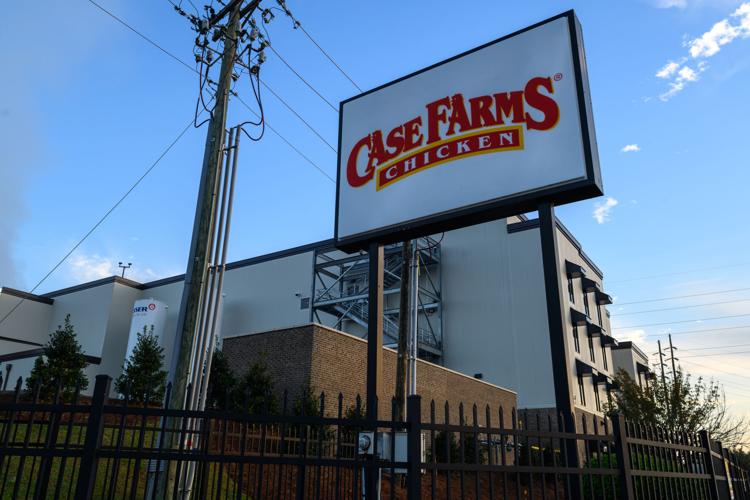
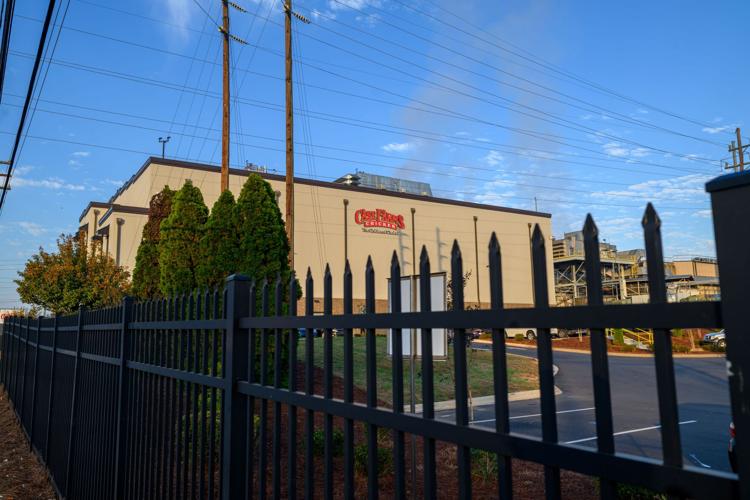
Since early October, Taylor said DAQ received more complaints from the area of Rand Street — where Case Farms is located — but investigators haven’t pinpointed the origin, although they’ve spoken with the chicken processing plant and other potential sources.
Case Farms did not respond to questions from The Paper.
Most facilities have to abide by state regulations that require their emissions don’t contribute to objectionable odors past the property lines. Should DAQ determine a facility isn’t adhering to that rule, the facility has to develop an odor management plan that must be reviewed and approved by DAQ, then implemented within 30 days.
Otherwise, DAQ cannot dictate what odor control practices or equipment a facility uses to comply.
Taylor reiterated that residents and anyone who notices the scent should keep a log noting the time, location, and intensity, as well as contact the Asheville Regional Office at 828-296-4500.
Investigators have made nearly weekly visits to the sites of odor complaints in recent weeks, using complainant-logged times to estimate the best times for investigation.
The investigation will continue, but in the 10 months since DAQ started sniffing for odors,, the agency hasn’t found quantifiable evidence that technically objectionable smells waft through the city.
City Manager Sally Sandy said that when complaints like this arise, the City checks its assets — sewer and storm drains — but that nothing has been identified during regulatory testing and monitoring. The City isn’t certain of where the odor comes from.
“We don’t know, and we don’t really have any way of knowing that,” she said.
Although the City uses masking agents in its own odor-causing processes throughout the year, any air quality authority and oversight concerning individual businesses falls in the state’s jurisdiction.
Locals started a website that auto-sends a complaint to the Asheville Regional Office, Burke County administration, and Morganton City Council. The website is cleartheairmorganton.com.
“Morganton is such a nice city,” O’Carroll said. “It will be a shame if this issue is not properly addressed. I don’t even drive through town with my windows down anymore.”


























































Commented