

von Rohr

von Rohr
FOR THE PAPERThe Burke and Rutherford County militia were now under the command of Colonel Charles McDowell’s 24-year-old brother, Major Joseph “Quaker Meadows” McDowell. A great deal of animosity already existed between the Patriot Army and their British counterparts. The British commander was Major Patrick Ferguson, an officer who, earlier in his career, earned a reputation as a “gentleman,” which was expected of one from an aristocratic Scottish family such as his.
During his earlier assignments in the Caribbean, Nova Scotia, and the northern American colonies, Ferguson was rated as a superior leader; however, at the Battle of Little Egg Harbor in 1778, he seems to have turned to the “dark side” when he allowed the slaughter of captured Patriot forces.
After the June of 1780 British invasion of the Carolinas, General Charles Cornwallis gave Ferguson the mission of drumming up colonial support for the British cause. Ferguson was said to have great communication skills, yet he made a big tactical blunder when he posted the following words at the end of a proclamation he had circulated throughout both North and South Carolina:
“The Back Water men have crossed the mountains; McDowell, Hampton, Shelby, and Cleveland are at their head, so that you know what you have to depend upon. If you choose to be degraded forever and every by a set of mongrels, say so at once, and let your women turn their backs upon you, and look out for real men to protect them.”
These were nothing short of “fighting words” and both an insult and threat to their way of life! It would be an understatement to call Ferguson’s words both bluster and exaggeration. If someone were to refer to current-day Morganton citizens in these demeaning terms, they’d be considered “fighting words.”
Arriving at what they called “The Cowpens” on Oct. 6, our forces had their first substantial meal in days. Teams of militiamen shot enough of the local livestock, owned by a British sympathizer named “Saunders,” to provide food for our undernourished soldiers. After receiving news from spies that the British force was encamped atop a plateau at Kings Mountain, Patriot leaders decided to send a force of 900 men on horseback (light cavalry) to fight. Their mission was to make haste to attack the enemy.
I have always found it interesting to note that the planning for the Battle of Kings Mountain was what I’d call “haphazard” at best. It was only during a stop along the way to Kings Mountain, which required leaving The Cowpens at 9 p.m. that evening and riding all night and through the next morning, that the Patriot leaders did any “planning” at all.
Contrary to my experience in the military, the closest they got to a battle plan was for them to agree to surround the base of the plateau and then fight upwards. Their British enemy was in possession of the higher ground, which was usually a tactical advantage. However, in this instance, Major Patrick Ferguson appears to have possessed way too much bravado and too high an opinion of himself to successfully defend his mountain stronghold. In fact, Ferguson publicly proclaimed that “Only Almighty God could remove him from the mountain.”
Arriving at the bottom of the plateau, it was obvious to everyone present that they would have to negotiate a very steep 22-degree incline up the mountainside to reach the enemy at the top. Miraculously, upon their arrival, they did not attract the attention of any British sentries, for Ferguson was so overconfident he failed to disperse them as a normal tactical precaution.
On the other hand, our Patriot leaders had no idea what Ferguson’s troop numbers were, how wide or narrow the plateau was, or how each leader would eventually engage the enemy. What became known was that despite the steep incline (from the bottom of the plateau to the top, it was only 60-70 feet) in their route upwards, they would come upon a wide variety of hardwood trees, shrubs, and rocky outcrops that could provide them with cover. Their regimental commanders psychologically prepared their assigned troops with their own version of a universal call to “fight like heroes and to either conquer or die.”
As our 1780 neighbors were about to begin the upward thrust, it was our own “Quaker Meadows” Major Joseph McDowell, who could be heard yelling out, “Follow me, lads!”
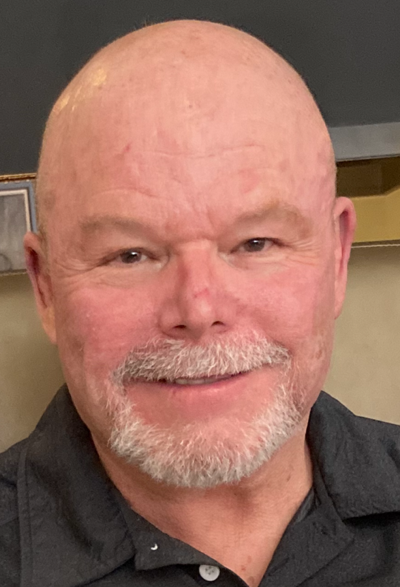
Maj. (Dr.) John von Rohr is an academician and former military officer. He is a member of the Col. Alexander Erwin Chapter of the Sons of the American Revolution.













Success! An email has been sent to with a link to confirm list signup.
Error! There was an error processing your request.


Sorry, an error occurred.
Already Subscribed!
Cancel anytime
Thank you .
Your account has been registered, and you are now logged in.
Check your email for details.
Submitting this form below will send a message to your email with a link to change your password.
An email message containing instructions on how to reset your password has been sent to the email address listed on your account.
No promotional rates found.
Secure & Encrypted
Thank you.
Your gift purchase was successful! Your purchase was successful, and you are now logged in.
| Rate: | |
| Begins: | |
| Transaction ID: |
A receipt was sent to your email.





(0) comments
Welcome to the discussion.
Log In
Keep it Clean. Please avoid obscene, vulgar, lewd, racist or sexually-oriented language.
PLEASE TURN OFF YOUR CAPS LOCK.
Don't Threaten. Threats of harming another person will not be tolerated.
Be Truthful. Don't knowingly lie about anyone or anything.
Be Nice. No racism, sexism or any sort of -ism that is degrading to another person.
Be Proactive. Use the 'Report' link on each comment to let us know of abusive posts.
Share with Us. We'd love to hear eyewitness accounts, the history behind an article.