

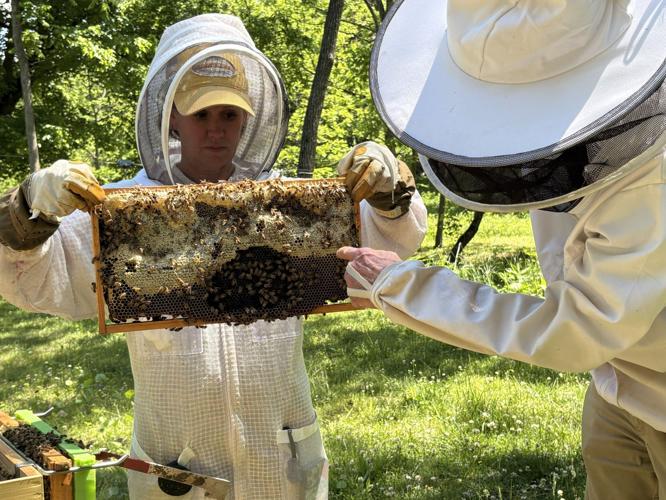
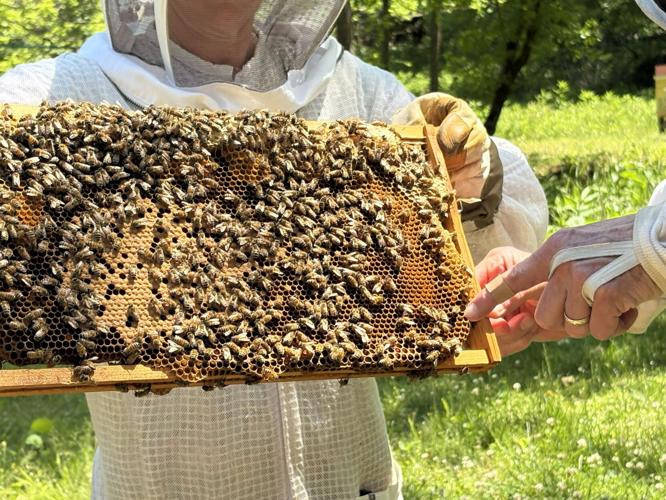
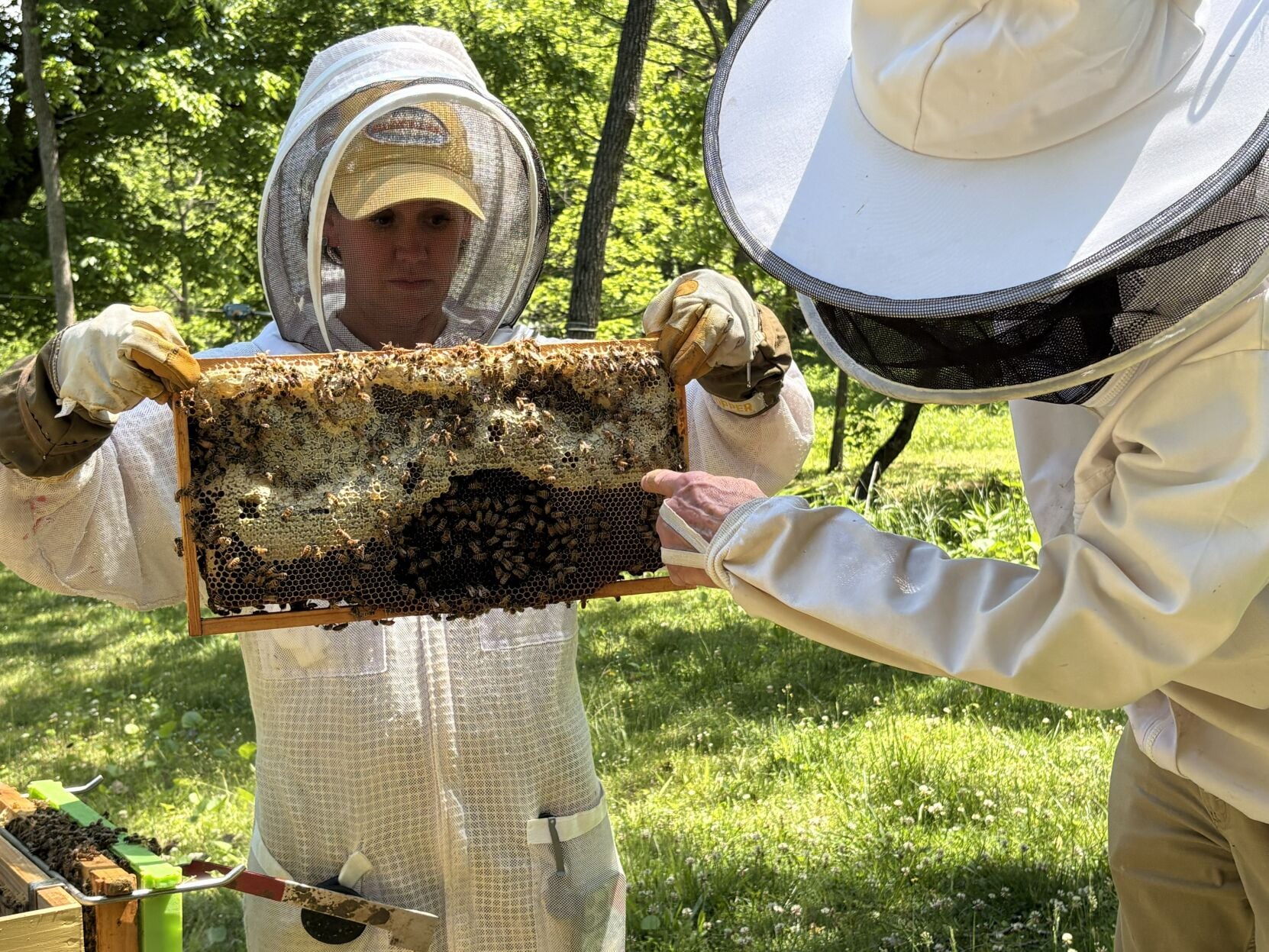
Beth Patton (left) and John Whalley discuss how they care for bee hives.
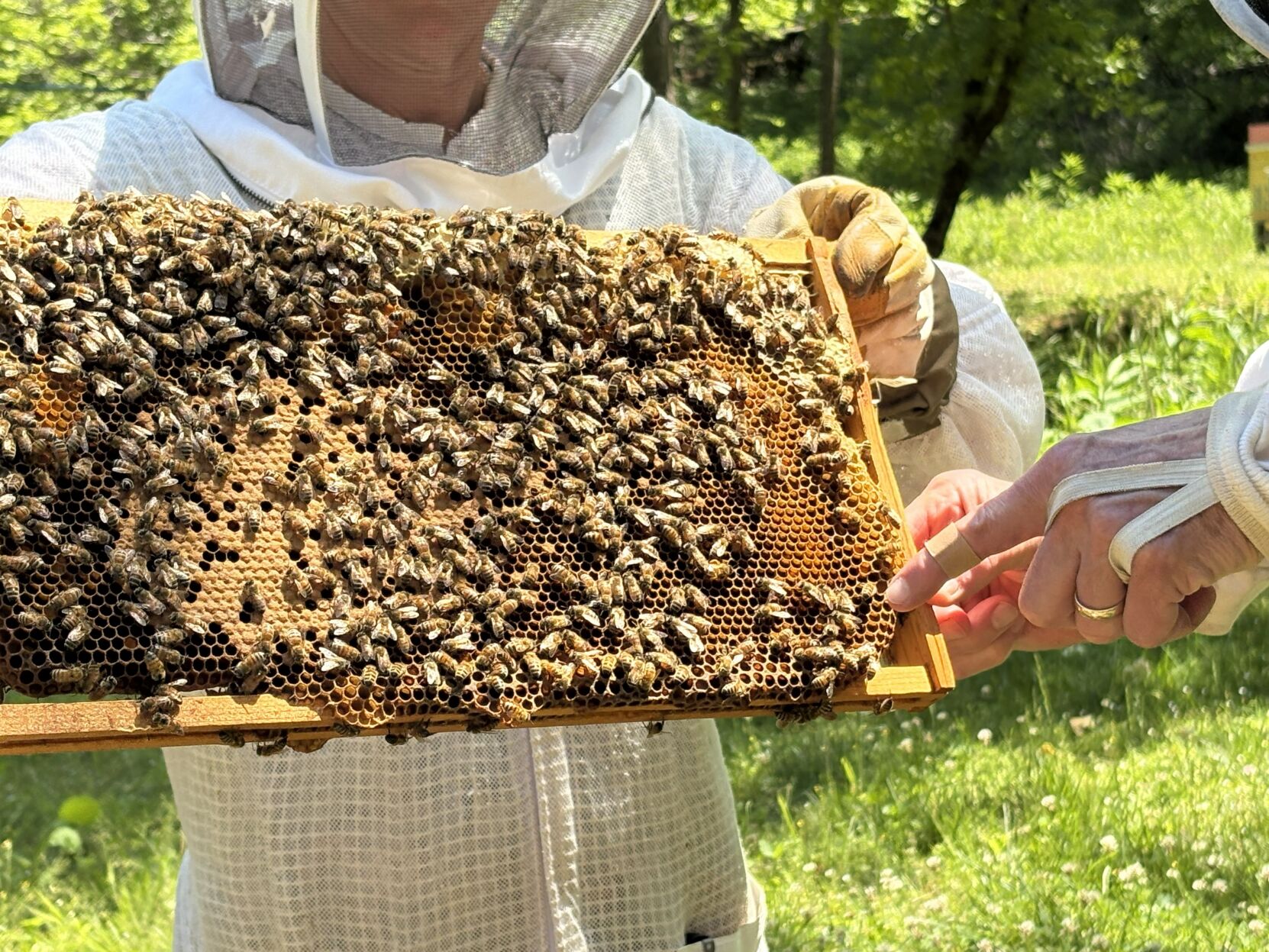
Three ways one can acquire honey bees: purchasing a package (up to 2.5 pounds of bees), purchasing a nucleus colony, or catching a swarm.
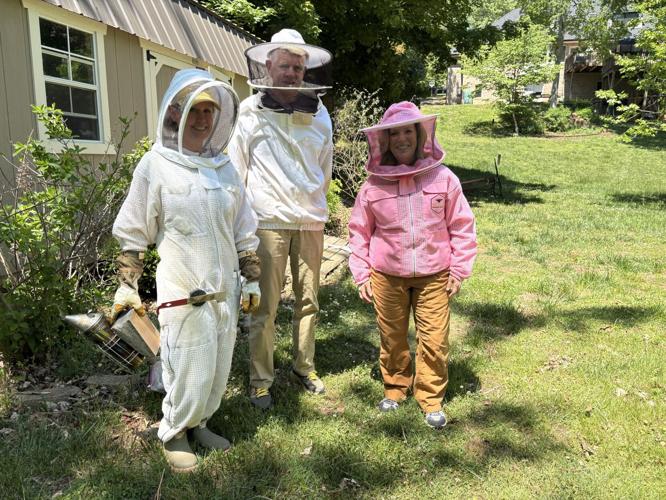
Writer Christiane Burkins (right) visits with Beth Patton and John Whalley in Morganton to learn more about honeybees and cultivating honey.
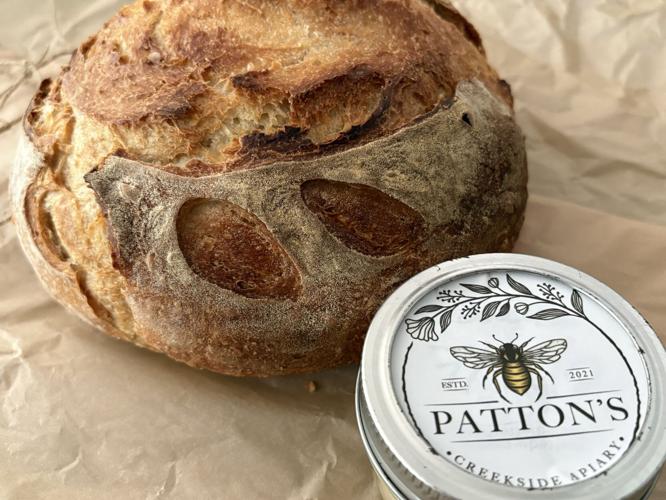
Online extra: Beth Patton’s Easy Sourdough with Local Honey recipe is included with this story on thepaper.media.
Honestly, I don’t know what I expected. Perhaps sprawling acreage? A farm? A cold outreach to the Burke County Beekeepers Association (BCBA) had led me here.
And, although Beth’s email told me that her family lived five minutes from downtown Morganton, I didn’t expect that I would be turning into a very pleasant, suburban neighborhood. After all, where exactly does one live when you’re a keeper of bees? I was about to find out.
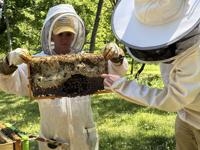
Beth Patton (left) and John Whalley discuss how they care for bee hives.
CHRISTIANE BURKINS / FOR THE PAPERNot one but four local beekeepers had agreed to talk with me this particular Saturday afternoon about a nectar that is as old as time: honey.
Nutritional. Medicinal. Delectable. It’s one of nature’s veritable powerhouses, and it has been impacting culture from ancient Egypt and Greece to modern day coffee and cocktails. It’s mentioned in the Bible, the Talmud, and other sacred books of the Far East. There is no denying honey’s prominent place in both society and gastronomy.
Of course, there would be no honey without bees. It’s believed that bees and other pollinators are responsible for one in every three bites of the food we consume. Think of it: All the good stuff we take for granted in the immediacy of our food chain supply is made possible by bees — vegetables, fruits, nuts. Like it or not, we need those flying insects.
A warm greeting, introductions, and a glass of ice water kicked off our chat. I had a plethora of questions for John Whalley, Beth Patton, and Rahn and Timberley Adams. After all, I adore honey, but I craved a deeper understanding about it. I know it’s versatile. I understand the basic concept of the environmental impact on its flavors. Yet, what I really needed to know was, “How many times have you been stung?”
I was here to learn about honey, but they really taught me about bees.
There are three distinct ways one can acquire honey bees: purchasing a package (up to 2.5 pounds of bees), purchasing a nucleus colony (typically from a warmer climate like Georgia), or catching a swarm (my mind is still reeling about this one). And all of these people had discovered this unique, and immensely complex, hobby in one of those ways.
Beth, a Maryland native from a commercial agriculture family, came across beekeeping as a happy little accident when her daughter decided that the 4-H junior beekeepers package was not for her (think goldfish on steroids). Now, Beth has seven hives in her apiary and produced 22 gallons of honey last year. And although her husband isn’t terribly fond of interacting with the bees when he cuts grass, he (along with Beth’s family and neighbors) enjoys her honey experimentation in both sourdough and rosemary or hot pepper-infusions.
Rahn and Timberley’s story is different. Retired educators, their beekeeping was born of a longing to connect with family who had kept bees in their childhood as well as a hope that their hives would be helpful pollinators for their neighbor’s garden. Now with four hives, they’re still learning about the nuances and behavior of their bees.
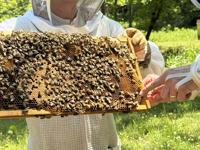
Three ways one can acquire honey bees: purchasing a package (up to 2.5 pounds of bees), purchasing a nucleus colony, or catching a swarm.
CHRISTIANE BURKINS / FOR THE PAPERHives, after all, can have different personalities. Some are feisty. Weather can impact their mood. It’s a bit like raising children. In the end, they’re likely to go off on their own, and all you can do is hope you’ve raised them well.
John, a retired pediatrician and the president of BCBA, is clearly a bee enthusiast and expert. Excited to share his knowledge, I asked him what he would want people to know about honey. As a medical professional, John acknowledged that the higher price of local honey can absolutely impact a food budget, but it really is a craft product that is labor-intensive. And with the limited regulations in more commercial honey production, often the result is a dilution with high fructose corn syrup and the presence of pesticides used to treat nearby crops.
For him, local honey is probably a better choice since you can use less of it than refined sugars due to its sweetness. That’s a benefit when watching your carbs and sugar intake.
Beth, the ultimate hostess, offered to show me her hives. After all, I’d come in my Carhartt’s as she had instructed. So, I donned the required bee jacket and hat. When she remarked, “ I don’t know how close you want to get?’, I politely replied, “I’m good right here.”
Perhaps beekeeping shouldn’t be considered a hobby. It’s not like loading your bike on the back of your vehicle and going for a ride on the mountain trails. It’s far more complex than sitting down with your favorite show while crocheting. This takes a paramount level of dedication, observation and patience. And you can get stung, for crying out loud.
It’s no surprise these people are our local beekeepers. They are generous of spirit and connected to the world in ways much larger than themselves. They all give of themselves and their honey to make the world a better place. Whether it’s John volunteering his medical expertise in the Ukraine or Beth leaving her extra honey by the roadside for people to partake.
When I asked her if people steal it, she replied, “Well, if they need it that badly, that’s OK with me.”
It’s really a labor of love. Beekeeping is hard work, but the result is sweet. As John reminded me, honeybees have a difficult time in the world: adequate nutrition, pesticides, pests and disease. That’s why they need people like Rahn, Timberley and John. In the end, as John said, honey on his biscuit “makes it all worthwhile.”
If you’re interested in learning more about beekeeping, John recommended the following read: “The Backyard Beekeeper,” by Kim Flottum.
Christiane Burkins is a contributor to The Paper, often writing about food and culture.













Success! An email has been sent to with a link to confirm list signup.
Error! There was an error processing your request.


Sorry, an error occurred.
Already Subscribed!
Cancel anytime
Thank you .
Your account has been registered, and you are now logged in.
Check your email for details.
Submitting this form below will send a message to your email with a link to change your password.
An email message containing instructions on how to reset your password has been sent to the email address listed on your account.
No promotional rates found.
Secure & Encrypted
Thank you.
Your gift purchase was successful! Your purchase was successful, and you are now logged in.
| Rate: | |
| Begins: | |
| Transaction ID: |
A receipt was sent to your email.







(0) comments
Welcome to the discussion.
Log In
Keep it Clean. Please avoid obscene, vulgar, lewd, racist or sexually-oriented language.
PLEASE TURN OFF YOUR CAPS LOCK.
Don't Threaten. Threats of harming another person will not be tolerated.
Be Truthful. Don't knowingly lie about anyone or anything.
Be Nice. No racism, sexism or any sort of -ism that is degrading to another person.
Be Proactive. Use the 'Report' link on each comment to let us know of abusive posts.
Share with Us. We'd love to hear eyewitness accounts, the history behind an article.