

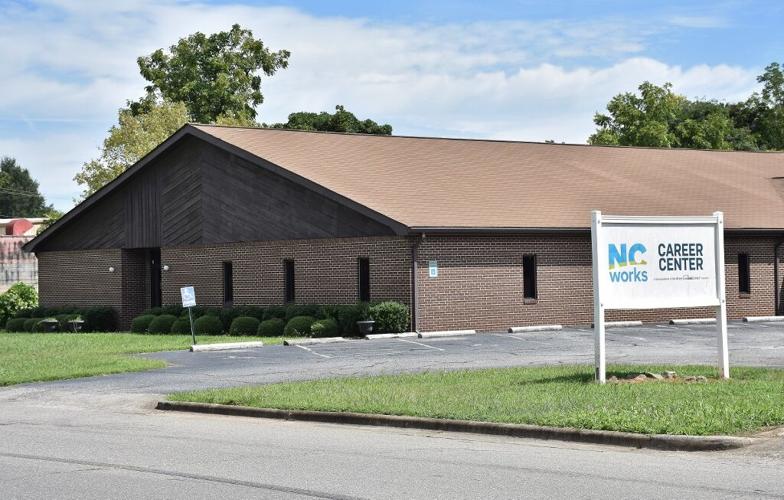

Burke County officials are planning to convert an $865,000 building at 720 E. Union St. into a 16-bed crisis and detox center using opioid settlement funds.
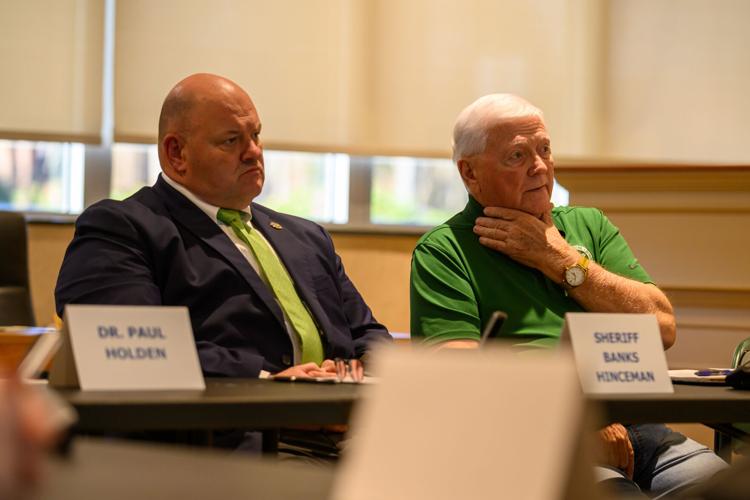
The Burke County Opioid Advisory Committee started discussing its next fiscal year on Tuesday, covering potential providers and the recent purchase of the former NC Works building to turn it into a facility-based crisis center.
The center will provide services for both substance use and mental health.
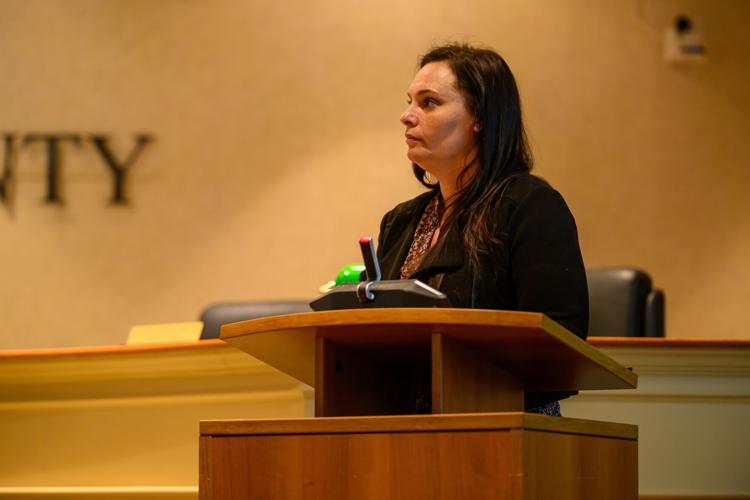
Dr. Katie Samuels, Burke County’s opioid settlement coordinator, explained that the average length of stay will be seven to 14 days, allowing medical monitoring, comprehensive assessment, and care coordination.
“This is the first stop,” Samuels said. “Other treatment facilities require medical detox before they’ll accept someone in. This is the medical detox. This is a place where people can go and be stabilized so they can be admitted to other places.”
Samuels said the county will release two requests for cost estimates — one for an architecture and engineering firm and another for a service provider to fill the space.
According to the presentation, the county expects to select the architecture and engineering firm by May and the service provider by June.
“This will also be a critical resource for law enforcement and EMS, because it is also proposed to be a first evaluation site,” she said. “If someone is involuntarily committed, they can go to the facility-based crisis center for evaluation rather than the emergency department or somewhere else.”
Staffing will be managed by the service provider that operates the facility.
Samuels explained that, like several of the other providers working with the opioid committee, the county will supplement the provider using settlement funds or grant dollars, if available, for the first year or two until they can be self-sustaining through insurance billing.
The county decided on the facility-based crisis center model due to the way the purchase was funded. The county used two grants to purchase the center, and one of the grants’ stipulations required that it be a crisis center or a behavioral urgent care center.
“When we were having discussions, we were talking about, ‘What would it look like to have both?’” Samuels explained. “The facility-based crisis, having an enhanced intake, would give us the ability to have both a behavioral health urgent care look-alike, and the ability for people to be able to be in-patient for up to 14 days.”
BUDGET PREP
Samuels proposed to continue support for its current partners — A Caring Alternative, SPARC (Supporting People’s Access to Reliable Care), High Country Community Health, and Burke County Recovery Court — as well as the Post Opioid Response Team, naloxone distribution, and additional programs.
The available balance is $6.2 million and, collectively, the current programs would take an estimated budget of $2.83 million.
“The amounts in here are (without) any startup costs,” Samuels said. “We’ve asked them to provide us what the actual cost for continuation for another year would be. We’re expecting it to be lower, but we would like to continue to support the programs that we funded in August.”
The proposed budget includes $550,000 to repeat the RFP (request for proposals) process, allowing more flexibility in how future programs are funded. Several current provider programs, including SPARC, are working to become billable services, allowing the county to shift funding away from opioid settlement dollars and instead bill insurance.
“We are also evaluating the setup of Recovery Court, so that when the contract with the Cognitive Connection expires Dec. 31, we’ll be able to transfer over to a county-led program so that we can standardize our operations across the district,” Samuels said.
“That would include Caldwell County and mirroring how they have their structure set up so we can be able to apply for grants together and standardize our advisory committee.”
According to Samuels, opioid settlement funds can be used as match dollars, expanding the capabilities of grant applications.
To date, the county has allocated $3.32 million of the $9.53 million received. The county receives one front-loaded deposit a year through 2038 for a total of about $25 million.

















(0) comments
Welcome to the discussion.
Log In
Keep it Clean. Please avoid obscene, vulgar, lewd, racist or sexually-oriented language.
PLEASE TURN OFF YOUR CAPS LOCK.
Don't Threaten. Threats of harming another person will not be tolerated.
Be Truthful. Don't knowingly lie about anyone or anything.
Be Nice. No racism, sexism or any sort of -ism that is degrading to another person.
Be Proactive. Use the 'Report' link on each comment to let us know of abusive posts.
Share with Us. We'd love to hear eyewitness accounts, the history behind an article.