



Anyone new to Burke County might hear the name The Industrial Commons and not quite know what to make of it. It sounds like a trade association, maybe, or some kind of historical preservation group.
It is none of those things. Yet, in a way, it is all of those things, and that unusual name is actually quite fitting.
“Industrial” is not nostalgia. It is not a lament for what Burke County used to be or a fond look backward at the mill era. It is a commitment to factories, textiles, production, and the people who have always shown up to do that work. The people who built this county with their hands and their hours and their willingness to keep going.
“Commons” is not policy language. It is an old idea, simple and serious at once, that some things belong to everyone. That the land and the workers and the opportunities here should not be treated as things to use up and move on from, but as something worth protecting for the long haul.
More than a decade ago, The Industrial Commons started with a mission that might have sounded overly ambitious for a county still feeling the weight of shuttered mills and lost jobs. It wanted workers to have not just paychecks, but dignity, voice, and a real stake in what they helped build. It wanted businesses that would put down roots, support local families, and give something back to the place that made them possible.
That mission has not changed.
Not through COVID-19, when everything that could be turned upside down was. Not through tariffs and supply chain chaos and the slow, unglamorous difficulty of doing economic development in a rural county. Not through Hurricane Helene, which reminded everyone in the hardest possible way that rural communities need organizations that can hold steady when things fall apart and keep building when they don’t.
The numbers tell part of the story.
More than 5,000 workers supported. More than 500 businesses helped. Workforce development, cooperative ownership, community land trust housing, textile innovation. More than 70 acres of land now held in community control, not for outside investors, not for speculation, but for the people who live and work here.
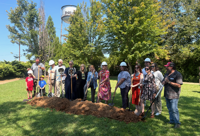
Then there is the Drexel 3 and 5 site, which is worth slowing down for. (See the related story on today’s front page.) Drexel Furniture once employed a remarkable share of this county’s working population. It was the kind of employer that shaped everything, not just the economy but the feel of daily life. When that era ended, it left more than empty buildings. It left a question that was easier to avoid than answer: What now?
Before anything new could happen on that land, somebody had to do the work nobody wants to do. Removing dirt. Removing coal. Removing asbestos-contaminated material. Confronting what got left behind instead of walking past it again. Burke County’s future cannot be built on ground we never got around to cleaning up. It cannot be built by pretending the hard parts of the past did not happen.
The Industrial Commons did not pretend. It cleaned it up and got to work.
That willingness to take on the slow, thankless jobs is probably the best way to describe how TIC operates. It is not a flashy organization. It does not chase headlines. It just keeps doing the work.
No single organization carries a county’s future on its own, and TIC would be the first to say so. Schools matter. Local government matters. Employers, community colleges, nonprofits, all of it matters. But what The Industrial Commons has offered over more than a decade is a working model that this community can learn from.
You can be patient and creative at the same time. You can honor the past and still build seriously toward something new. You can keep going when the conditions are hard and the results come slowly.
Work in Burke, TIC’s program connecting young people with local employers and mentors, earned statewide recognition from the Governor’s NCWorks program in 2024. The county’s declining Opportunity Youth rate did not happen by accident. It happened because schools and employers and community organizations decided to work together and stayed with it.
Burke County has always moved forward the same way. Not by waiting on someone from outside to come fix things. Not by living in what used to be. But by people here deciding to invest in what is already present. The workers. The land. The young people who need a reason to stay. The small businesses trying to survive long enough to reach the next generation. The history that deserves to be looked at honestly, hard parts and all.
The Industrial Commons did not create any of those assets. Burke County already had them. What TIC did was recognize them, take them seriously, and give them somewhere to go.
That matters. Not because one organization has figured everything out, but because the approach it models is one this county needs more of. Patient. Practical. Rooted in this place. Honest about where things stand. Committed to building from within.
Burke County’s next chapter will not come from elsewhere. It will be written here, by people willing to look at what is present, honor what was left behind, and build something that lasts.














(0) comments
Welcome to the discussion.
Log In
Keep it Clean. Please avoid obscene, vulgar, lewd, racist or sexually-oriented language.
PLEASE TURN OFF YOUR CAPS LOCK.
Don't Threaten. Threats of harming another person will not be tolerated.
Be Truthful. Don't knowingly lie about anyone or anything.
Be Nice. No racism, sexism or any sort of -ism that is degrading to another person.
Be Proactive. Use the 'Report' link on each comment to let us know of abusive posts.
Share with Us. We'd love to hear eyewitness accounts, the history behind an article.