

Every parent of a child with disabilities has likely heard some variation of the same phrase:
“We are following procedure.”
But procedure is not always justice.
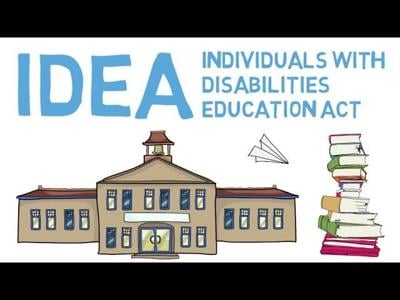
The Individuals with Disabilities Education Act (IDEA) was created to ensure that children with disabilities would never again be ignored, isolated, or denied meaningful educational access in America.
It remains one of the most important civil-rights commitments in modern public education.
Yet decades later, many families still feel they must battle the very systems designed to protect their children.
The problem is not that IDEA lacks noble intentions. The problem is that enforcement, transparency, and accountability are often inconsistent from state to state and district to district.
Too frequently, special education becomes driven by compliance paperwork, administrative protection, and budget management rather than measurable student outcomes.
This is not an attack on teachers, interpreters, therapists, or frontline educational staff. Many work tirelessly under difficult conditions and genuinely care about students with disabilities.
Instead, this is a call to examine whether the larger structure surrounding special education has become too insulated from meaningful oversight.
Families across the country routinely face overwhelming challenges: delayed evaluations, staffing shortages, inconsistent accommodations, lengthy disputes over services, and systems that often appear more focused on legal defensibility than educational success.
For low-incidence populations such as Deaf and hard-of-hearing students, the consequences can be even greater.
Deaf children are not simply students with hearing loss. They are language learners whose futures depend heavily on early communication access, educational consistency, and qualified support services.
Yet educational opportunities for Deaf students can vary dramatically depending on geography, local funding priorities, and administrative philosophies.
A child’s educational future should not depend on whether their parents can afford attorneys, advocates, or endless procedural battles.
America should seriously consider stronger independent oversight of special education at the federal level — potentially including a dedicated commissioner or agency whose sole responsibility is protecting the integrity of IDEA and ensuring accountability nationwide.
Such oversight should focus on several principles.
First, transparency.
Parents and taxpayers should be able to clearly see how IDEA and Section 504 funds are being used. Families deserve confidence that funds intended for students are truly reaching students rather than disappearing into excessive administrative overhead.
Second, accountability based on outcomes — not merely compliance.
Schools should certainly follow procedures, but compliance alone cannot become the standard for success. We should also examine literacy outcomes, graduation rates, communication access, workforce readiness, and long-term independence for students with disabilities.
Third, protection from political instability.
Disability rights should never become temporary priorities dependent on election cycles or shifting political agendas. The educational rights of disabled students must remain protected regardless of who occupies office.
Finally, families must be treated as partners rather than adversaries.
Too many parents describe special education disputes as emotionally exhausting and financially devastating. When families begin viewing educational systems with fear or distrust, something fundamental has broken down.
America once made a promise to children with disabilities: that they would not be forgotten, hidden away, or treated as burdens.
That promise still matters.
Disabled children should never become political afterthoughts, compliance statistics, or budget calculations.
They deserve transparency.
They deserve accountability.
And above all, they deserve educational systems built around student success rather than institutional survival.
IDEA was meant to protect students.
America must ensure it still does.


























(0) comments
Welcome to the discussion.
Log In
Keep it Clean. Please avoid obscene, vulgar, lewd, racist or sexually-oriented language.
PLEASE TURN OFF YOUR CAPS LOCK.
Don't Threaten. Threats of harming another person will not be tolerated.
Be Truthful. Don't knowingly lie about anyone or anything.
Be Nice. No racism, sexism or any sort of -ism that is degrading to another person.
Be Proactive. Use the 'Report' link on each comment to let us know of abusive posts.
Share with Us. We'd love to hear eyewitness accounts, the history behind an article.