




Burke County is not yet “winning” the opioid epidemic if winning means the crisis is over, families are no longer burying loved ones, and emergency responders are no longer answering overdose calls.
But if “winning” means building a serious, coordinated, evidence-based response after years of devastation, then Burke County is finally moving in the right direction.
The best answer, then, is this: Burke County is making measurable progress, but it has not earned the right to declare victory. Not yet.
My perspective on this issue is both public and personal. I sit on Burke County’s Opioid Advisory Committee, and during my service as president of the North Carolina Association of County Commissioners, the “One More Thing” initiative reflected my belief that counties had a duty to do one more thing to save one more life.
My family also knows the grief that substance use disorder can leave behind. I do not mention this to ask for sympathy, but to be honest about why this work matters so deeply.
For too many Burke County families, this crisis is not theoretical. It is lived, remembered, and carried every day.
That distinction matters. Communities lose focus when they mistake progress for success. They also lose hope when they ignore progress altogether. Burke County needs neither complacency nor despair.
It needs a clear-eyed commitment to keep doing what is working, fix what is not, and measure success by lives saved and long-term recovery sustained.
IMPORTANT STEPS TAKEN
I truly believe Burke County has taken important steps that deserve recognition.
The county has created a dedicated opioid response structure, used settlement funds to support recovery services, and expanded programs aimed at treatment rather than punishment.
According to Burke County’s fiscal year 2024–2025 opioid settlement reporting, local efforts included recovery support services, Recovery Court expansion, peer-led planning, public health and safety coordination, and distribution of more than 1,000 naloxone kits across schools, law enforcement, the jail, senior centers, paramedics, and peer networks.
Those are not symbolic actions. Naloxone saves lives. Recovery Court can keep people connected to treatment instead of cycling through jail.
Peer support can reach people who may not trust institutions but will listen to someone who has lived through addiction and recovery.
Low-barrier treatment, including medication for opioid use disorder, gives people a practical path away from fentanyl, heroin, and other dangerous substances.
Some residents may question naloxone or rehabilitation, believing they excuse drug use or delay accountability. I understand that concern, but I do not believe saving a life and expecting change are opposites.
Naloxone does not cure addiction; it keeps a person alive long enough for treatment, accountability, and recovery to remain possible.
Rehabilitation does not erase personal responsibility; it gives people a structured way to rebuild their lives, repair damage where they can, and stop repeating the same cycle.
There are also signs that the numbers may be bending in the right direction. State overdose data showed 72 opioid overdose emergency department visits in Burke County for 2024 year-to-date, compared with 131 during the comparable January-to-October period in 2023.
County updates have also reported a decline in overdose deaths from 60 in 2023 to 50 in 2024, while continuing to track emergency calls, verified overdoses, treatment engagement, and recovery outcomes.
That is progress. It is the kind of progress that comes from coordination, funding, public pressure, and a willingness to treat addiction as a public health crisis rather than a moral failure.
A SERIOUS RESPONSIBILITY
One reason Burke County can honestly talk about progress is that the county has treated opioid settlement work as a serious responsibility, not a side project.
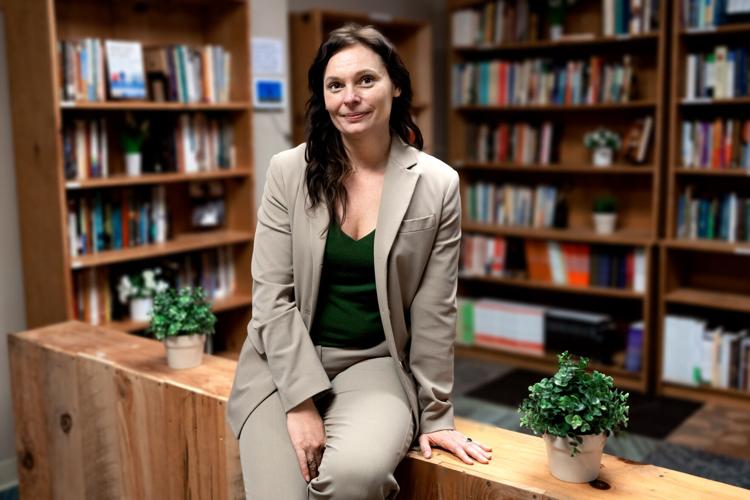
Dr. Katie Varnadoe Samuels’ work as the county’s opioid administrator has helped turn money, data, public concern, and community pain into a more organized system of response. Just as important, she has assembled a team around that work, recognizing that no single administrator can carry a crisis this complex alone.
Dr. Samuels is not simply managing a grant ledger. She has been helping Burke County build the architecture of an opioid response: coordinating partners, presenting strategies to advisory committees, tracking approved programs, strengthening naloxone distribution, advancing post-overdose response, and pushing the county toward treatment access that is more practical, local, and immediate.
In a county where the opioid crisis touches emergency services, law enforcement, courts, schools, health care, social services, churches, families, and people in recovery, that kind of coordination is essential.
Her return to Burke County government in 2025 also says something important. After the county reviewed more than 90 applications, Dr. Samuels was selected to lead the county’s opioid settlement initiatives in a newly restructured role.
Before that, she had served as Burke County’s Director of Behavioral Health, worked in the behavioral health sector as a consultant with the Community Education Group, and brought experience from executive nonprofit leadership, local management entity operations, and direct clinical practice.
That background matters because the opioid epidemic is not one problem with one solution. It is a public health crisis, a behavioral health crisis, a family crisis, a workforce crisis, and a community trust crisis all at once.
County officials have described the work ahead as urgent and strategic, with roughly $25 million in opioid settlement funds expected over an 18-year period.
Under Dr. Samuels’ leadership, the county has moved toward a more formal structure for deciding how that money should be used, including the creation and support of an Opioid Advisory Committee, continued work on a comprehensive strategic plan, and development of larger treatment infrastructure such as the planned crisis and detox center on East Union Street.
That facility matters because it is designed to be more than another office. It is expected to provide a local place for stabilization, medical detox, assessment, and connection to the next level of care, including treatment for substance use disorder and behavioral health needs.
For people in crisis, it could become the first safe door they can walk through. For EMS and law enforcement, it could provide a better first evaluation option than relying almost entirely on a hospital emergency department or jail.
Those steps point to a county trying to move beyond scattered good intentions and toward a durable local system.
VERY IMPORTANT WORK
Some of the most important work has been practical and immediate. Local reporting has credited Samuels’ team with negotiating a lower purchase price for naloxone kits, helping establish a Post Overdose Response Team, creating recovery-support space, and moving local partners toward opioid addiction treatment programs.
These are the nuts-and-bolts details that often decide whether a plan saves lives or remains a document on a shelf.
A lower naloxone price means more kits can be distributed. A post-overdose response team means a person revived by emergency care can be contacted again when the moment of crisis has passed.
Recovery support means people are not left to navigate treatment, transportation, housing, stigma, and relapse risk alone.
The county is also beginning to show that it cannot do this work alone. Burke County Commissioners have appropriated settlement dollars to three community-based providers: SPARC, A Caring Alternative, and High-Country Community Health.
Each fills a different gap in the local response. SPARC’s work is aimed at family-centered treatment, recognizing that substance use disorder often affects an entire household, not just one individual.
A Caring Alternative brings intensive outpatient and comprehensive outpatient treatment capacity, giving people more structured care without requiring them to leave the community.
High Country Community Health expands low-barrier medication-assisted treatment, helping residents reach evidence-based care before another overdose, arrest, or family crisis occurs.
Together, these investments show that Burke County’s strategy is not simply to create county programs, but to build a network of partners that can meet people where they are.
That is why Dr. Samuels’ emphasis on peer support is so important. Treatment works best when people can reach it, understand it, and trust the people guiding them toward it.
Peer support specialists can serve as bridges between institutions and residents who have every reason to be skeptical. They can meet people where they are, explain options in plain language, and keep contact after the initial crisis.
In an epidemic where isolation can be deadly, connection is a form of intervention.
A LARGER QUESTION
Dr. Samuels’ work also helps answer a larger question facing Burke County: can a rural county build a response that is both compassionate and accountable?
The county needs data, contracts, budgets, and public reporting. It also needs trust, relationships, lived experience, and a willingness to see people with substance use disorder as neighbors whose lives are worth saving.
In that sense, Dr. Samuels has become more than an administrator of settlement funds. She is helping define what Burke County’s opioid response is supposed to be: coordinated instead of fragmented, evidence-based instead of reactive, local instead of abstract, and urgent without being careless.
If Burke County is making progress, her work is one of the reasons why.
Still, the word “winning” should make us cautious. Fifty overdose deaths in a single year is not victory. Hundreds of EMS calls connected to overdose are not victory.
Families disrupted by substance use, children entering foster care because of parental addiction, and residents depending on emergency reversal medication to survive another day are not signs that the epidemic has been defeated.
The opioid epidemic has also changed. Prescription pain pills began the crisis, but fentanyl and other synthetic opioids have made today’s drug supply far more unpredictable and deadly.
A county can distribute naloxone, expand treatment, and still face sudden spikes when contaminated drugs circulate. That means progress can be fragile. One bad week can remind a community how quickly the crisis can surge again.
SETTLEMENT MONEY IS TEMPORARY
There is another reason to be careful: settlement money is temporary, even though it represents a major local opportunity.
Burke County is expected to receive significant opioid settlement funding over many years, and that money did not arrive by accident.
As a former Burke County commissioner and past president of the North Carolina Association of County Commissioners, I saw firsthand how hard counties worked to secure a strong local-government share of the opioid settlement proceeds.
As a member of the NCACC’s 5-5-5 Committee, I worked alongside commissioners, managers, and county attorneys who helped shape a framework that kept local communities at the center of the response.
For Burke County, the dollars now being debated and invested are tied not only to national litigation, but also to local leadership that helped bring resources home.
But those dollars are only tools. Programs that work will still need sustainable funding, trained staff, public trust, and clear accountability long after the headlines fade.
That is why Burke County should measure winning not by the money it receives, but by the lives it helps save and the recovery it helps sustain.
Winning should not mean pretending addiction has disappeared. It should mean fewer fatal overdoses, fewer repeat overdoses, faster access to treatment, more people staying in recovery, fewer children separated from parents because of untreated substance use, and less stigma preventing people from asking for help.
It should also mean that every resident knows where to get naloxone, how to call for help without hesitation, and how to connect someone to treatment before the next overdose happens.
A community is winning when recovery is easier to find than drugs, when treatment is available without endless barriers, and when law enforcement, public health, schools, churches, courts, hospitals, and families stop working in separate lanes.
By that standard, Burke County has begun to build the right foundation. The question is whether the county will keep building.
STEPS FOR THE FUTURE
I believe Burke County should continue expanding naloxone access, especially in schools, workplaces, rural areas, and places where people are least likely to seek formal help.
It should strengthen post-overdose outreach so that a person revived today is not abandoned tomorrow.
It should support evidence-based treatment, including medication for opioid use disorder, without letting old prejudices decide who deserves care.
It should invest in family-centered services, because addiction rarely harms only one person. And it should publish clear, understandable data so residents can see what is working and where gaps remain.
The planned crisis center should be treated as one of the most important tests of that strategy. If it is built well and operated well, it can help close one of the biggest gaps in the local system: what happens in the hours and days after someone finally reaches out, overdoses, is brought in by family, or encounters law enforcement while in crisis.
A 16-bed facility that can provide detox, stabilization, assessment, and care coordination would give Burke County a practical bridge between emergency response and long-term recovery.
It will not solve the epidemic by itself, but it could make recovery easier to enter, easier to sustain, and less dependent on luck, transportation, or a crowded emergency room.
Most of all, Burke County should keep listening to people in recovery. They know where systems fail, where stigma hurts, and what kind of help actually reaches people before it is too late. A public health strategy that ignores lived experience will always be incomplete.
So, is Burke County winning the opioid epidemic? The honest answer is that Burke County is responding with more focus, more coordination, and more resolve than it once did—and that matters.
But winning is not a press release, a committee meeting, or a single year of better numbers. Winning is sustained recovery, fewer funerals, stronger families, and a community that refuses to look away.
Burke County has not won this fight. Not yet. But I have seen enough—through my family, through county service, and through the people doing this work every day – to believe that we are finally learning what winning requires. Now we have to keep doing one more thing, for one more person, for one more family.





















(0) comments
Welcome to the discussion.
Log In
Keep it Clean. Please avoid obscene, vulgar, lewd, racist or sexually-oriented language.
PLEASE TURN OFF YOUR CAPS LOCK.
Don't Threaten. Threats of harming another person will not be tolerated.
Be Truthful. Don't knowingly lie about anyone or anything.
Be Nice. No racism, sexism or any sort of -ism that is degrading to another person.
Be Proactive. Use the 'Report' link on each comment to let us know of abusive posts.
Share with Us. We'd love to hear eyewitness accounts, the history behind an article.