A hush fell over the room full of fifth and seventh graders at New Dimensions Charter School. The man from the TV was there, covering weather balloons, weather patterns, and what it’s like to be a weatherman.
WBTV Chief Meteorologist Al Conklin woke up around 2:30 a.m. on May 1, performed his regular early morning job of preparing and delivering the weather report, and then hit the road for a nearly two-hour drive to NDS.
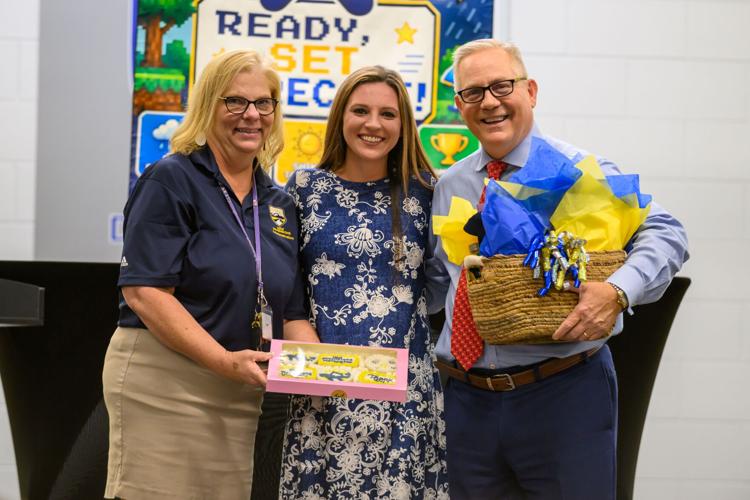
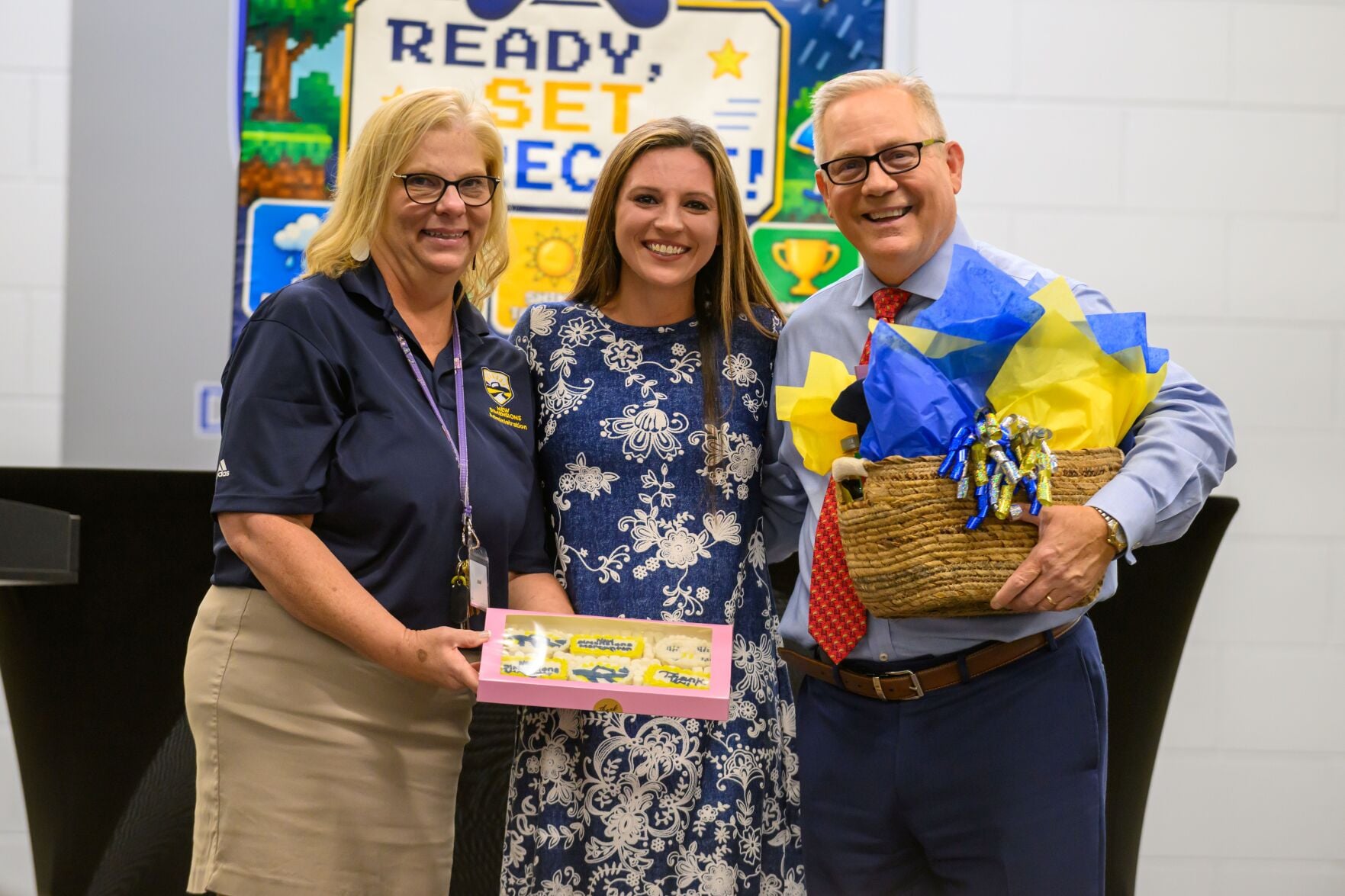
NDS Director Lisa Ervin (left) and MacKenzie Attaway present Al Conklin with a box of cookies and a basket of other items.
JACOB CHRISTOPHER / THE PAPER
“We do a whole unit of weather and energy on Earth,” said fifth grade science teacher MacKenzie Attaway. “It all just goes together.”
The classes watched Conklin’s morning forecast each day as a real-world application of their daily lessons on meteorology.
“They were so excited that the man that they were actually watching on TV was going to be at our school,” Attaway said.
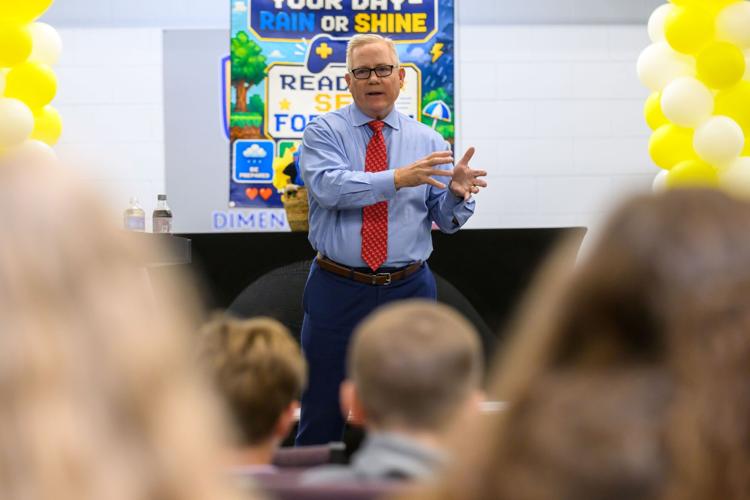
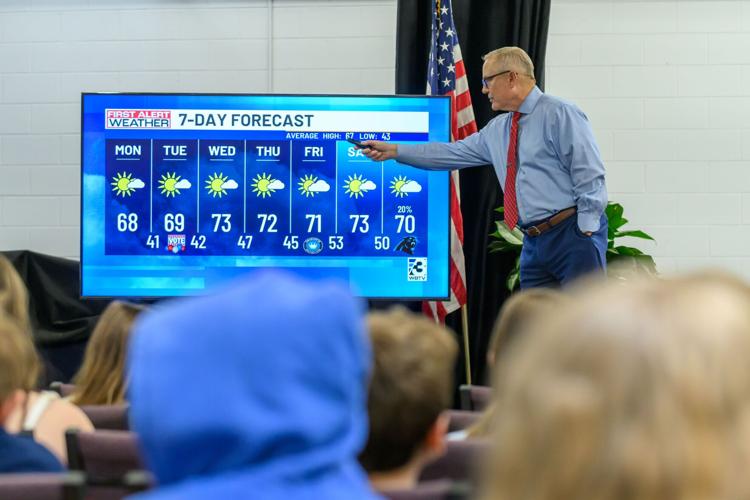
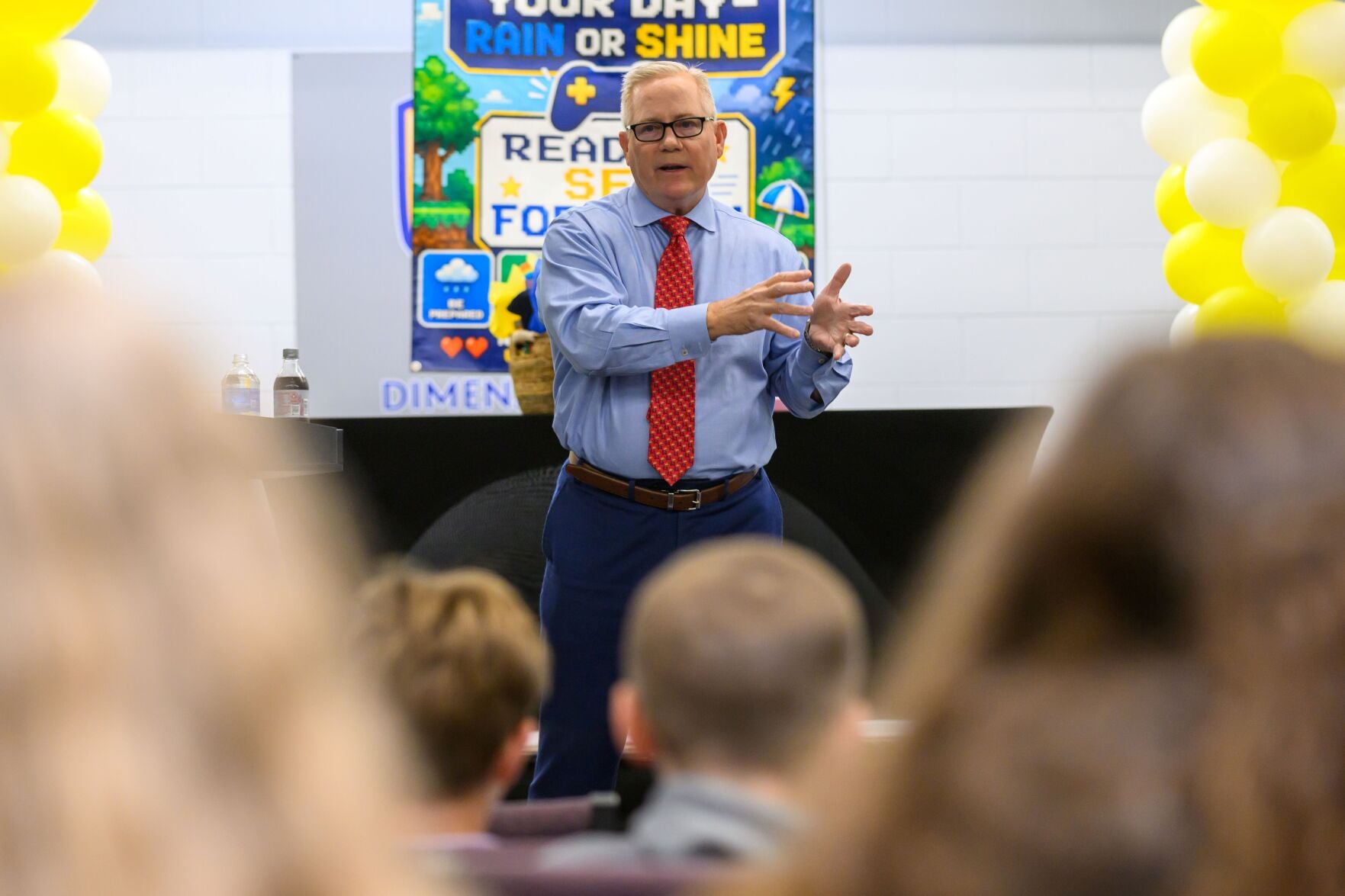
Conklin began with an explanation of what a meteorologist is and how the job works.
Al Conklin explains his role as a meteorologist.
JACOB CHRISTOPHER photos / THE PAPER
“We start with computer guidance,” he said. “It’s just that: guidance. It’s not gospel. … Only the Good Lord knows exactly what’s going to happen with the weather. This is never going to be 100% right.”
Meteorologists use all the tools at their disposal to make highly educated guesses, but, Conklin pointed out, they are still human.
“It doesn’t mean that we don’t put our best efforts forward,” Conklin told the dozens of children. “It just means that we looked at the guidance. We based it on that and our experience. The forecast just didn’t work out the way that we thought.”
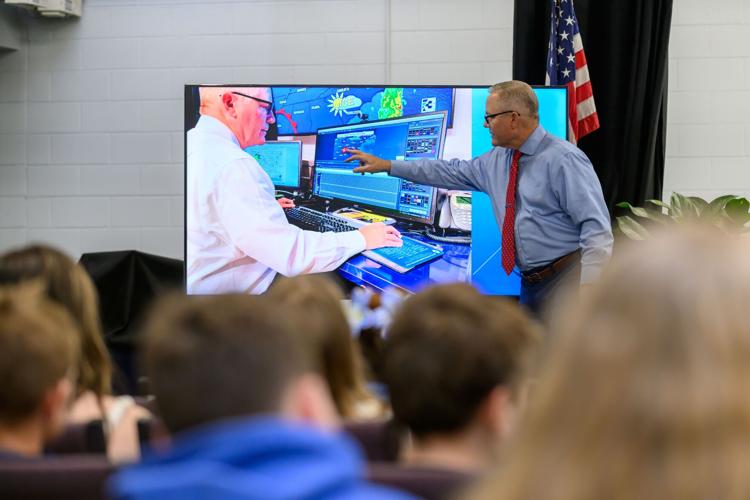
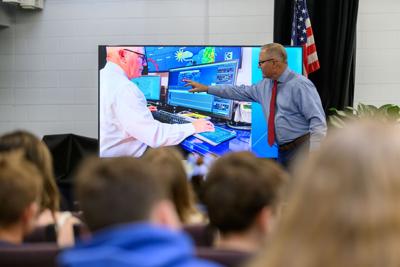
Conklin reviews a previous forecast layout to show how he compiles the information.
JACOB CHRISTOPHER / THE PAPER
The models use data gathered through a grid-like, global release of weather balloons with attached radiosondes — battery-powered equipment that measures atmospheric pressure, temperature, humidity, and wind data.
The balloons often drift with the wind, landing in farmers’ fields and the ocean. According to Conklin, if one is released from Tennessee, it likely ends up in North Carolina. If one is released from North Carolina, it likely ends up in the Atlantic.
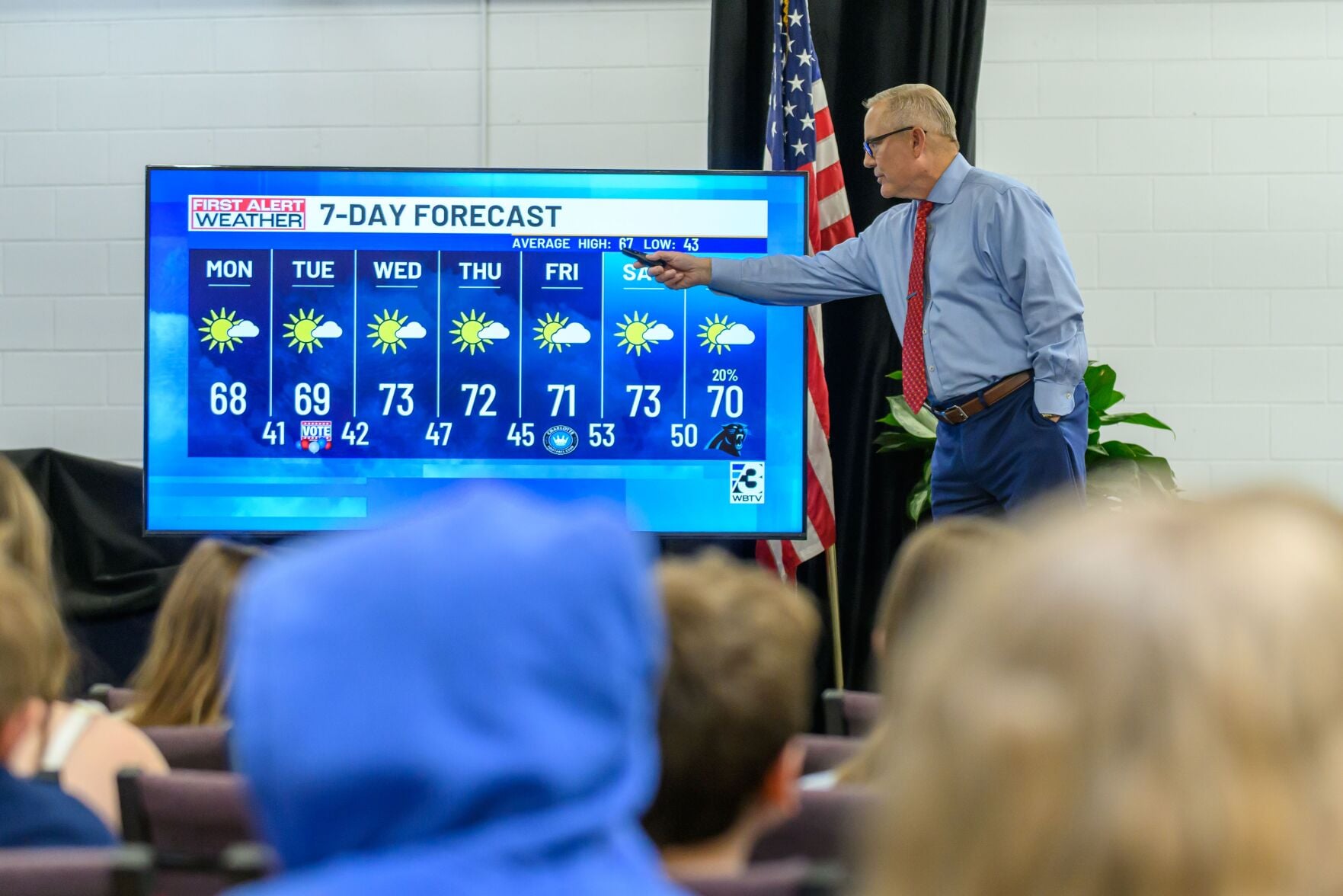
“This is one of the things I find exciting about the weather: It doesn’t know any political boundaries,” Conklin said, walking briskly across the stage.
“The weather doesn’t know anything about counties, or states, or countries. It just goes from here to here,” he continued, pointing to spots along a map of a global jet stream. “It goes and keeps cycling back around. It’s kind of interesting that weather never really stops; it’s continually going and reinventing itself.”
As Conklin worked down the list of meteorology tools and questions that classes sent over before his arrival, he asked the students what they knew.
Half the hands in the crowd shot up and students blurted out the answers, excited to show off their knowledge for the WBTV weatherman.
Keep it Clean. Please avoid obscene, vulgar, lewd,
racist or sexually-oriented language. PLEASE TURN OFF YOUR CAPS LOCK. Don't Threaten. Threats of harming another
person will not be tolerated. Be Truthful. Don't knowingly lie about anyone
or anything. Be Nice. No racism, sexism or any sort of -ism
that is degrading to another person. Be Proactive. Use the 'Report' link on
each comment to let us know of abusive posts. Share with Us. We'd love to hear eyewitness
accounts, the history behind an article.





















(0) comments
Welcome to the discussion.
Log In
Keep it Clean. Please avoid obscene, vulgar, lewd, racist or sexually-oriented language.
PLEASE TURN OFF YOUR CAPS LOCK.
Don't Threaten. Threats of harming another person will not be tolerated.
Be Truthful. Don't knowingly lie about anyone or anything.
Be Nice. No racism, sexism or any sort of -ism that is degrading to another person.
Be Proactive. Use the 'Report' link on each comment to let us know of abusive posts.
Share with Us. We'd love to hear eyewitness accounts, the history behind an article.