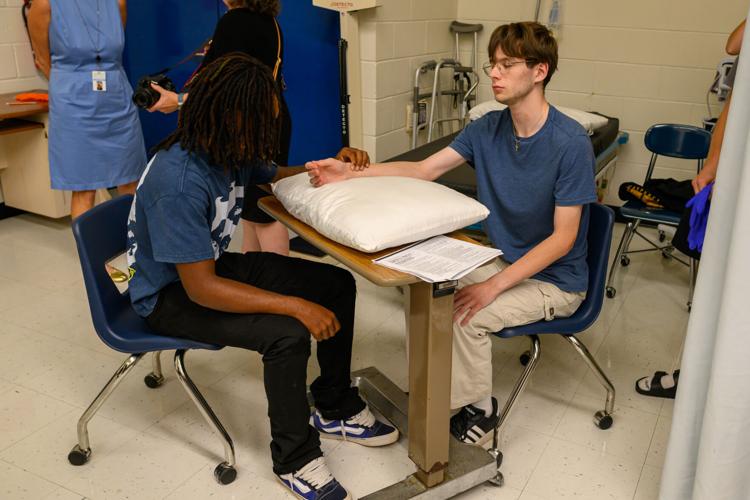
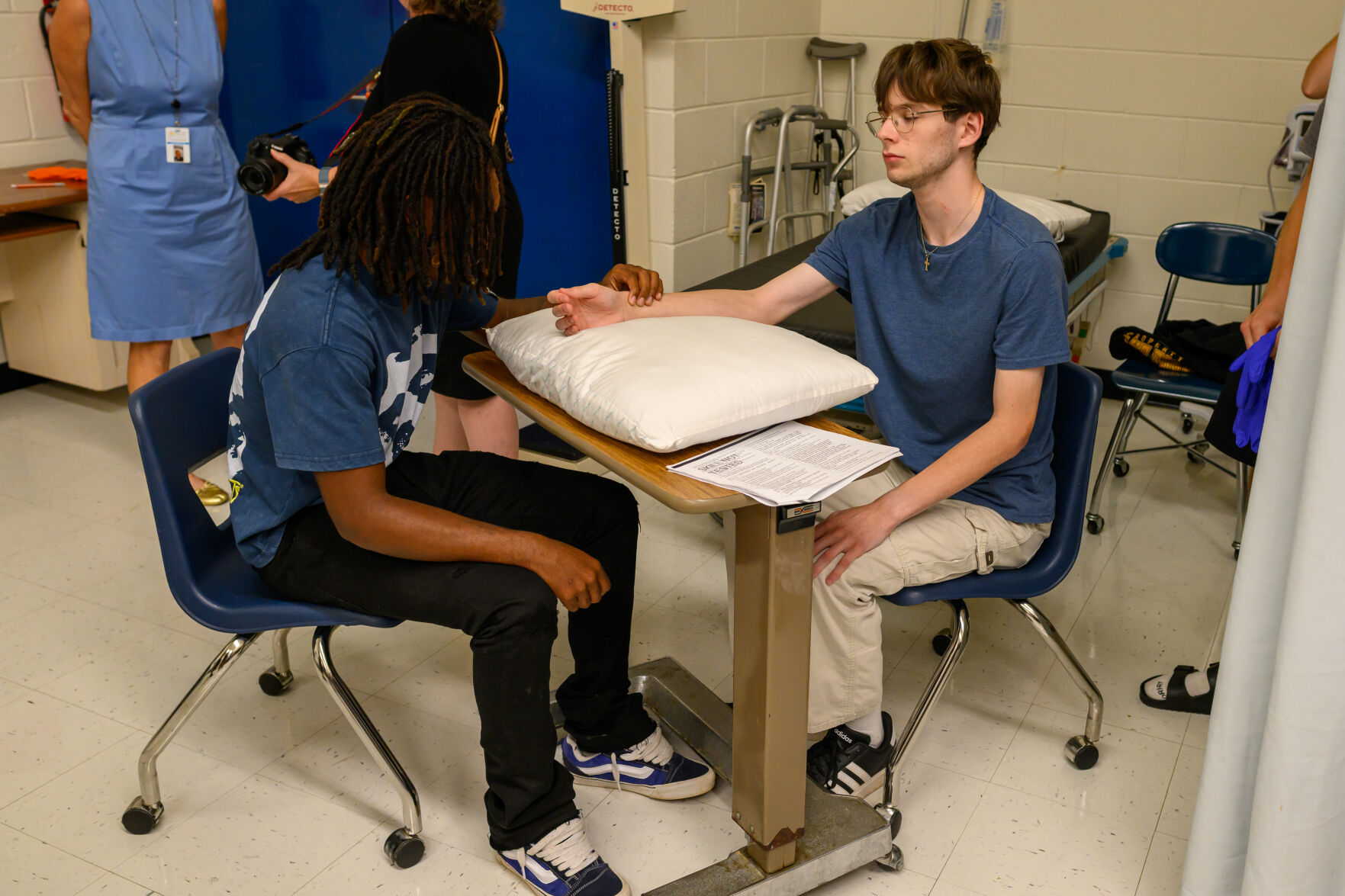
Nursing student Justice Dominguez checked classmate Riley Buchan’s pulse, demonstrating what they’d learned in September 2025. Nursing is one of the most popular CTE courses offered at Burke County high schools.
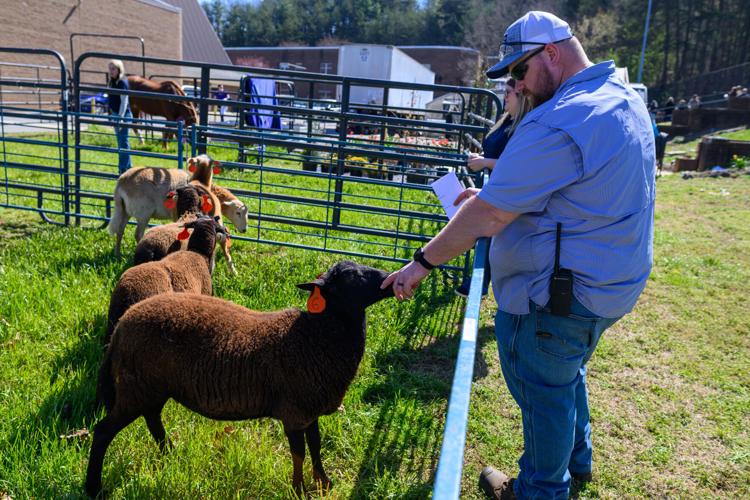
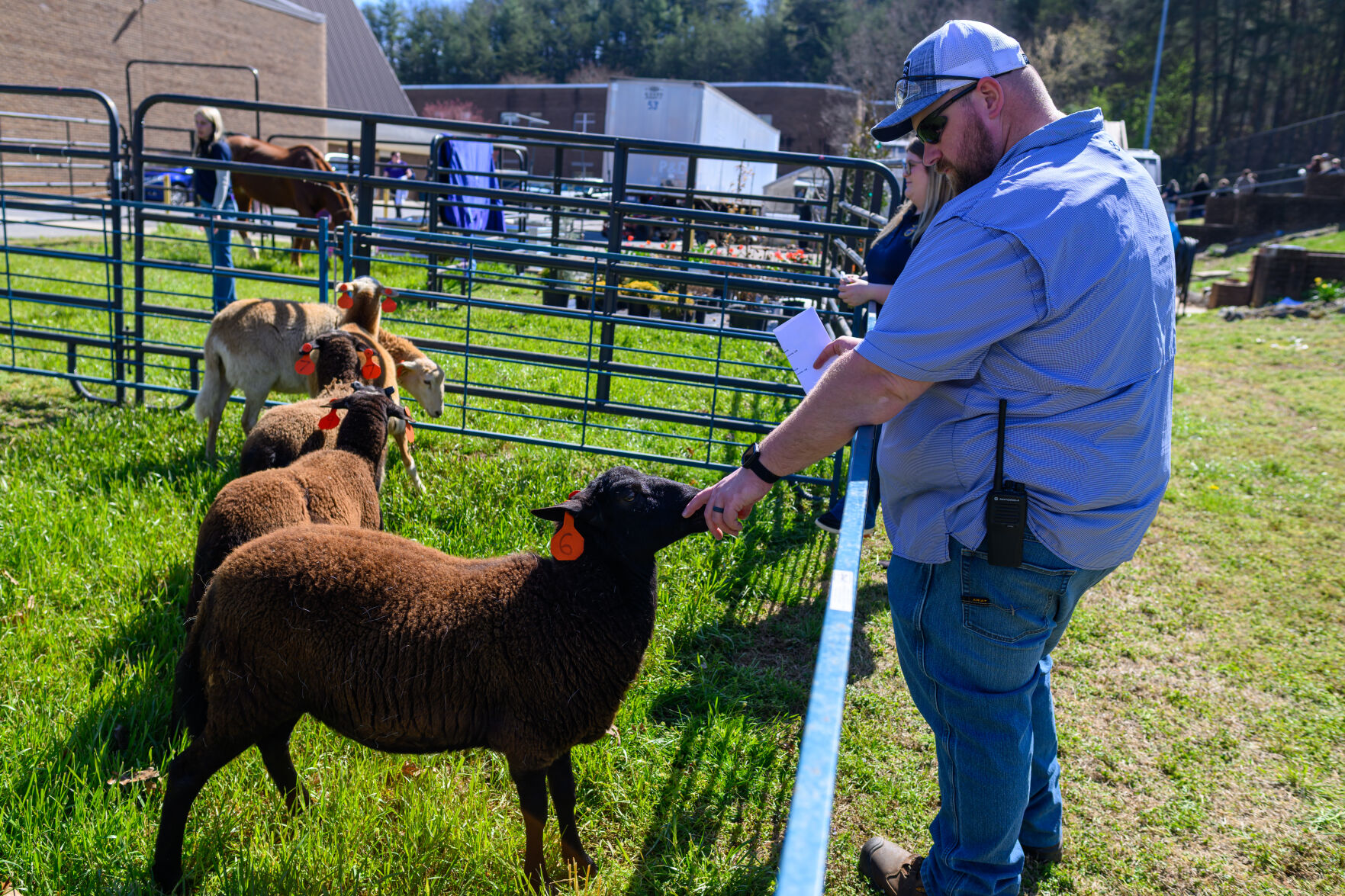
East Burke High School Agriculture teacher Daniel Sartin pets a sheep during Agriculture Day in March. Agriculture and the Future Farmers of America (FFA) are part of the CTE program. EBHS was nationally recognized earlier this school year for their FFA program.
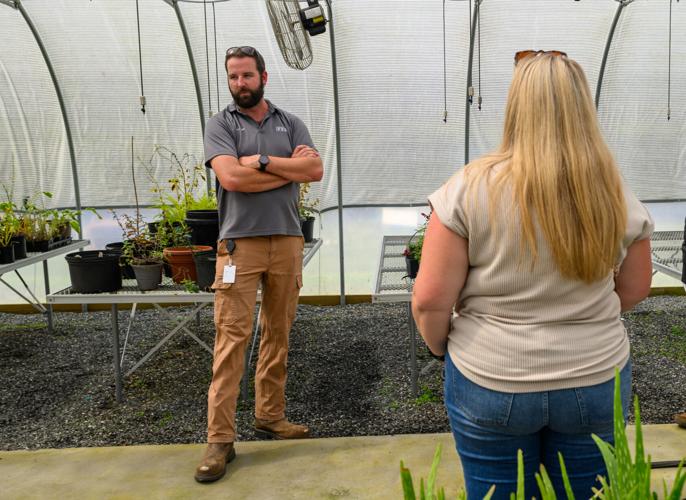
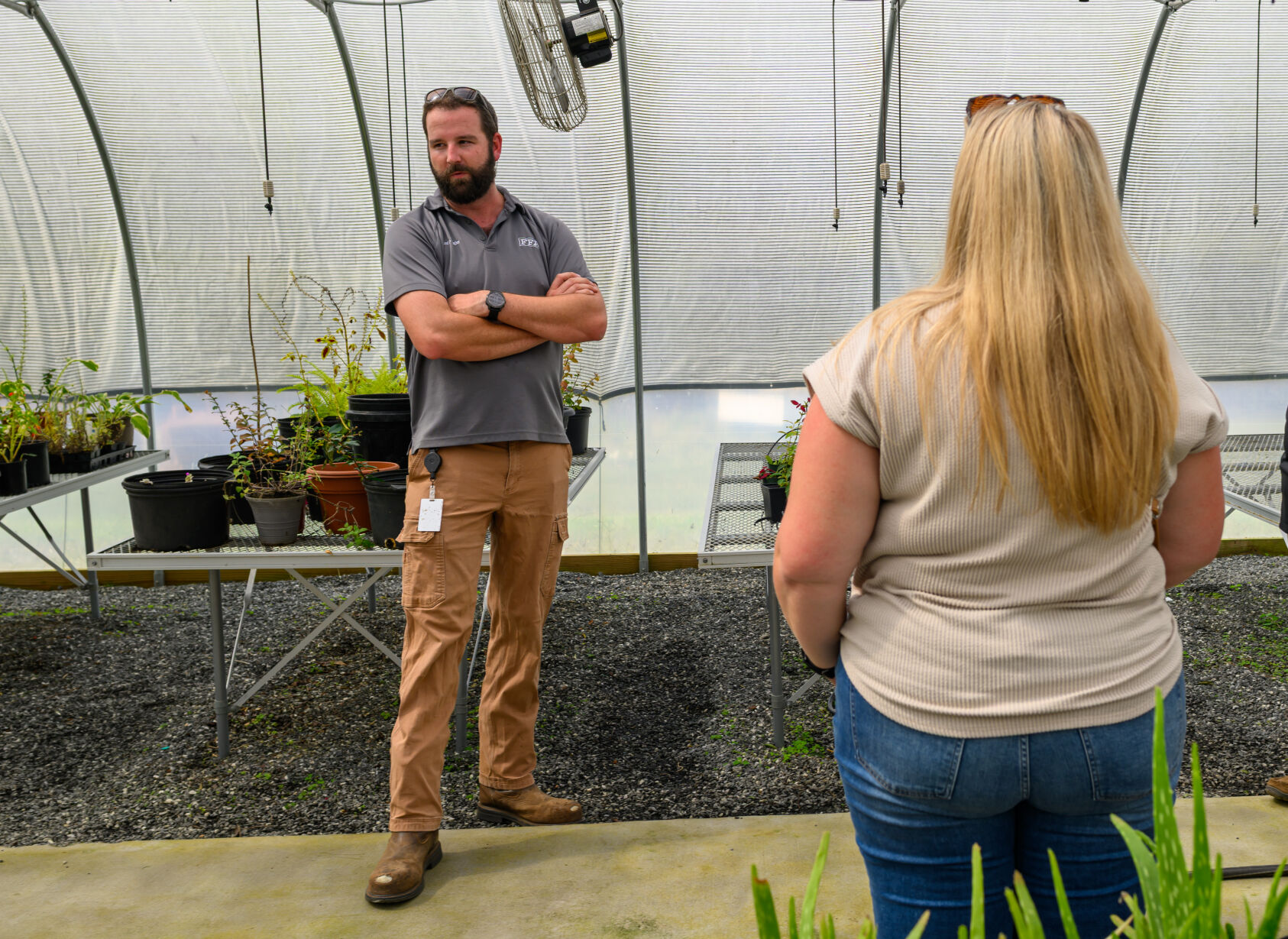
Freedom High School Agriculture teacher Dustin Haigler walked representatives of the Burke County Chamber of Commerce through his students’ greenhouse in September 2025.
Career and technical education funding in Burke County will decline for the fourth consecutive year, continuing a trend district officials say could strain workforce training programs in a county where nearly a quarter of graduates enter the workforce or military directly after high school.
Casey Rogers, director of career and technical education, told the Board of Education during its May 11 strategic planning session that CTE funding for the 2026-27 school year will be reduced by seven man-months.
Freedom High School Agriculture teacher Dustin Haigler walked representatives of the Burke County Chamber of Commerce through his students’ greenhouse in September 2025.
JACOB CHRISTOPHER / THE PAPER
The reduction affects the district’s allocation of “man-months,” the state’s measurement for staffing time. One full teaching position equals 10 man-months.
Based on the district’s current average teacher salary, a seven-month reduction would amount to roughly $39,000 less in CTE funding.
While a $39,000 reduction doesn’t seem large in the grand scheme of Burke County Public Schools finances, it does mean continuously constricting capabilities for educational pathways that lead directly to work-ready certifications.
Resignations and retirements at the end of this year are expected to reduce the teacher average pay since veteran teachers, who tend to bring home higher salaries, are leaving the workforce and being replaced by newer educators at lower salaries.
Since CTE isn’t funded at the county level, the decisions made by state and federal agencies carry more weight when handed down.
With the discussions surrounding teacher raises fluctuating in the General Assembly, the true hit won’t be certain until the next fiscal year.
CONTINUING A PATTERN
The reduction is part of a continued pattern that Rogers referred to, highlighting that in 2023, the district had 582 available man-months.
As of 2025-26, that number sat at 543, and the latest reduction will drop it to 536 — a monetary loss that would equate to nearly five teaching positions over the last few years, which the district has absorbed through attrition.
East Burke High School Agriculture teacher Daniel Sartin pets a sheep during Agriculture Day in March. Agriculture and the Future Farmers of America (FFA) are part of the CTE program. EBHS was nationally recognized earlier this school year for their FFA program.
JACOB CHRISTOPHER / THE PAPER
“There’s no carryover money,” Rogers explained. “Whatever you don’t spend, you lose. That’s the way it is. If you were $75,000 to the good and you said, ‘I would like to start another program next year,’ the money’s not carried over.”
While the district has avoided layoffs, the funding loss has cost schools like Hallyburton Academy CTE opportunities for its students.
In fact, making CTE courses available to Hallyburton students once again was a hot-button topic during school board and community discussions surrounding the relocation of the alternative school to Draughn High School.
BCPS Public Relations Officer Cheryl Shuffler confirmed that the seven-month reduction will also be absorbed through attrition.
Rogers said the district will avoid cutting existing courses by sharing teachers across schools and continuing its partnership with Western Piedmont Community College for nurse aide classes.
Because the state can adjust man-month allocations during the school year, Rogers said the district tries to leave itself some flexibility.
“Because the state often adds, and can also take away, months in the middle of the year, we can build in a few months as a cushion,” he said. “An uneven amount of man-months that can’t be used for a full-time 10-month position can be reverted to be used for materials and supplies.”
If months are added in the middle of the school year, as they usually are during February, CTE month, when the state assesses the teacher-to-student ratio, the district doesn’t increase its workforce with another teacher, Rogers said. There’s no guarantee the funding will be there in the coming fall.
CTE SUCCESSES AND CHALLENGES
Students enrolled in CTE often receive industry-recognized certifications and credentials, with Burke County sitting in the top six counties in the state for credential attainment at 86.87%.
Nursing student Justice Dominguez checked classmate Riley Buchan’s pulse, demonstrating what they’d learned in September 2025. Nursing is one of the most popular CTE courses offered at Burke County high schools.
JACOB CHRISTOPHER / THE PAPER
Burke is also seventh in the state for work-based learning, and the district has passed all audits when it came to course offerings, certifications and credentials, testing and accountability and other financial criteria.
Despite these successes, Board Chair Tiana Beachler questioned the school-to-work pipeline available locally.
“We’re going out and getting as much as we can,” Beachler said. “We’re doing our job. … You’ll hear, ‘Burke is a dying county. No one wants to work in Burke.’ The district is pumping them out credentialed and ready to go. Is industry coming and scooping them up in the most efficient way?”
Although board members pointed to the nursing pipeline through WPCC, and Swan said he has seen several CTE students working in local automotive shops, several acknowledged the district still faces challenges connecting students directly to local careers.
Rogers said one curriculum he would like to see is a law enforcement course. However, the current budget doesn’t allow for it, and age restrictions in law enforcement make the high school-to-workforce transition difficult to navigate.
Keep it Clean. Please avoid obscene, vulgar, lewd,
racist or sexually-oriented language. PLEASE TURN OFF YOUR CAPS LOCK. Don't Threaten. Threats of harming another
person will not be tolerated. Be Truthful. Don't knowingly lie about anyone
or anything. Be Nice. No racism, sexism or any sort of -ism
that is degrading to another person. Be Proactive. Use the 'Report' link on
each comment to let us know of abusive posts. Share with Us. We'd love to hear eyewitness
accounts, the history behind an article.

































(0) comments
Welcome to the discussion.
Log In
Keep it Clean. Please avoid obscene, vulgar, lewd, racist or sexually-oriented language.
PLEASE TURN OFF YOUR CAPS LOCK.
Don't Threaten. Threats of harming another person will not be tolerated.
Be Truthful. Don't knowingly lie about anyone or anything.
Be Nice. No racism, sexism or any sort of -ism that is degrading to another person.
Be Proactive. Use the 'Report' link on each comment to let us know of abusive posts.
Share with Us. We'd love to hear eyewitness accounts, the history behind an article.