


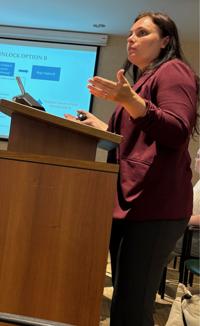
One of the first initiatives for Burke County’s inaugural Opioid Advisory Committee will be to provide those recovering from overdose a PORT in the storm.
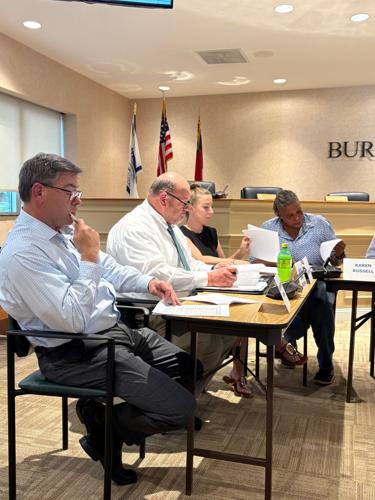
The committee, which met for the first time Tuesday afternoon, advised Opioid Settlement Coordinator Dr. Katie Samuels to design a model for a PORT – Post Overdose Response Team.
Burke’s PORT team could be embedded with the EMS and housed in the new base currently under construction near the intersection of South Sterling Street and Drexel Road.
PORT is a specialized program in which professionals follow up with overdose patients after emergency treatment and connect them to resources like counseling, medical services, and social support to prevent another incident in the days and weeks following an overdose.
That directive, along with drafting a model for a peer support navigator and continuing a successful naloxone distribution program, will be the next steps as the county begins to spend its opioid lawsuit settlement funds — more than $27 million disbursed incrementally between 2022 and 2038 (see related story).
“To have a PORT team in place to know the follow-up is coming is definitely needed,” said board member Karen Russell, an experienced peer-support counselor. “It would save a lot of lives, because a lot of time, if somebody ODs and nobody checks on them, the next day, they’ve done it again.”
Committee member Dr. Anthony Frank, chief medical officer of UNC Health Blue Ridge, agreed. “If we could build a more robust team that occurs when you dial 911 for these people, I think there’s a huge opportunity there,” Frank said.
The newly formed committee acted with a palpable sense of urgency Tuesday, setting its sights on having a plan in hand by the next meeting on July 15.
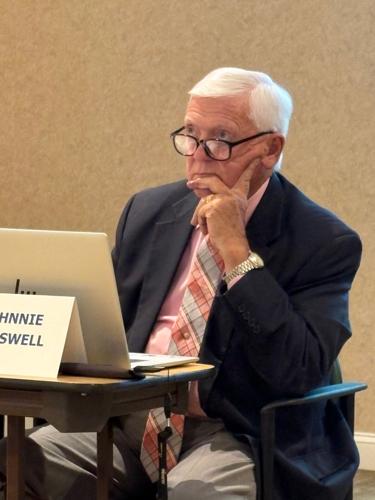
It comprises a diverse group made up of health care professionals like Dr. Frank, counselors with lived addiction experience like Russell and Jerry Duckworth, law enforcement officers like Sheriff Banks Hinceman, and community stakeholders like Western Piedmont Community College President Dr. Joel Welch, among others.
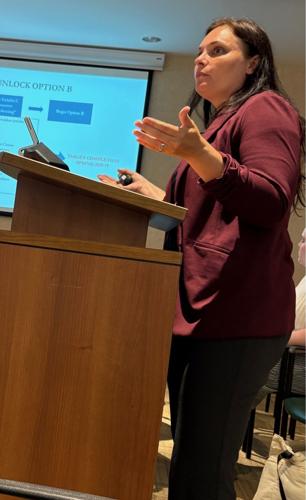
“There was a lot of engagement with the committee members, and they already have a lot of ideas,” Samuels said afterward. “I think it’s going to be really good and productive. And it’s nice to be able to come away with some action items so that when we meet again, we can move forward with some of these strategies that we can start implementing.”
Samuel said the county’s first steps should be addressing three key concerns: reducing the onset of new substance use; evaluating pathways to recovery; and reducing fatalities.
All the items the committee approved Tuesday addressed at least one of those missions.
Peer navigators help overdose patients negotiate the complex behavioral health system. The county currently does not have one, and committee members agreed it would be a good idea to pursue the option.
With a peer navigator in place, OD patients typically go directly from a hospital emergency department or treatment by a community paramedicine team to a post-overdose care provider without having to be alone.
The industry terminology for such a transition is a “warm handoff.”
The members also agreed to continue naloxone distribution.
Under the leadership of HARBOUR (Helping Achieve Recovery in Burke through Opioid Use Reduction) Director Brandi Greer, Burke has made measurable strides toward reducing overdose fatalities.
County Manager Brian Epley pointed out the county was ranked 90th in the state in 2021 in fatalities per capita with 67.4 per 100,000 residents.
But the four-month overdose fatality rate has fallen sharply, from 4.5 fatalities per month in April 2022, to just .5 in November 2024. It has since rebounded to two as of May 2025, but the graph still shows a noticeable and consistent decline.
The reduction could well be due to the increased naloxone distribution financed by settlement dollars. “I think that’s a reasonable assumption,” Epley concluded.
Tuesday’s meeting was initially supposed to serve primarily as an organizational session, and the commission did do some housekeeping, like naming Burke Board of Commissioners chair Jeff Brittain to chair the opioid committee as well. Frank volunteered to serve as vice chair, and Samuels will act as secretary.
“I think this has been a good start to get us moving quickly,” Brittain said in his closing remarks.
Following July’s meeting, the board will meet every other month on the third Tuesday beginning at 3:30 p.m. in the commission boardroom in the county services building at 110 N. Green St. in Morganton.





















(0) comments
Welcome to the discussion.
Log In
Keep it Clean. Please avoid obscene, vulgar, lewd, racist or sexually-oriented language.
PLEASE TURN OFF YOUR CAPS LOCK.
Don't Threaten. Threats of harming another person will not be tolerated.
Be Truthful. Don't knowingly lie about anyone or anything.
Be Nice. No racism, sexism or any sort of -ism that is degrading to another person.
Be Proactive. Use the 'Report' link on each comment to let us know of abusive posts.
Share with Us. We'd love to hear eyewitness accounts, the history behind an article.