

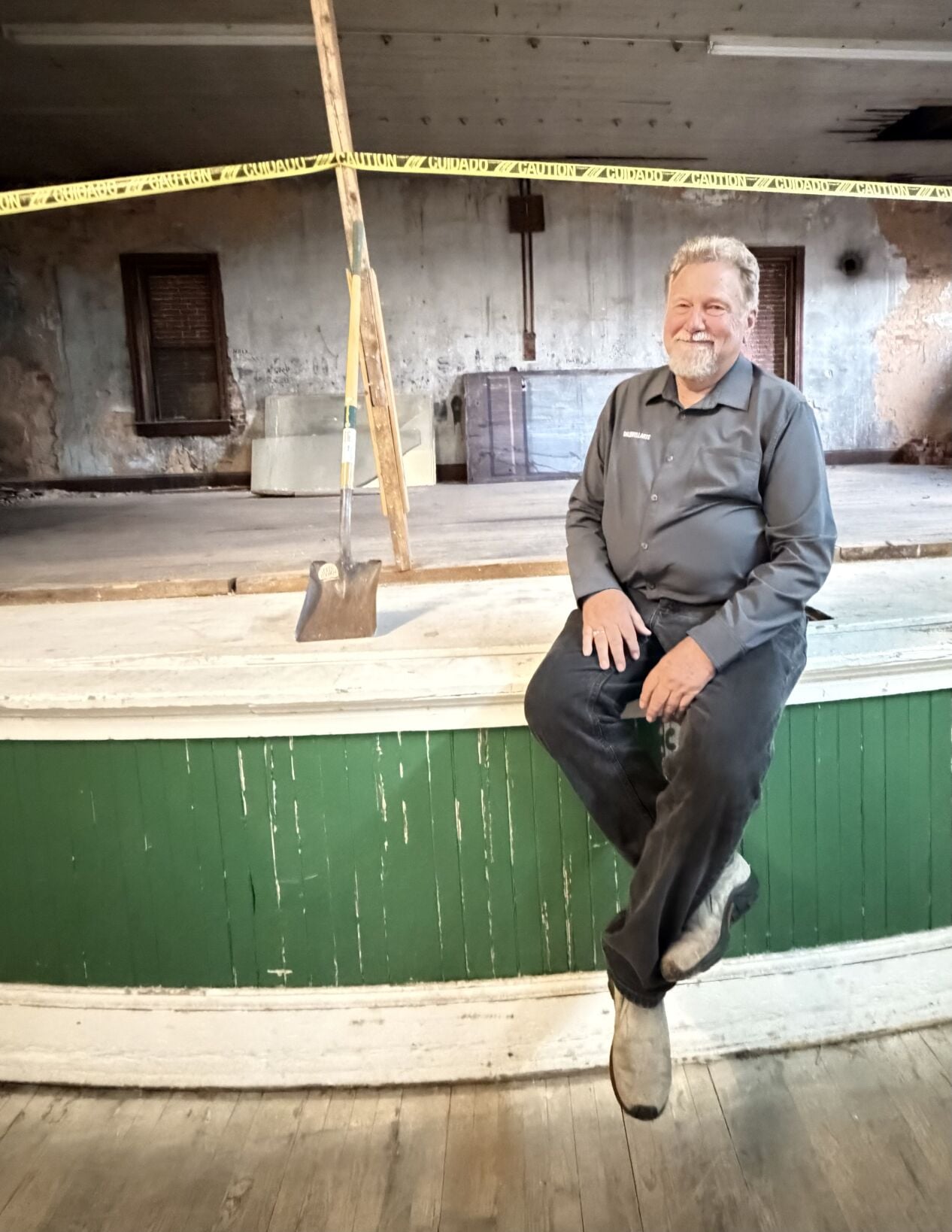

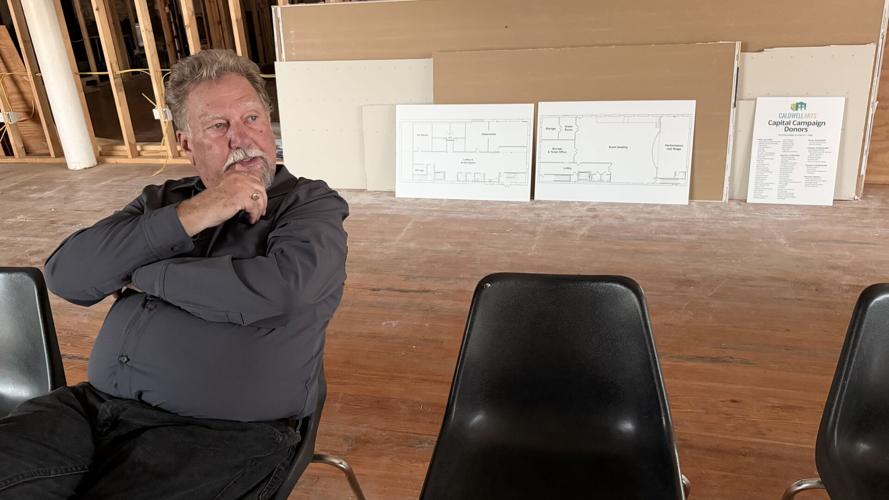
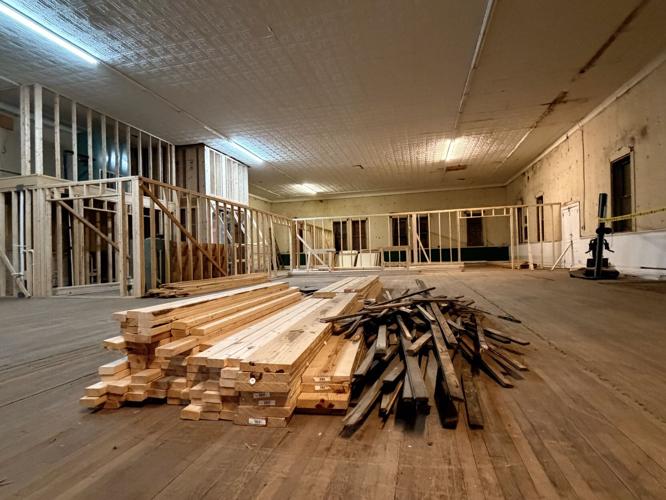
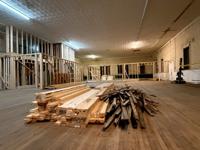
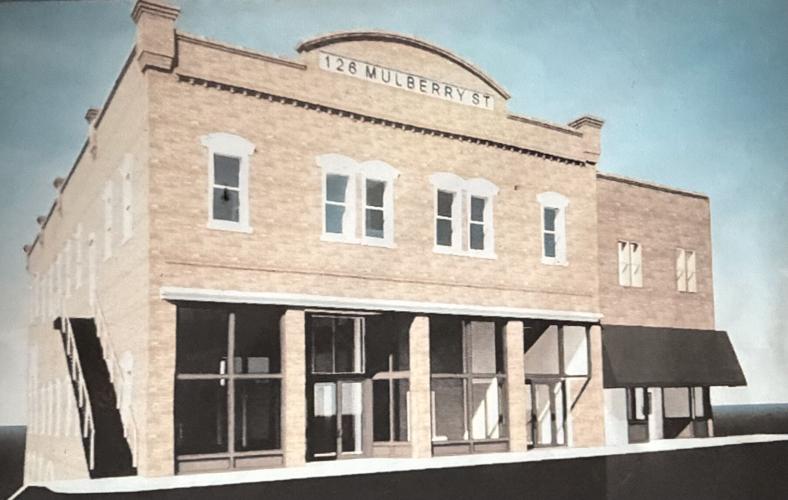

Standing inside the unfinished building at 126 Mulberry St. NW, Caldwell Arts Council Executive Director Zan Thompson can see well beyond the exposed framing, construction materials, and scarred wooden floors.
He sees a spacious shop filled with pottery, paintings, textiles, jewelry, and other work by local artists. He sees galleries large enough to attract statewide exhibitions, classrooms for visual, musical, culinary, and performing arts, and a public meeting room that other community organizations can use.
On the top floor, where crowds once watched performances in the Henkel Opera House and later laced up their skates, he sees an intimate theater coming to life again.
But realizing that vision will require considerably more money, along with time and patience.
The Arts Council bought the building for $635,000 in May 2024, according to property records and the council’s campaign materials. Those materials put the total project cost at $2.5 million, including the purchase. Thompson said council leaders had been told the renovation would cost about $1 million, but he now expects it to cost closer to $3.5 million.
“It is so much larger than what we had, and the cost to fix it — somebody told them, ‘Oh, it’ll only take you a million bucks to fix it,’” Thompson said. “It’s more like three and a half million to fix this thing.”
Thompson, who became executive director April 1, said work had proceeded in increments as donations became available. One of his first decisions was to pause construction until the council can complete the first phase in a sustained push.
“I talked to the contractor (Brushy Mountain Builders), and I said, ‘Look, let’s agree we’re going to hold work until we have enough money to finish phase one,’” he said.
Thompson estimates the council needs $1.5 million to $2 million to finish that phase, which centers on the main floor and mezzanine. No date has been set for construction to resume.
Crews have installed water and sewer lines, started work on an elevator, and framed and wired portions of the main floor. Finishing the phase will require building-wide sprinkler and climate-control systems and a second code-compliant staircase.
The street-level plans call for an artisan gift shop, exhibition hall, council offices, a boardroom that could serve other community groups, and a small kitchen. Part of the floor would become a City of Lenoir welcome center.
Later phases would add basement classrooms, soundproof rooms for music instruction, another gallery, storage, and possible studio or rental space.
The top floor contains the feature that helped convince Arts Council leaders of the building’s potential: the former Henkel Opera House.
The stage remains, along with signatures and dates left on a backstage wall over many decades. Thompson wants to preserve that wall, refinish the wooden floor, and add dressing rooms and ticketing space.
The room could host plays, concerts, school productions, classes, lectures, and receptions. Thompson envisions seating about 100 to 150 people, creating a more intimate space than Caldwell County’s larger venues. Some had floated the idea of making the stage wider, but the decision was made not to make that change.
“We need those areas for staging and directing, so we’re going to leave the stage size just as it is,” he said.
A BUILDING WITH MANY LIVES
The building began as a carriage, harness, and saddle business in the early 1900s, with horses kept in basement stables and the opera house upstairs. When performances were not scheduled, benches were stacked on the stage, and the hall became a roller-skating rink.
The building later became an automobile showroom and repair facility before W.E. Shaw Furniture Co. made it a showroom and warehouse.
A previous owner started renovations for an event venue but did not finish the project, later selling the property to the Arts Council and financing the purchase.
Thompson said he might have warned that the undertaking was larger than the organization realized had he been advising the council at the time. But he understands the appeal: The building is nearly four times the size of the council’s former home and offers room for programs that could never fit there.
The council sold its College Avenue property because of rising maintenance costs and accessibility limitations. The organization’s temporary home is two rented offices near the Mulberry Street building, with no gallery or classroom space.
A COUNTYWIDE ROLE
When Thompson arrived, programming had slowed, and some artists believed the council had closed. It has since refreshed its website, resumed regular communications, and begun rebuilding its board.
“You can’t be an Arts Council and not hold events,” he said.
Thompson also is pressing the organization to serve communities throughout Caldwell County, not only Lenoir. The council expects to continue using classroom space at The HUB Station in Hudson after the Mulberry Street center opens.
“We are the Caldwell Arts Council, not the Lenoir Arts Council,” he said.
He wants to rebuild relationships with municipal governments that once contributed annually. He also sees the center as a place to connect artists and expand arts education, teaching, and sales opportunities.
Thompson cited research estimating that nonprofit arts and culture activity generates more than $4 million a year in Caldwell County. Visitors to exhibitions, festivals, and performances also spend money at restaurants, hotels, and other businesses.
Arts and culture help determine whether communities can attract and retain residents, particularly younger people, Thompson said.
“Do you have music? Do you have theater? Do you have artists? Do you have galleries?” he said. “Because if you don’t have some of those elements, especially the younger generation, they’re going to the next town that does.”
For now, those plans exist beside exposed pipes, unfinished walls, and construction dust. Thompson spends much of his time pursuing grants and donations to keep the council operating and restart the renovation.
The task is daunting, he said, but so is the opportunity: to restore a building that once gathered residents for theater, music, skating, automobiles, and commerce, and make it a gathering place again.
The former theater helps explain why Arts Council leaders took on such a difficult project, Thompson said.
“This is what I think excited them in the beginning,” he said. “We’ve got to buy this history.”














(0) comments
Welcome to the discussion.
Log In
Keep it Clean. Please avoid obscene, vulgar, lewd, racist or sexually-oriented language.
PLEASE TURN OFF YOUR CAPS LOCK.
Don't Threaten. Threats of harming another person will not be tolerated.
Be Truthful. Don't knowingly lie about anyone or anything.
Be Nice. No racism, sexism or any sort of -ism that is degrading to another person.
Be Proactive. Use the 'Report' link on each comment to let us know of abusive posts.
Share with Us. We'd love to hear eyewitness accounts, the history behind an article.