

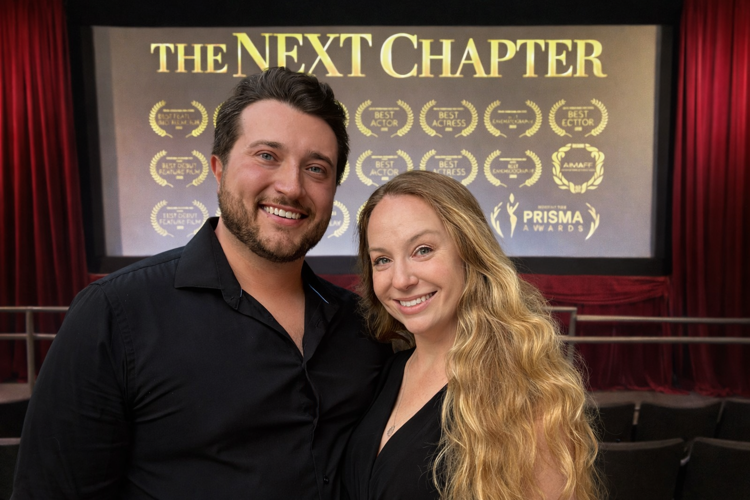
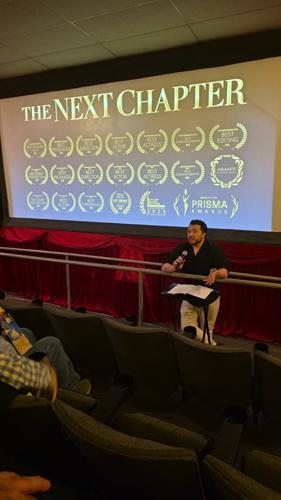

On March 1, the lights dimmed inside Newton’s New State Cinema for something rarer than a typical premiere: a film made here, by people from here, returning home.
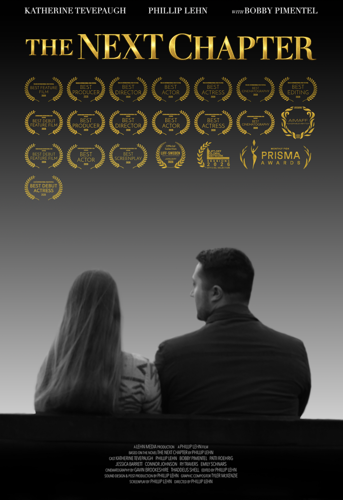
“The Next Chapter,” written, directed, and starring Burke County native Phillip Lehn, debuted before a crowd of cast, crew, and community who helped bring the film to life.
Lehn first drew attention with “The Sessions” in 2019, filmed in Morganton and later distributed on Amazon Prime Video. This latest project marks a step forward. Adapted from his own novel, the nearly two-and-a-half-hour film was written, shot, and completed in less than five months — a fast, disciplined turnaround for an independent production.
For the premiere, theater’s lobby filled with a cross-section of the community: lead actors and first-time performers, business owners who opened their storefronts as locations, and families who lent their homes.
The setting reinforced the moment. The New State Cinema was once the historic State Cinema and has been carefully restored, blending its original character with modern updates. Owner Alan Jackson has made a point to showcase independent films alongside major releases, giving local filmmakers a rare opportunity to see their work on a full theater screen.
Before the lights went down, Lehn stepped forward to address the audience. His remarks focused less on promotion and more on process. He spoke about returning to filmmaking after nearly six years away, and how “The Next Chapter” grew first as a novel before becoming a film.
He credited several key collaborators. Julie Church, a longtime mentor, helped shape both his craft and confidence. Bobby Pimentel, who directed Lehn in “The Sessions,” returned this time in front of the camera. Cinematographers Thaddeus Shell and Gavin Brookshire were recognized for translating the story visually, with Brookshire balancing production work while still a student at Western Piedmont Community College.
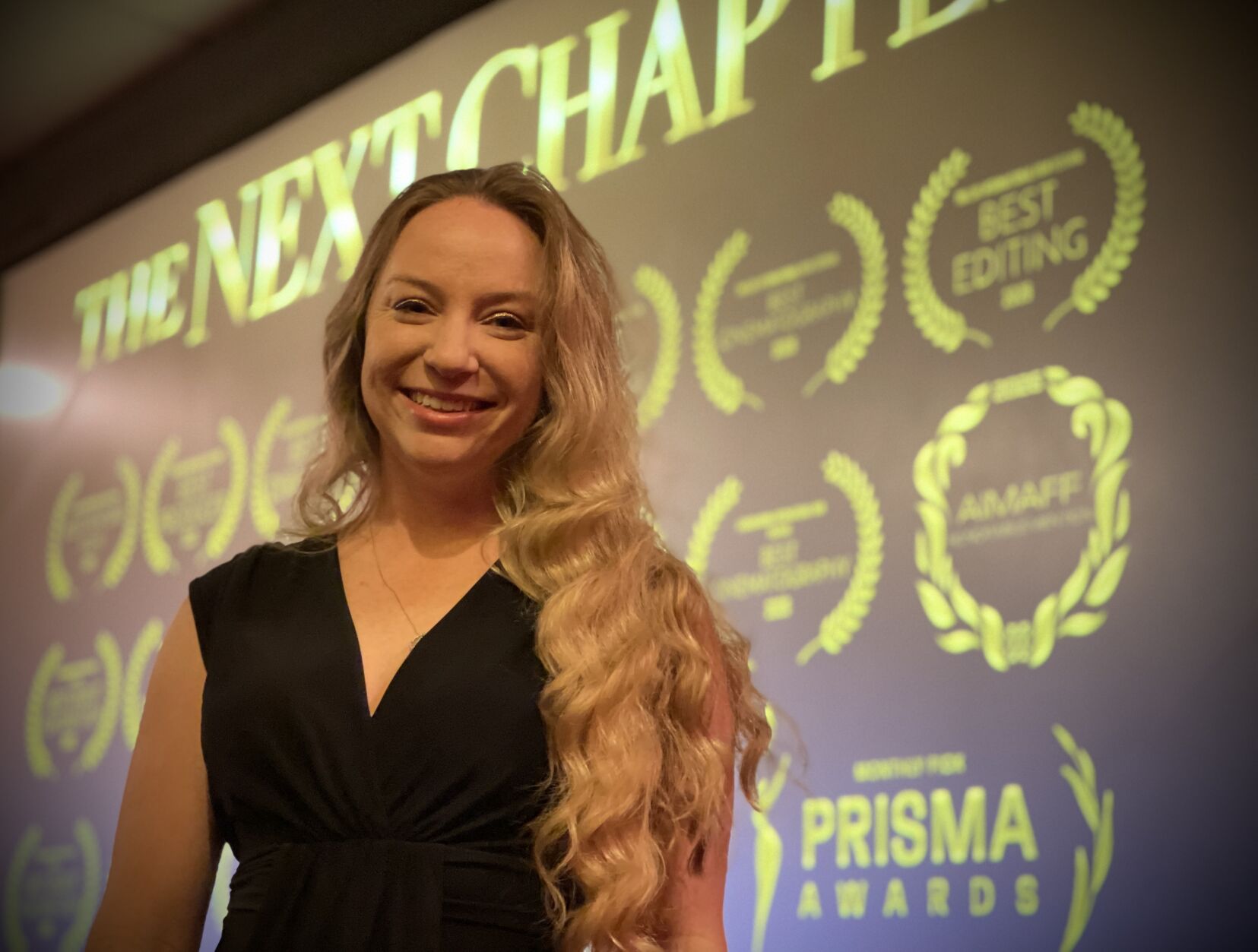
Lehn also highlighted lead actress Katherine Tevepaugh, who had read the manuscript early on and connected with the material before the film was ever planned. Cast without prior acting experience, she carries much of the film’s emotional weight — a performance that has already earned multiple international awards.
The film avoids spectacle, focusing instead on grief, regret and the difficulty of moving forward. It builds deliberately, allowing its characters to sit in those emotions before turning toward something steadier. By the final act, what begins as a heavy drama resolves into something more hopeful — an earned sense of reconciliation rather than an easy conclusion.
When the credits rolled, the applause came quickly and held.
Lehn returned to the front and invited the cast and crew to stand. Then he asked those who had offered homes and businesses as filming locations to identify themselves.
Filming locations in Burke County included downtown Morganton, McGalliard Falls, Thornwell Books, Morganton Community House, Burke United Christian Ministries, and VanNoppen Marketing.
Finally, he invited family, friends, and supporters to stand. In that moment, the distinctions between roles faded. Whether someone had acted, worked behind the camera, or simply supported the effort, they shared in the result.
A Q&A followed, with questions ranging from technical details to Lehn’s decision to return to filmmaking. His answers were straightforward and reflective, mirroring the tone of the film itself.
Behind the scenes, the production was often as stripped down as it was ambitious. Some days, the working crew consisted of just three people. In certain scenes, Lehn handled audio himself while acting, holding a recorder just out of frame. It was filmmaking built on resourcefulness rather than scale.
Despite those limitations, the film has already gained traction on the festival circuit. It has earned multiple international awards, including Best Feature, Best Director and acting honors for both Lehn and Tevepaugh. The strategy, Lehn explained, has been deliberate by building recognition through smaller festivals before entering larger competitions.
For Tevepaugh, the recognition is especially notable. With no prior acting background, her performance has earned multiple awards, including Best Actress and Best Debut Actress, marking a rare entry into the field at this level.
There are also full-circle moments within the production. Pimentel, once Lehn’s director, now appears onscreen in a key role, bringing both experience and mentorship to the set. Patti Roehrig reprises her role as Lehn’s mother, a part she also played in “The Sessions,” linking the two films across time.
As the event concluded, the theater did not empty quickly. Conversations lingered. Photos were taken beneath the marquee. The atmosphere felt less like an industry event and more like a community milestone.
In an era when much of filmmaking happens far from where audiences live, “The Next Chapter” stands as a reminder of what can be built locally with limited resources, but strong commitment.
The film will continue its run on the festival circuit, with larger showcases still ahead. More recognition may follow.
But its most meaningful screening may have already taken place — inside a restored theater, filled with the people who made it possible.





















(0) comments
Welcome to the discussion.
Log In
Keep it Clean. Please avoid obscene, vulgar, lewd, racist or sexually-oriented language.
PLEASE TURN OFF YOUR CAPS LOCK.
Don't Threaten. Threats of harming another person will not be tolerated.
Be Truthful. Don't knowingly lie about anyone or anything.
Be Nice. No racism, sexism or any sort of -ism that is degrading to another person.
Be Proactive. Use the 'Report' link on each comment to let us know of abusive posts.
Share with Us. We'd love to hear eyewitness accounts, the history behind an article.