When the Burke County Opioid Advisory Committee formed last year, they had a huge undertaking ahead of them: the utilization of more than $24 million in settlement funding to heal a county of years of opioid abuse.
On May 19, the committee met at Western Piedmont Community College to present their first year of progress during the Burke County Annual Recovery Summit, inviting the community for a day full of presentations, breakout sessions, and future-forward brainstorming.
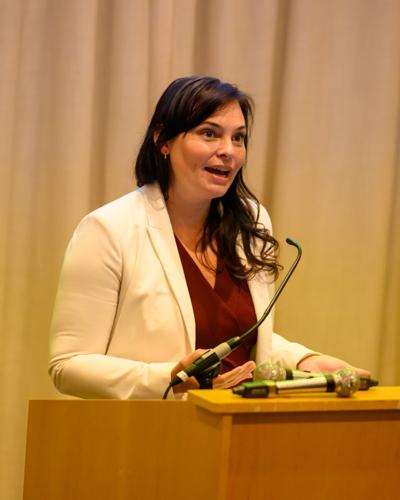
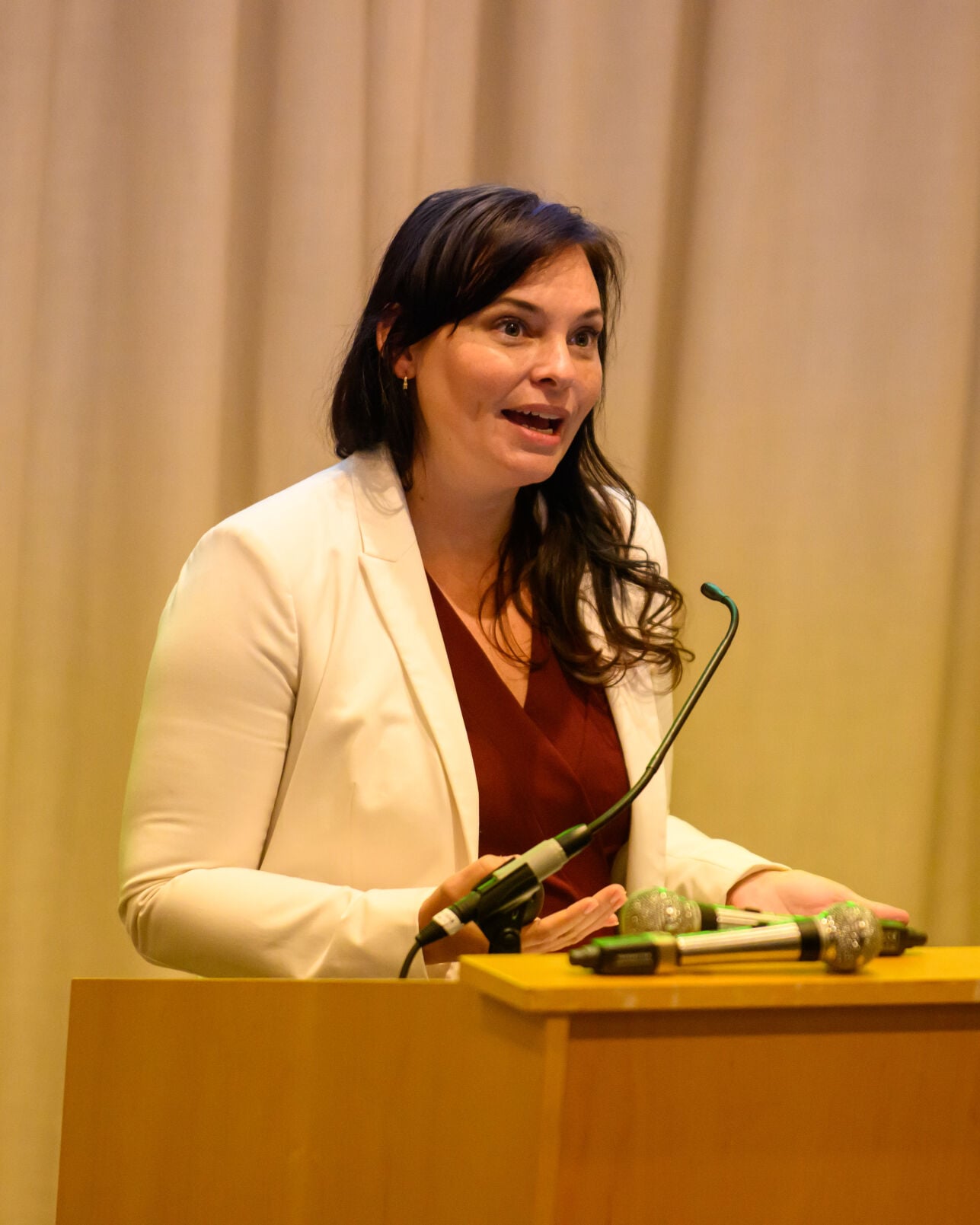
Dr. Katie Samuels reviews the Burke County Opioid Advisory Committee’s progress since they were established.
JACOB CHRISTOPHER / THE PAPER
“What I’m gonna do next,” said Burke County Opioid Settlement Coordinator Dr. Katie Samuels, “is put all these notes together and send your recommendations to our opioid advisory committee so we can look at what we can get going over the next year.”
Until this point, the committee has focused on resource and connection building, developing a Post Overdose Response Team and providing grants for local agencies to move forward with treatment and peer support programs.
With approximately $3.32 million of the $9.53 million received, as of March, already allocated to 12 different objectives and agencies, the committee is looking for the next wave of organizations and community stakeholders to invest in.
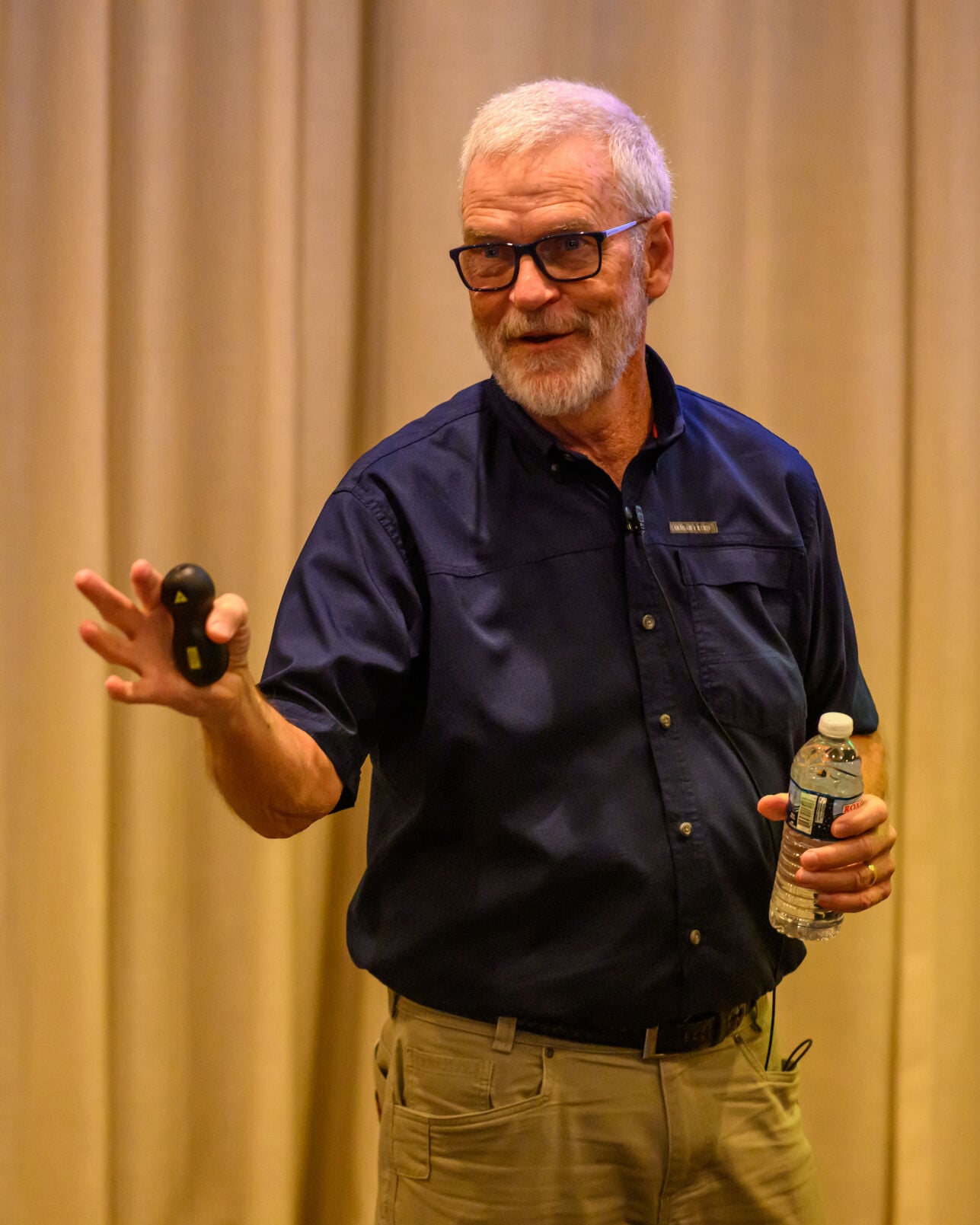
Although the county’s panel laid out a roadmap of where they’ve been in the past year, keynote speaker Dr. Don Teater drew the largest crowd as he discussed the causes of opioid addiction.
THE KEYNOTE SPEAKER
According to Teater, the severity of pain is rooted in the emotional state of the individual when incurring the injury or disease. A negative emotional state leads to increased suffering from pain, meaning the worse an individual’s world view, the worse the pain feels.
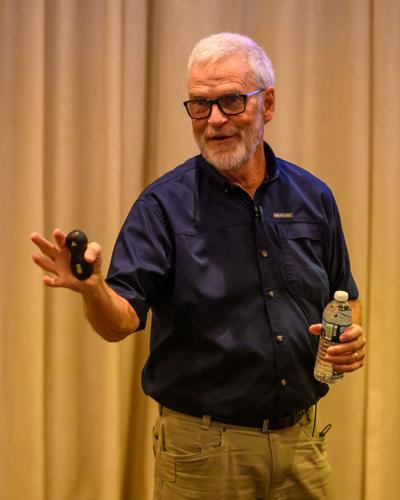
Dr. Don Teater explains what leads to an addiction to opioids.
JACOB CHRISTOPHER photos /
THE PAPER
Teater said the people most susceptible to opioid abuse include those with acute or chronic stress; depression; troubled childhoods; a genetic predisposition to addiction; living in poverty; a preexisting substance use disorder, including smoking; and historical or generational trauma, such as Native Americans or other oppressed groups.
Opioids interact with human bodies at a biological level, adhering to opioid receptors and prompting the production of dopamine and endorphins.
Dopamine is a key to human survival and reproduction and is produced when people eat or have sex. However, the brain responds with the same chemical to alcohol, nicotine, gambling, opioids, and other illicit drugs.
Endorphins are the steppingstones to dopamine production, decreasing pain, depression, and anxiety, while increasing confidence, reward, motivation, and warm-liking, the name for enjoying the warm feeling of connection — similar to the sensation of a hot shower on a cold morning.
Opioids stimulate them all, in the form of one tiny dose.
“These are dangerous medications and that first exposure can really be problematic for some people,” Teater said to an audience of peer support specialists, nurses, current and former county commissioners, and other community stakeholders.
Teater gave an example of the average, everyday person, who sprains their ankle at work, gets prescribed Percocets, and develops an addiction to the opioid inside them.
“What that Percocet did is bring them up to where many of us are all the time,” Teater said. “It made them feel normal. But they had never felt that before. … They keep taking it. Then, they try to come off of it. Those feelings come back. Sometimes, even worse, and it gets really hard for them to come off.”
Because of the chemical production induced by opioid use, Teater argued that opioid addiction is the hardest to treat successfully without medication, but the easiest with it.
He specifically recommended the use of buprenorphine, citing studies that the prescription outperforms detox and abstinence, the most common practice in addiction rehabilitation.
Teater explained that, while methadone also works, it has side effects that can be dangerous, especially when mixed with other medicines in emergency situations.
Furthermore, the doctor said, buprenorphine can be delivered at lower milligrams, tolerance doesn’t develop, it has a safer effect on the respiratory system, and it acts as an antidepressant.
BREAKOUT SESSIONS
A few hours after Teater’s lecture on the roots of addiction, the audience and several facilitators broke into sessions to discuss what the community wanted to see from the county going forward.
Sessions focused on recovery housing, prevention, faith community engagement, family impact & support needs, and peer support. After they ended, the facilitators came together to do a report-out for the amalgamated audience.
While the Faith Community Engagement group discussed how they could be more involved in the community and work together more consistently, the Recovery Housing session looked for more resources.
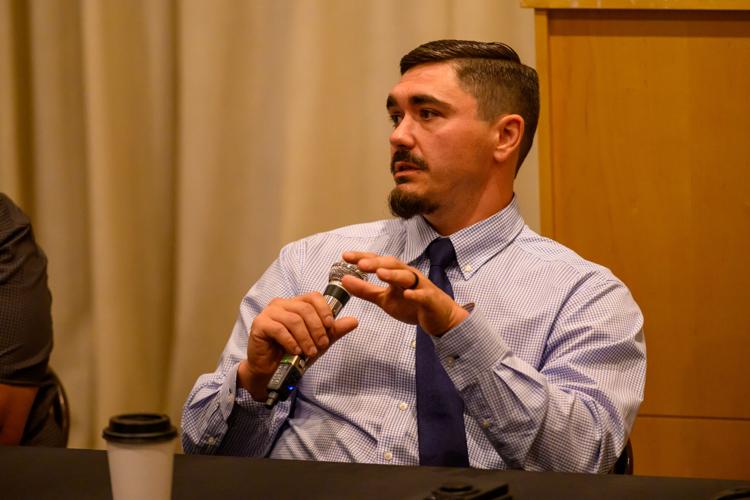
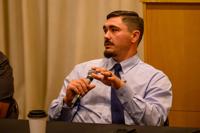
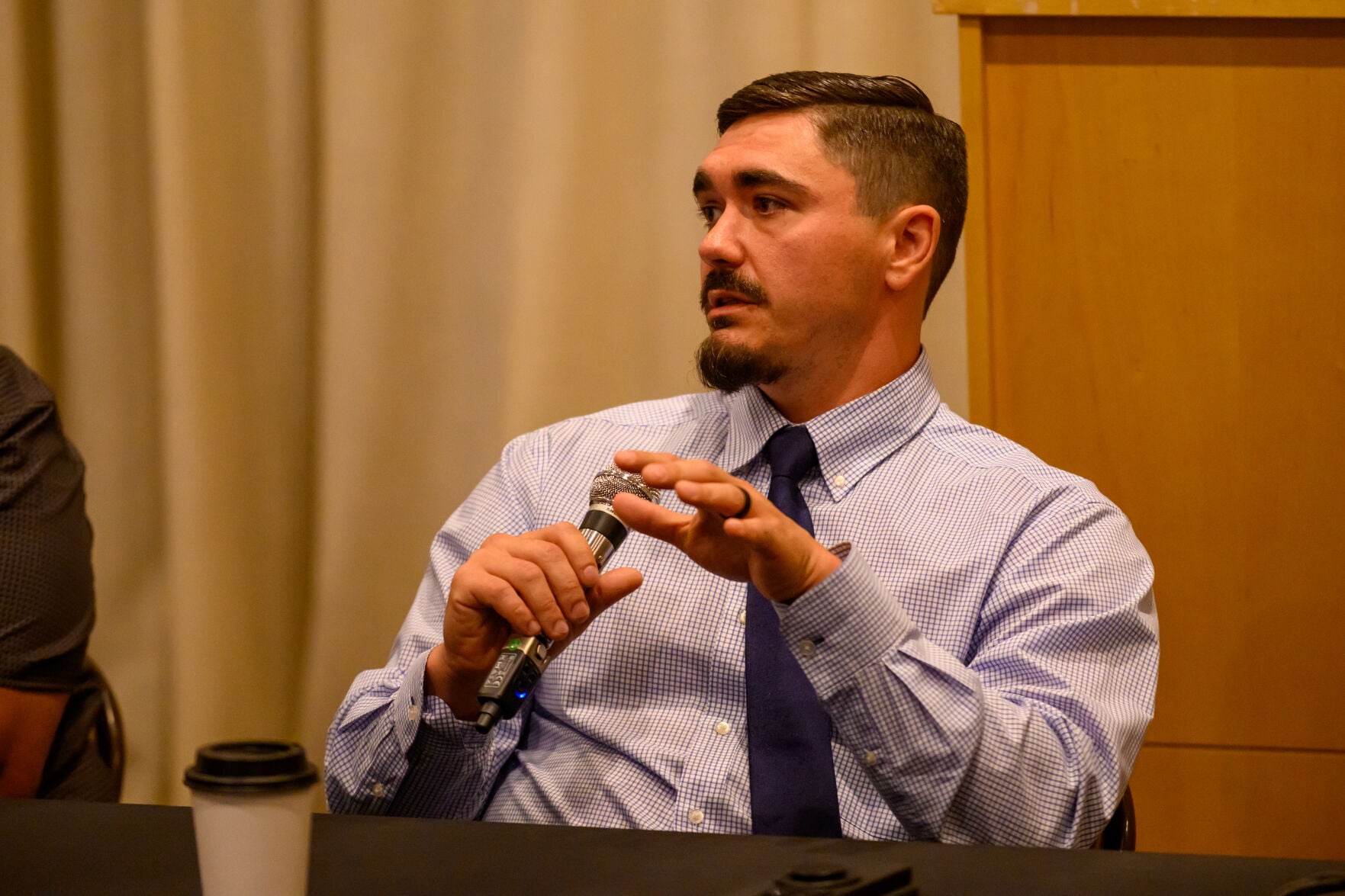
Jesse Wilson explains how recovery housing works at Oxford Houses, self-run homes for people in recovery.
JACOB CHRISTOPHER / THE PAPER
Facilitator Jesse Wilson explained that one of the largest barriers to residential programs is consistency in rent and bill payment from the people regaining their stability.
“Each house runs itself,” Wilson said. “We’ve seen people have to go, and sometimes they return to use because of the stress of owing money. We talk about looking for a hand-up, not a handout.”
Family Impact & Support Needs said they would like to see a website that acts as a one-stop shop for families in need of resources.
Facilitator Ava Yamouti said, “Ultimately, it’s the family members who guide the loved one to recovery a lot of times, because when you’re under the influence of a substance, you may not be able to navigate the supports yourself.”
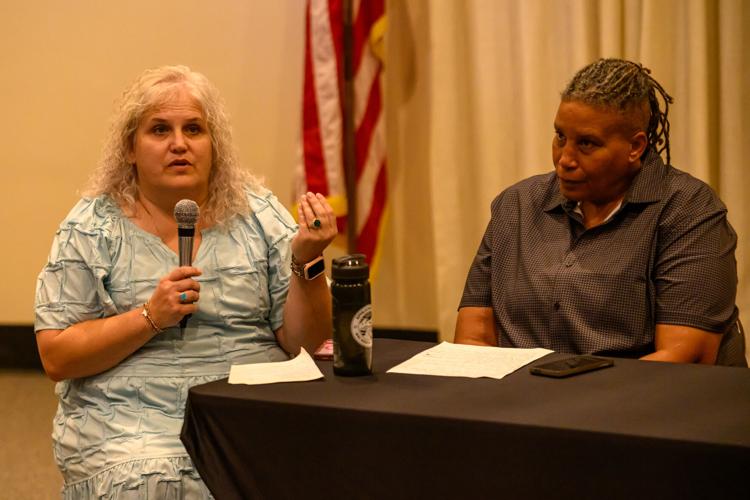
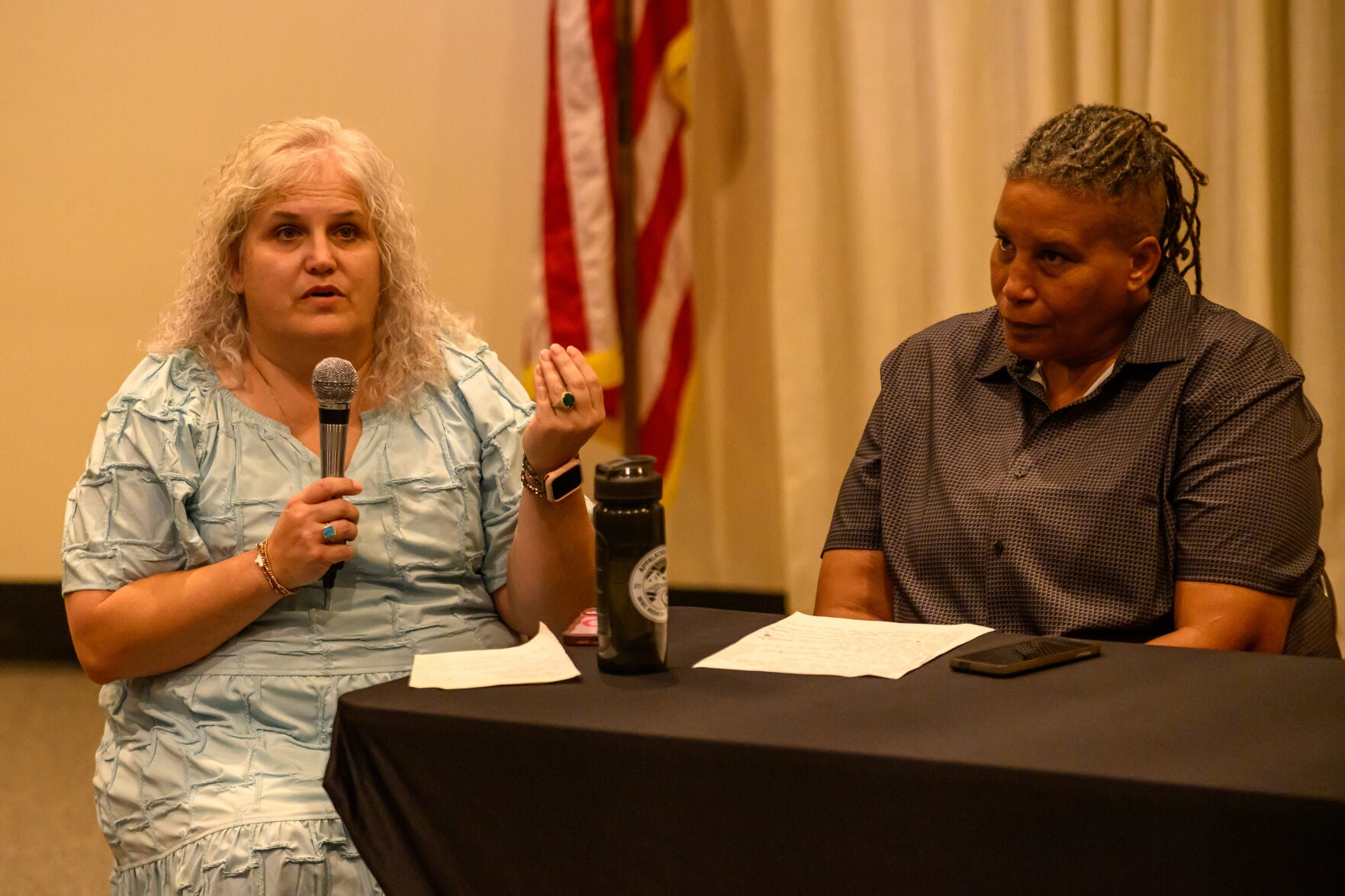
The Prevention and Peer Support sessions discussed awareness and sympathy for those in recovery, with Tracey Cook Hall, a prevention specialist and community health worker, claiming that the average age of first use in Burke County is 11.5 years old.
Tracey Cook Hall discusses the Prevention session while Karen Russell waits to relay what the Peer Support group covered.
JACOB CHRISTOPHER / THE PAPER
Hall warned that the community won’t see the effects of the limited resources left for families in the wake of Hurricane Helene for another decade, and that work needs to be done now to sufficiently prepare students that are already in crisis.
“The opposite of addiction is connection,” Hall said. “Primary prevention is catching them upstream.”
Keep it Clean. Please avoid obscene, vulgar, lewd,
racist or sexually-oriented language. PLEASE TURN OFF YOUR CAPS LOCK. Don't Threaten. Threats of harming another
person will not be tolerated. Be Truthful. Don't knowingly lie about anyone
or anything. Be Nice. No racism, sexism or any sort of -ism
that is degrading to another person. Be Proactive. Use the 'Report' link on
each comment to let us know of abusive posts. Share with Us. We'd love to hear eyewitness
accounts, the history behind an article.






























(0) comments
Welcome to the discussion.
Log In
Keep it Clean. Please avoid obscene, vulgar, lewd, racist or sexually-oriented language.
PLEASE TURN OFF YOUR CAPS LOCK.
Don't Threaten. Threats of harming another person will not be tolerated.
Be Truthful. Don't knowingly lie about anyone or anything.
Be Nice. No racism, sexism or any sort of -ism that is degrading to another person.
Be Proactive. Use the 'Report' link on each comment to let us know of abusive posts.
Share with Us. We'd love to hear eyewitness accounts, the history behind an article.