




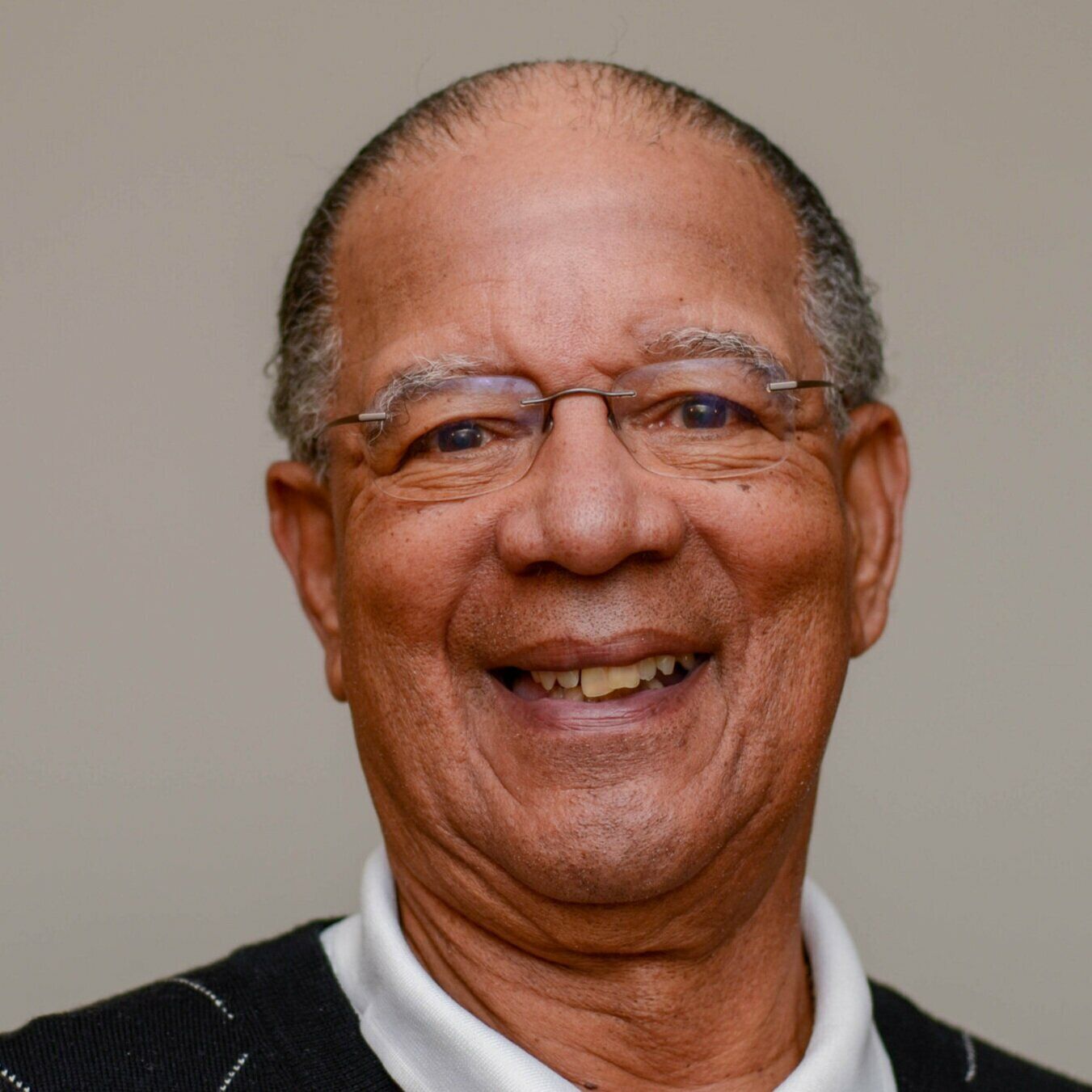
Edward Phifer recalls a day, more than six decades ago, when his father, Dr. Ned Phifer, called him into the family living room to introduce him to a young man who shared Dr. Phifer’s passion for the study of history.
“This young man is as eager for knowledge and for learning as anyone I have ever met,” Dr. Phifer, who went on to write the definitive history of Burke County, told his son.
That young man was John Fleming, who went on to achieve great personal and professional success, all the while dedicating his life to the preservation of African American history and culture.
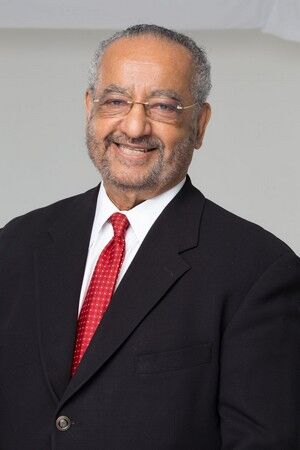
Dr. John E. Fleming, a distinguished author, museum leader, historian, husband, father, and mentor to many, passed away on Friday, Sept. 12, after a battle with cancer. He was 81 years old.
A native of Morganton, Dr. Fleming grew up on West Concord Street. In 1962, he graduated from Olive Hill High School, which was then the only high school for Black students in Burke County.
Determined to pursue further education, Dr. Fleming earned his bachelor’s degree from Berea College, a small liberal arts school in Kentucky, which allowed its students to work their way through college.
After receiving his bachelor’s degree, Dr. Fleming served as a Peace Corps volunteer in Malawi, East Africa, where he was assigned to the Ministry of Agriculture.
An Exemplary Career
After his return to the United States, he worked for Pride Inc. under Washington Mayor Marion Berry and as a program analyst for the U.S. Civil Rights Commission.
Fleming later went on to earn both his master’s degree and his doctorate from Howard University, a private, historically Black school in Washington, D.C.
While a senior fellow at Howard’s Institute for the Study of Educational Policy, Fleming wrote two books, “The Lengthening Shadow of Slavery” and “The Case for Affirmative Action for Blacks in Higher Education.”
Fleming’s museum career began in 1980 when he joined the Ohio Historical Society as the Afro-American Museum project director.
He was the founding director of the National Afro-American Museum and Cultural Center in Wilberforce, Ohio, and later became the director and chief operating officer for the National Underground Railroad Freedom Center in Cincinnati.
Over the course of his career, he was directly involved in the development of six museums, including the Mississippi Civil Rights Museum and the National Museum of African American Music, where he served as immediate past director.
He was also Director Emeritus of the Cincinnati Museum Center and an adjunct professor in the department of history at the University of Cincinnati.
His leadership extended across several respected historical and cultural organizations. He was president of the Ohio Museums Association, the Association for the Study of African American Life and History, and the Association of African American Museums.
Influence in Morganton
Although Dr. Fleming never again made his home in Morganton after his graduation from Berea College, his influence continued to be felt in his home community.
When Judge Claude Sitton and other Burke residents began to plan for the establishment of the History Museum of Burke County more than two decades ago, Dr. Fleming was a resource of knowledge they sought out.
“He was one of the first people I contacted,” said Sitton. “And he remained on my list as one of the first people to call when we needed advice or direction on something.”
Allen Fullwood, who is also passionate about the preservation of African American history in Burke County, knew Dr. Fleming when they were growing up and the two maintained their friendship throughout Dr. Fleming’s life.
“His record of scholarship and achievement is truly remarkable,” said Fullwood of his friend. “We would try to get together whenever he came to Morganton or we would stay in touch by phone. He was a man who cared deeply for other people.”
Decades after Dr. Fleming left Morganton, the Phifer family also kept their connection with him alive and with the establishment of the N.C. School of Science and Mathematics in Morganton, decided to honor him in an extraordinary way.
A generous financial contribution to the school was made by the surviving Phifer siblings in honor of Dr. Fleming. The prominent staircase in Goodwin Hall, situated underneath the building’s central archway, is named in his honor.
In an earlier publication, Edward Phifer said, “My sisters and I mulled it over and decided on the staircase which is symbolic of the grand entrance John made into the world of high-profile artistic and scholastic achievement.
“You think of him ascending the way he has,” Phifer continued, “and a grand staircase is kind of symbolic of his rising out of very humble beginnings here in Morganton.”
Additional Honors
Dr. Fleming was appointed by President George W. Bush to serve on the commission for the Smithsonian Institution’s National Museum of African American History and Culture.
He was the immediate past chair of the board for the American Association for State and Local History and was recently appointed by Ohio Gov. Mike DeWine to the Ohio Semiquincentennial Commission.
Dr. Fleming was also a prolific writer and scholar: He was author of three books and 50 articles throughout his career. In addition to his scholarly works, he published two memoirs: “A Summer Remembered,” about his childhood in North Carolina, and “Mission to Malawi,” about his time in the Peace Corps.
He was a recipient of numerous accolades, including distinguished service awards from the Association of African American Museums, the American Association for State and Local History, the National Peace Corps, Berea College, the Ohio Library Association, and the National Peace Corps.
In his honor, the Association of African American Museums named its highest honor the John E. Fleming Lifetime Achievement Award. In 2020, he was named one of the Top Ten African Americans in Dayton, Ohio.
But Dr. Fleming was proudest of the time that he devoted to his family and community.
He is survived by his wife, Barbara, a psychologist and mystery writer, of Yellow Springs, Ohio; his two daughters, Diara Spelmon, a lawyer in Atlanta, and Tuliza Fleming, who followed in her father’s footsteps as the supervisory curator of American art at the National African American Museum in Washington, D.C; and his brother, James (Jimmy) Fleming, of Morganton, N.C., and sister, Patricia Hardin (Fleming), of Knoxville, Tenn.
He was a former board member and volunteer for the St. Vincent de Paul Homeless shelter in Dayton. And he was a proud member of Alpha Phi Alpha and Sigma Pi Phi, known as the Boule.
Memorial Services honoring the life and legacy of Dr. John E. Fleming will be held at a later date in Morganton and in Ohio.





















(0) comments
Welcome to the discussion.
Log In
Keep it Clean. Please avoid obscene, vulgar, lewd, racist or sexually-oriented language.
PLEASE TURN OFF YOUR CAPS LOCK.
Don't Threaten. Threats of harming another person will not be tolerated.
Be Truthful. Don't knowingly lie about anyone or anything.
Be Nice. No racism, sexism or any sort of -ism that is degrading to another person.
Be Proactive. Use the 'Report' link on each comment to let us know of abusive posts.
Share with Us. We'd love to hear eyewitness accounts, the history behind an article.