

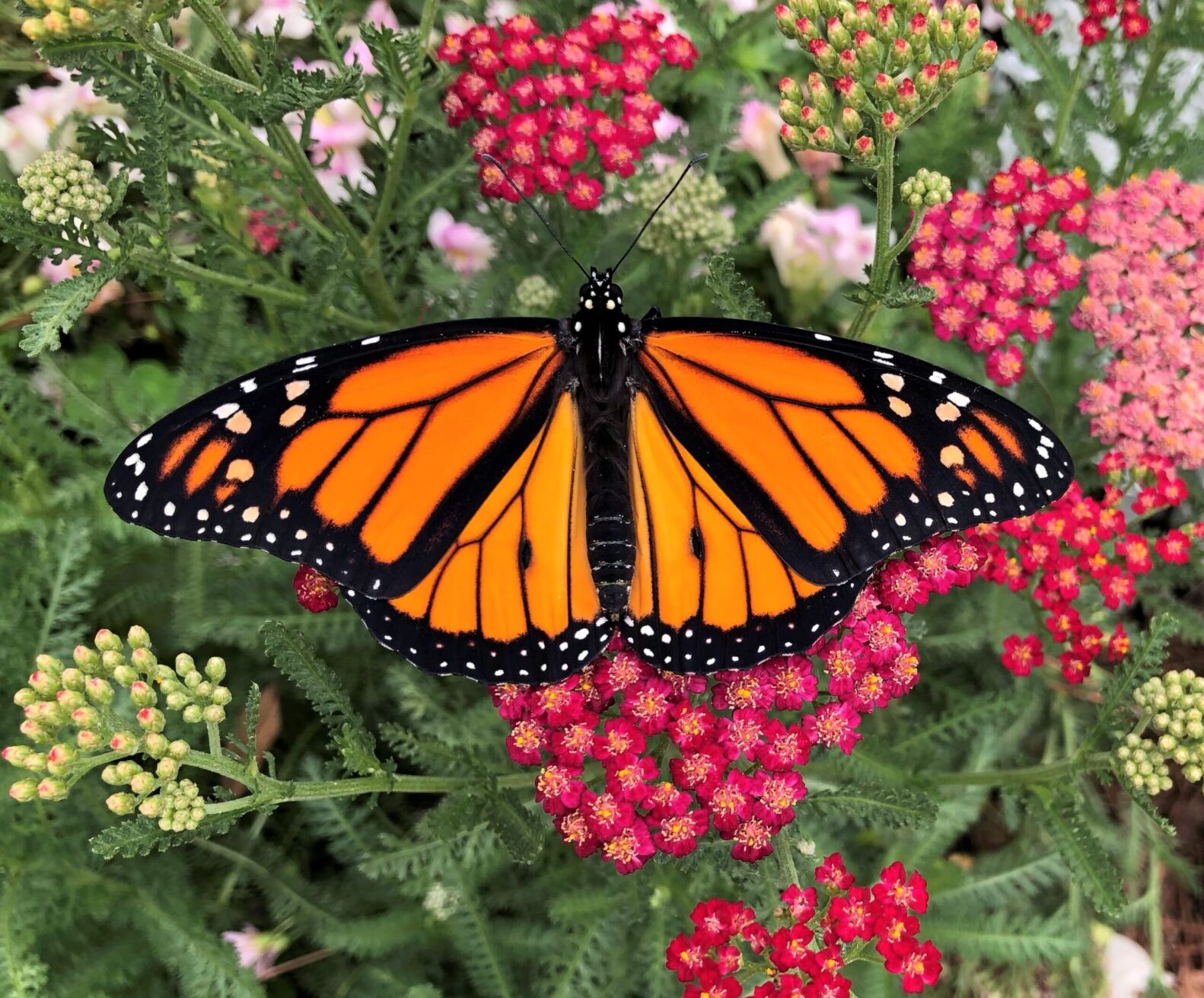
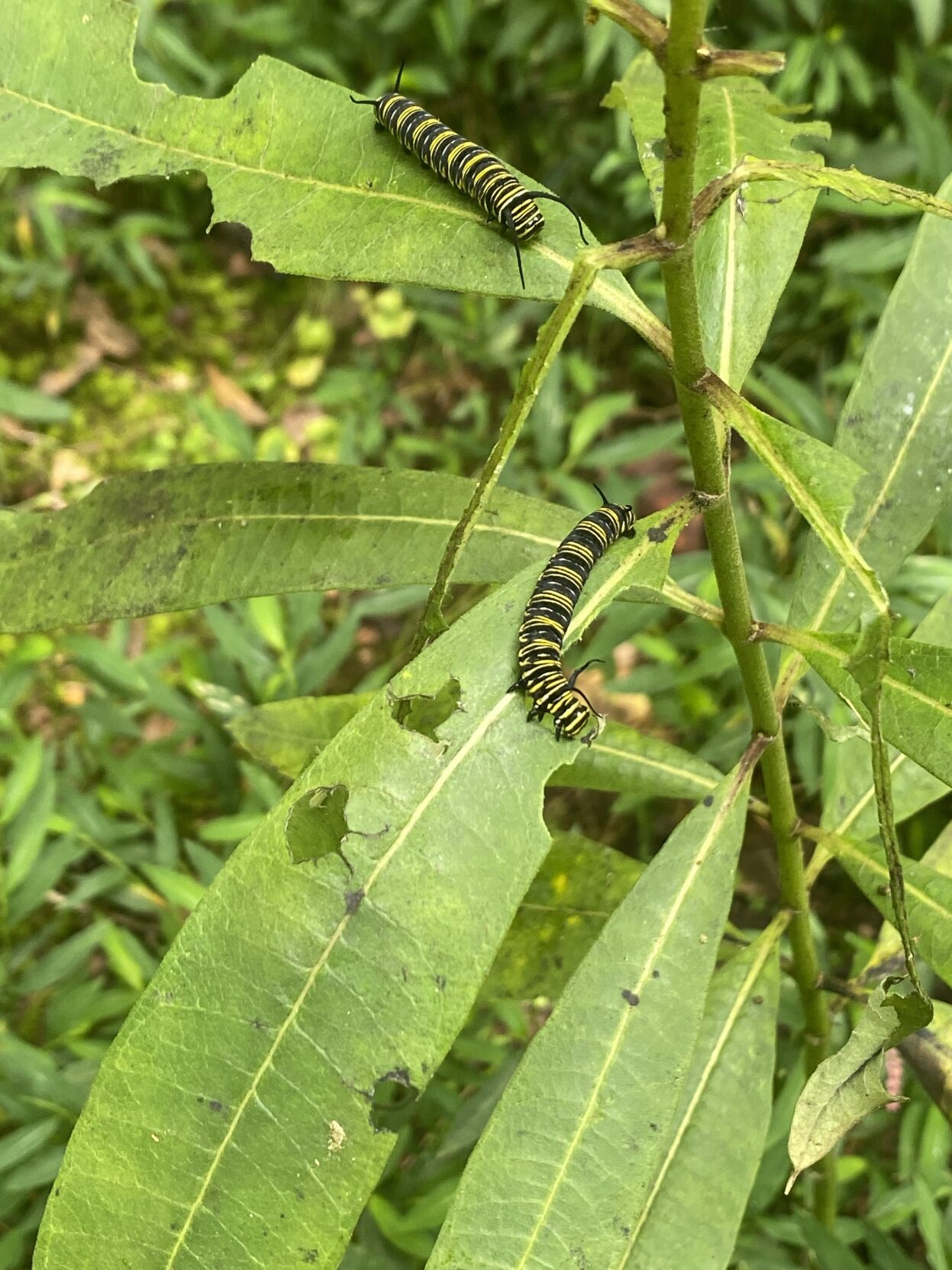
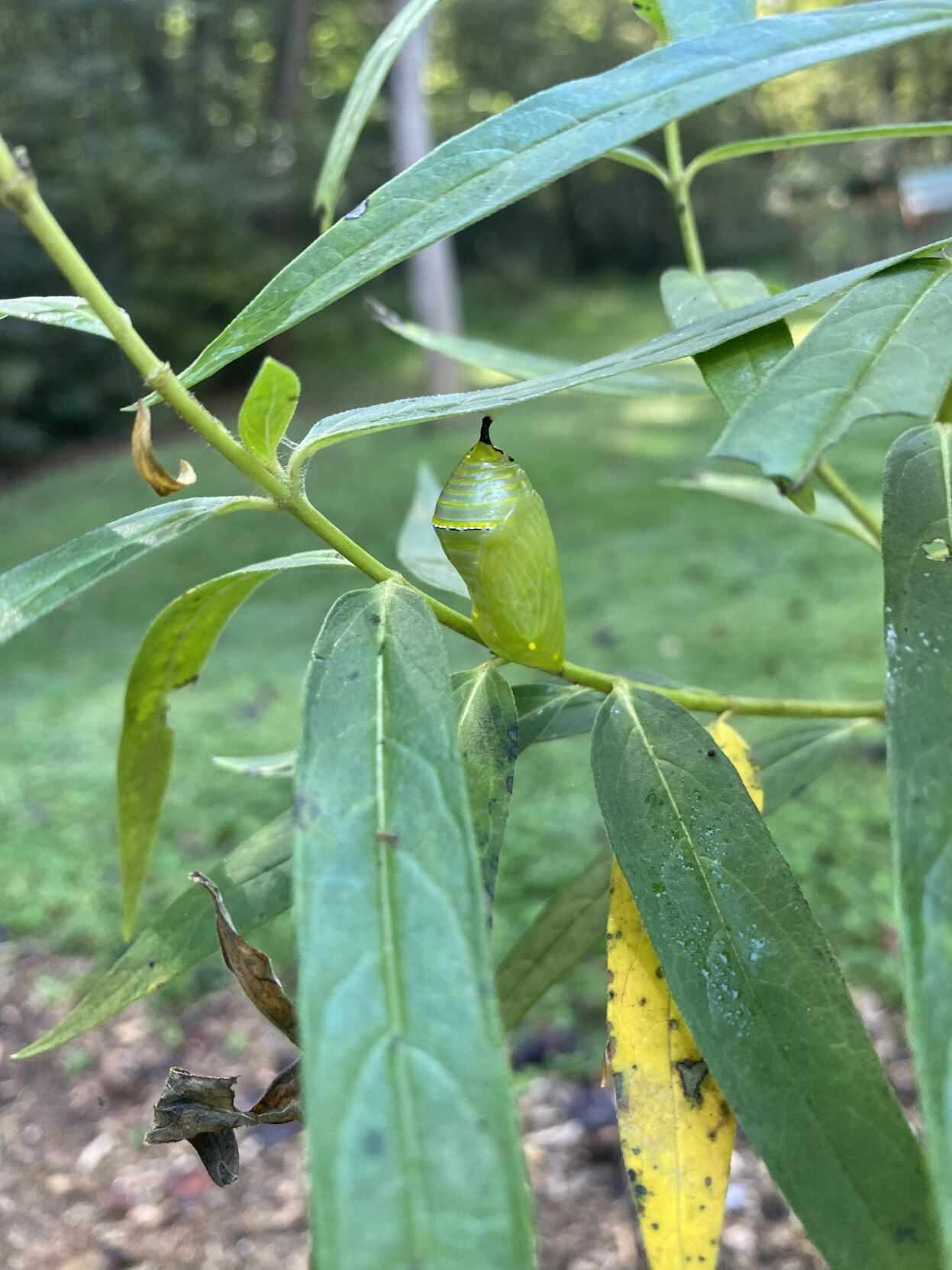

As May rolls in, residents across the county should keep an eye on their gardens for orange and black butterflies, resting as they make their multigenerational, thousands-of-miles trek north from Mexico.
May 2 is National Start Seeing Monarchs Day.
“They’re the only butterfly that migrates,” said Jessica Howells, a former Western Piedmont Community College biology professor who now works on the steering committee for the new North Carolina Native Plant Society Foothills Chapter. “It’s really the coolest thing to think that something so small can migrate like that, such long distances.”
From late March to early April, the monarch butterflies begin their 1,200- to 3,000-mile journey to southeast Canada, often drifting across the Carolinas around May. Each adult lives about four to five weeks, laying eggs on milkweed plants along the trip.
Once the caterpillars are born from the eggs, they chow on the milkweed and undergo metamorphosis. They pick up the journey as a butterfly, moving across states, laying their eggs, and repeating the cycle.
The spring butterflies tackle the trip individually unlike the mass migration cluster that heads south to Mexico in the fall between August and October.
Another big difference between the two migration periods: the fall trip is completely undertaken by the same butterflies that start the journey, not multiple generations.
“They don’t absolutely know how they navigate,” Howells said.
Scientists believe butterflies use electromagnetic fields oriented by Earth’s magnetic core as well as visual cues to travel.
“They can lay an egg, the egg is gonna hatch into a caterpillar, the caterpillar is gonna pupate and dissolve into goo, reassemble itself as a butterfly, and still have those neural impulses that are gonna take it from there to the next place on the migration,” Howells said excitedly. “I think that’s amazing.”
BUTTERFLY HIGHWAY
As with many pollinators, habitat destruction and a lack of reliable food sources have this insect on track to be listed as a threatened species on the Endangered Species Act by the U.S. Fish and Wildlife Service.
The organization proposed the listing in December 2024, but no official ruling has hit the books as of this article’s publication.
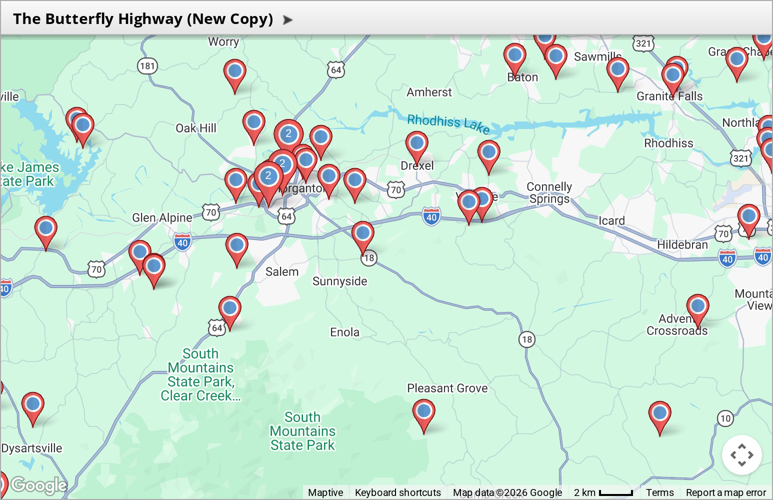
The North Carolina Wildlife Federation fills that gap in protection with the Butterfly Highway, a collection of gardens across the state dedicated to plants specifically cultivated for pollinators.
There are more than 20 registered gardens in Burke County, mostly residential, according to the Butterfly Highway website.
Some of their tips for attracting pollinators and contributing to the conservation:
- Focus on native plants and be aware of when they are likely to bloom. Stagger blooming periods, meaning one flower blooms as another finishes its cycle.
- Diversify nectar sources and larvae food sources. While monarch caterpillars eat milkweed and the butterflies lay eggs on milkweed, adult monarchs eat Joe Pye weed.
- Understand the sunlight patterns and soil in your yard. Plan gardens accordingly.
NORTH CAROLINA NATIVE PLANT SOCIETY
The foothills chapter of the North Carolina Native Plant Society, which earned its official status in February, covers Burke and nine surrounding counties, including Catawba, Caldwell, and McDowell.
“We’re not in the mountains and we’re not in the Piedmont,” Howells said. “We have a whole unique ecosystem and the plant and animal life reflect that.”
According to Brenda Thomas, the founder of the chapter, some residents can provide a healthy lawn for pollinators through changing the way they maintain their lawns.
The violets that spring up across yards around this time of year are optimal for early pollinators searching for a meal.
“Green lawns are lovely,” Thomas said, “but lawns full of flowers to support early pollinators are even better.”
Many pollinators will piggyback off other more popular insects like monarchs and honeybees. One example, Howells explained, is the oak tree, where one tree can be a food source for between 80 and 100 different species.
“This whole world opens up to you when you start looking at simple organisms, or things that fascinate you like monarchs and honeybees,” Howells said. “You recognize the importance that they have to our food sources, to our ecosystems, to our sense of mystery and magic in the world, and our place in this world.”
Howells suggested that gardeners think of the whole picture when laying out their gardens, targeting multiple pollinators. Asters and other flowers that provide plenty of nectar and pollen attract butterflies as well.
As for the monarchs, any native milkweed — common milkweed, swamp milkweed, butterfly weed — will do the trick.
She said to avoid tropical milkweed, which is more likely to host Ophryocystis elektroscirrha, a parasite that infects monarchs and other butterflies, deforming their wings, making smaller adults, and impairing mating.
According to Howells, approximately 66% of eastern monarchs are infected with the parasite, which spreads asexually during development.
























(0) comments
Welcome to the discussion.
Log In
Keep it Clean. Please avoid obscene, vulgar, lewd, racist or sexually-oriented language.
PLEASE TURN OFF YOUR CAPS LOCK.
Don't Threaten. Threats of harming another person will not be tolerated.
Be Truthful. Don't knowingly lie about anyone or anything.
Be Nice. No racism, sexism or any sort of -ism that is degrading to another person.
Be Proactive. Use the 'Report' link on each comment to let us know of abusive posts.
Share with Us. We'd love to hear eyewitness accounts, the history behind an article.