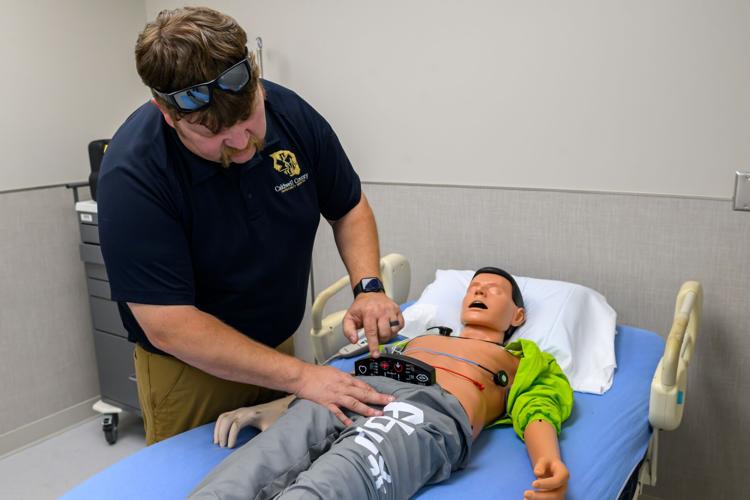
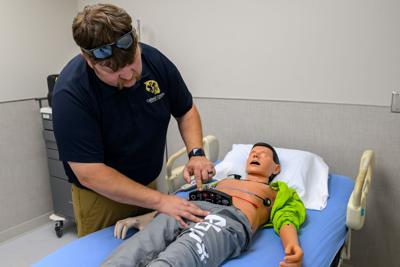
Emergency Services Director Trevor Key walks through each of the unique qualities of the dummy, from the changeable heart rate and breathing panel located at the pelvis to the flesh-like arm with veins used for practicing IV insertion.
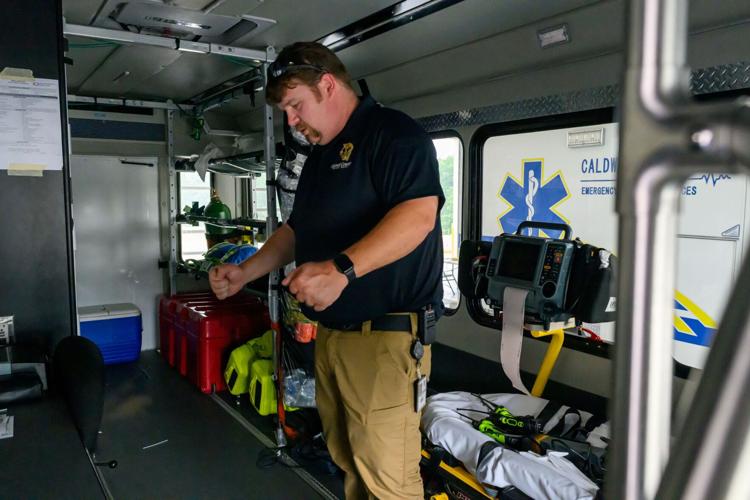
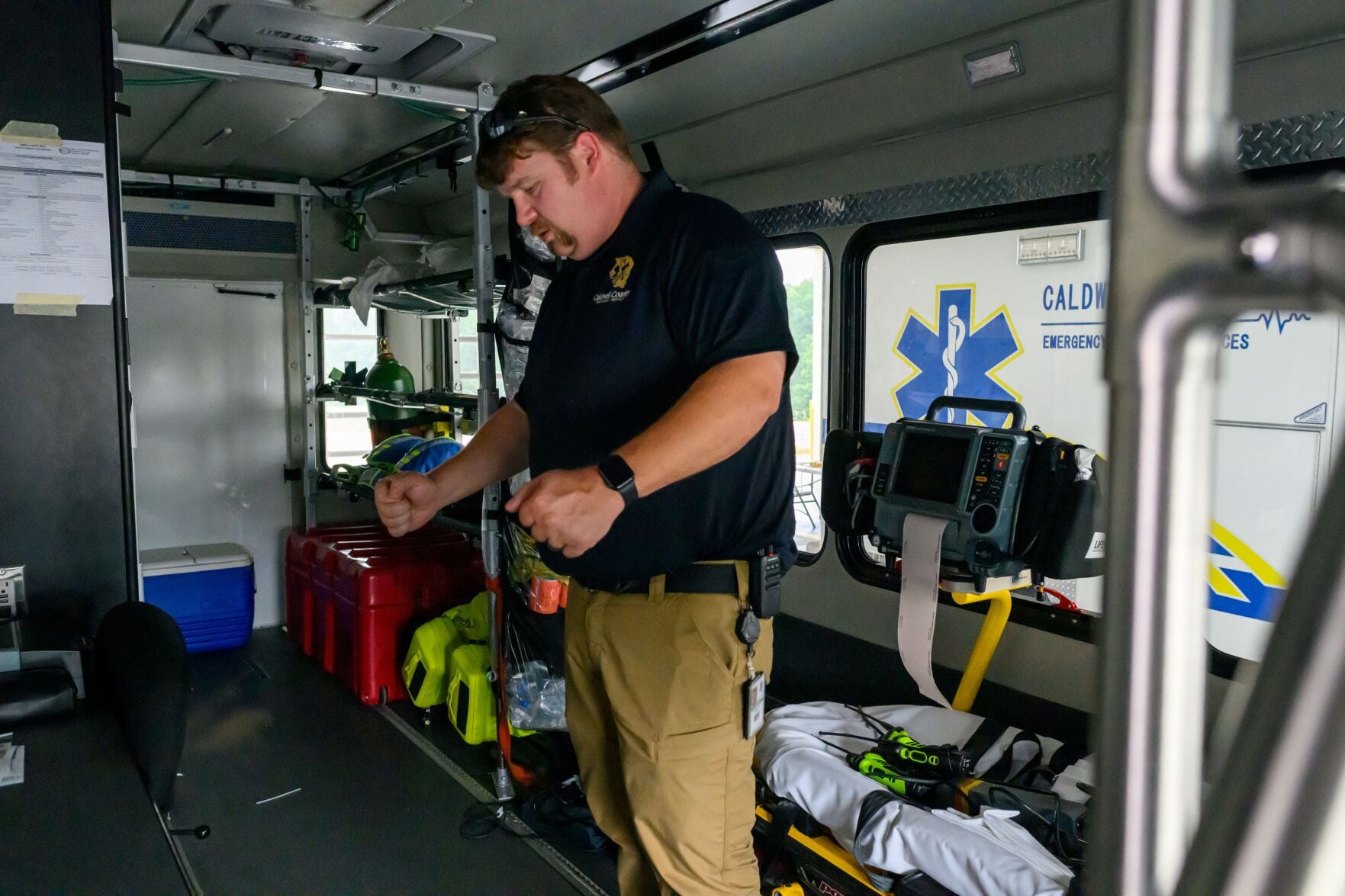
While giving a tour of the new facility, Key explains how a mass casualty bus is used to transport up to seven patients at once. The county’s only mass casualty bus is stationed at the Cajah’s Mountain base.
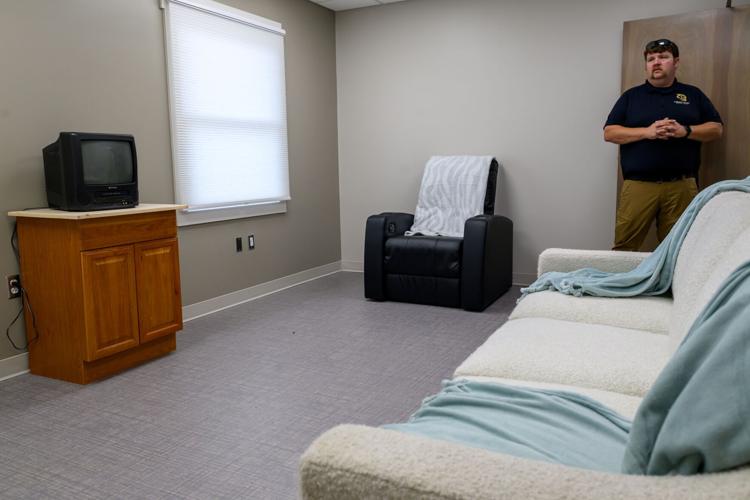
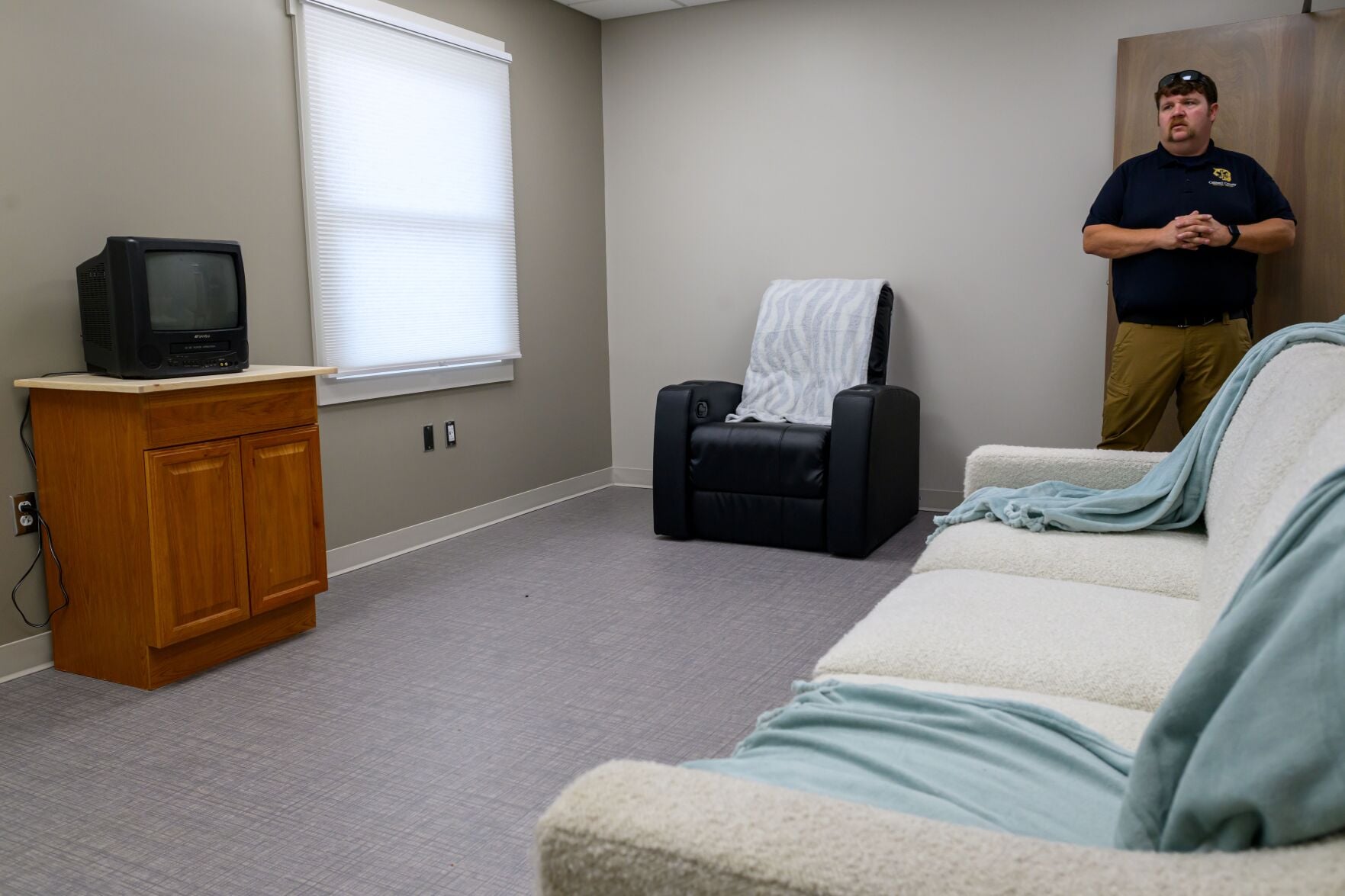
Key shows off one of the simulation rooms, where the TV volume would normally be turned up and a mannequin would be having a mock medical emergency, preparing trainees for real-world response hurdles.
Emergency Services Director Trevor Key walks through each of the unique qualities of the dummy, from the changeable heart rate and breathing panel located at the pelvis to the flesh-like arm with veins used for practicing IV insertion.
A mannequin sits on a sofa across from a blaring television, its simulated pulse erratic as if in medical distress. A trainee bursts through the door, equipped with all the tools they would need in the field, ready to practice saving a life while a camera watches from above.
At the new Cajah’s Mountain EMS station, this exact scenario is business as usual.
“We’re able to simulate almost all of our skills with this patient,” said Emergency Services Director Trevor Key, pointing to a mannequin with varying prosthetics and button boards allowing the replication of different medical conditions. “We can innovate. … He’s a simple mannequin, but right now we can do a lot.”
There are several mannequins of varying technological degrees scattered throughout the base, including the full-body dummy laying in a hospital bed in the simulation room.
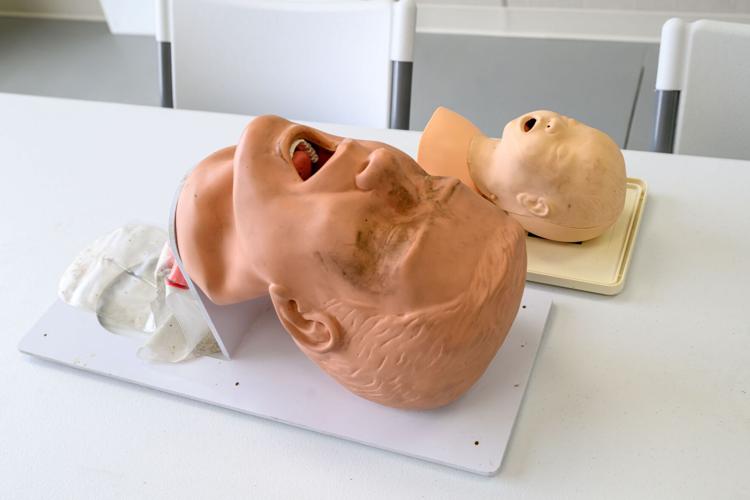
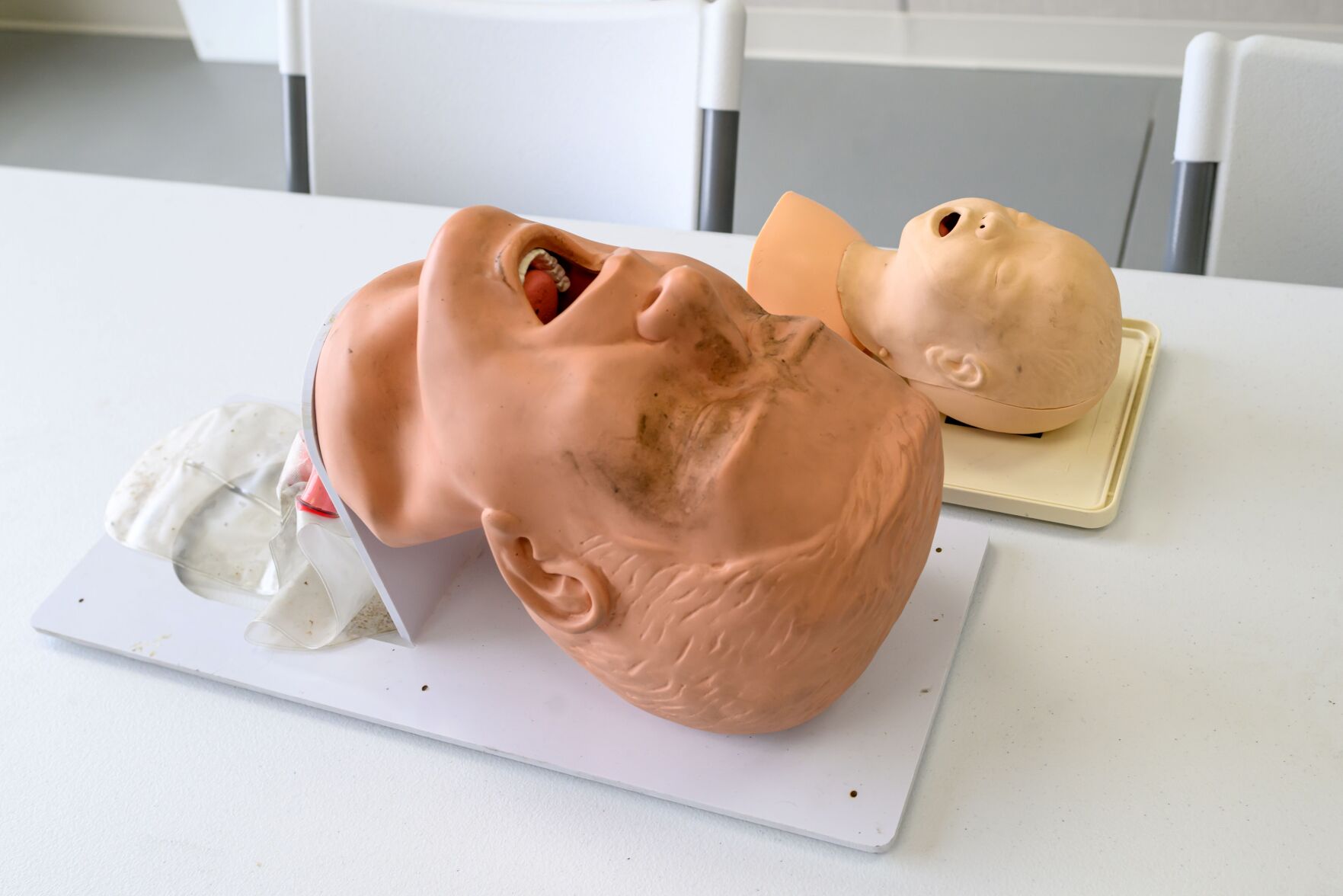
In another room, disembodied adult and infant models lay on a table, offering the opportunity to practice resuscitation on different age ranges.
There are various mannequins throughout the facility allowing for everything from CPR to tool practice.
JACOB CHRISTOPHER / THE PAPER
“For new folks that come in or when we do new procedures that come out for our tenured folks, being able to actually run through it and actually provide the therapy off the monitor versus just talking about it — it does help that tremendously,” Key explained.
Trainees can defibrillate, resuscitate, drill, poke, and triage mannequins in a variety of ways, sharpening their skills for real-world application.
Key shows off one of the simulation rooms, where the TV volume would normally be turned up and a mannequin would be having a mock medical emergency, preparing trainees for real-world response hurdles.
JACOB CHRISTOPHER / THE PAPER
The facility isn’t only improving training.
Since April, the new Cajah’s Mountain EMS station has cut arrival times by nearly a minute and a half in the southern part of Caldwell County, and Key only expects that number to improve.
“Seconds matter,” Key said in his office, rows of firefighter hats lining his cabinets and degrees and certificates filling the walls. “When you have that much time, a minute could mean saving someone’s life in terms of how quick we get there and provide life-saving measures for those that need it.”
While giving a tour of the new facility, Key explains how a mass casualty bus is used to transport up to seven patients at once. The county’s only mass casualty bus is stationed at the Cajah’s Mountain base.
JACOB CHRISTOPHER / THE PAPER
What sets the base apart, however, are the unique spaces dedicated to training, including a simulated living room, a mock emergency room, advanced patient simulators, and 360-degree cameras that catch all the action, allowing trainers to evaluate a variety of scenarios without watching over a trainee’s shoulder.
The project was designed and constructed by Atriax Group of Hickory.
Key, who spoke at the ribbon cutting for the new base on July 17, said that between the base and the newly occupied Emergency Operations Center (EOC) on Pleasant Hill Road in Hudson, Caldwell is strengthening its coverage across the board.
But the decisions didn’t happen overnight.
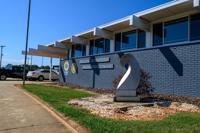
Town council members had been working toward the station for years, often making do by placing emergency responders around town — like a paramedic in with the North Catawba Fire Department and later an ambulance stationed at town hall — before the county purchased an old doctor’s office across the street from Living Hope Church on Connelly Springs Road in May 2024.
As well as reworking the roof and building on the six-bay emergency vehicle garage, the county refurbished the floor plan, creating living quarters and office space for the rotating eight employees who have to be available at any given time.
Although Hurricane Helene slowed down the momentum of the project, crews eventually occupied the space operationally on April 21, 2026.
Between the beginning of operations and the ribbon-cutting in mid-July, responders were dispatched on 394 calls for that specific district — which brushes against Gamewell, Hudson, Granite Falls, and Valmead — and 522 collaborative calls, assisting other districts.
Keep it Clean. Please avoid obscene, vulgar, lewd,
racist or sexually-oriented language. PLEASE TURN OFF YOUR CAPS LOCK. Don't Threaten. Threats of harming another
person will not be tolerated. Be Truthful. Don't knowingly lie about anyone
or anything. Be Nice. No racism, sexism or any sort of -ism
that is degrading to another person. Be Proactive. Use the 'Report' link on
each comment to let us know of abusive posts. Share with Us. We'd love to hear eyewitness
accounts, the history behind an article.






















(0) comments
Welcome to the discussion.
Log In
Keep it Clean. Please avoid obscene, vulgar, lewd, racist or sexually-oriented language.
PLEASE TURN OFF YOUR CAPS LOCK.
Don't Threaten. Threats of harming another person will not be tolerated.
Be Truthful. Don't knowingly lie about anyone or anything.
Be Nice. No racism, sexism or any sort of -ism that is degrading to another person.
Be Proactive. Use the 'Report' link on each comment to let us know of abusive posts.
Share with Us. We'd love to hear eyewitness accounts, the history behind an article.