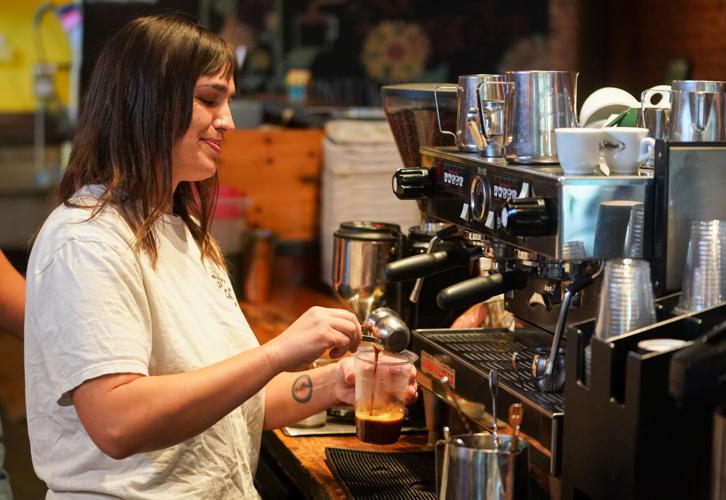
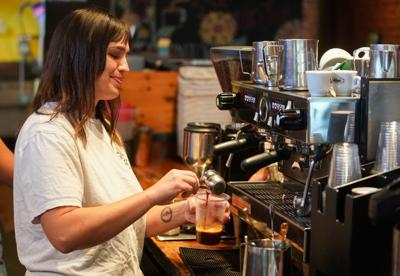
Barista Lesley Robinson has been working in the coffee industry for about eight years. Not only does she work at The Grind Café, but she also assists Little Guatemala with the roasting process.
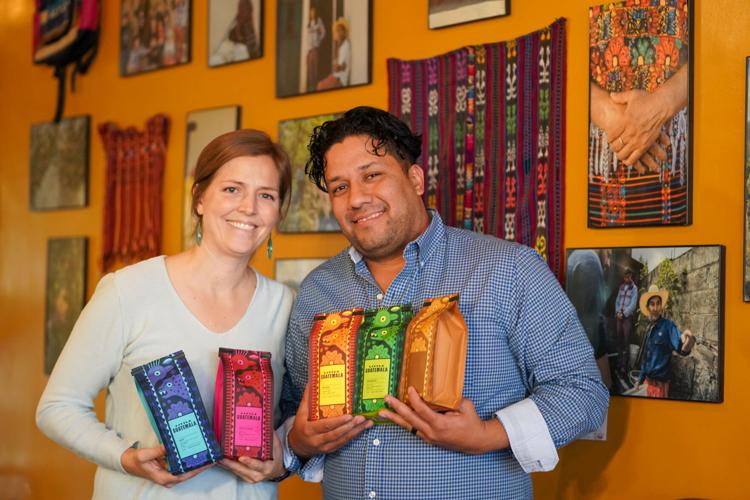
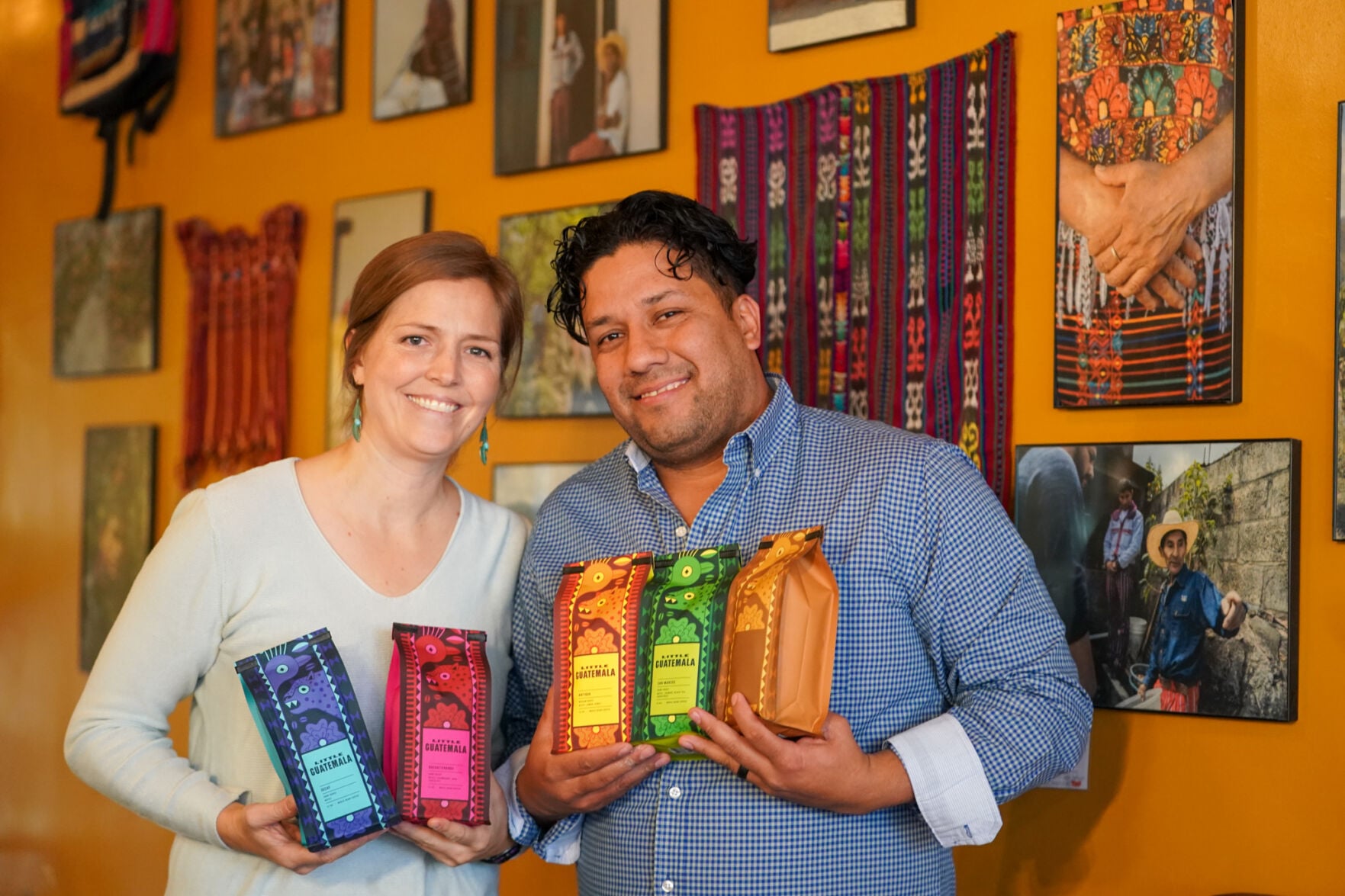
Erica and Christian Ramazzini own Little Guatemala in Morganton. Just in the last year, the roastery and café has distributed about 100,000 pounds of coffee throughout the United States.
Little Guatemala owners Christian and Erica Ramazzini focus on ethically sourcing coffee from farms in Guatemala that provide transparency about pay and other resources for their employees.
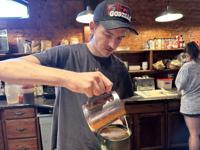
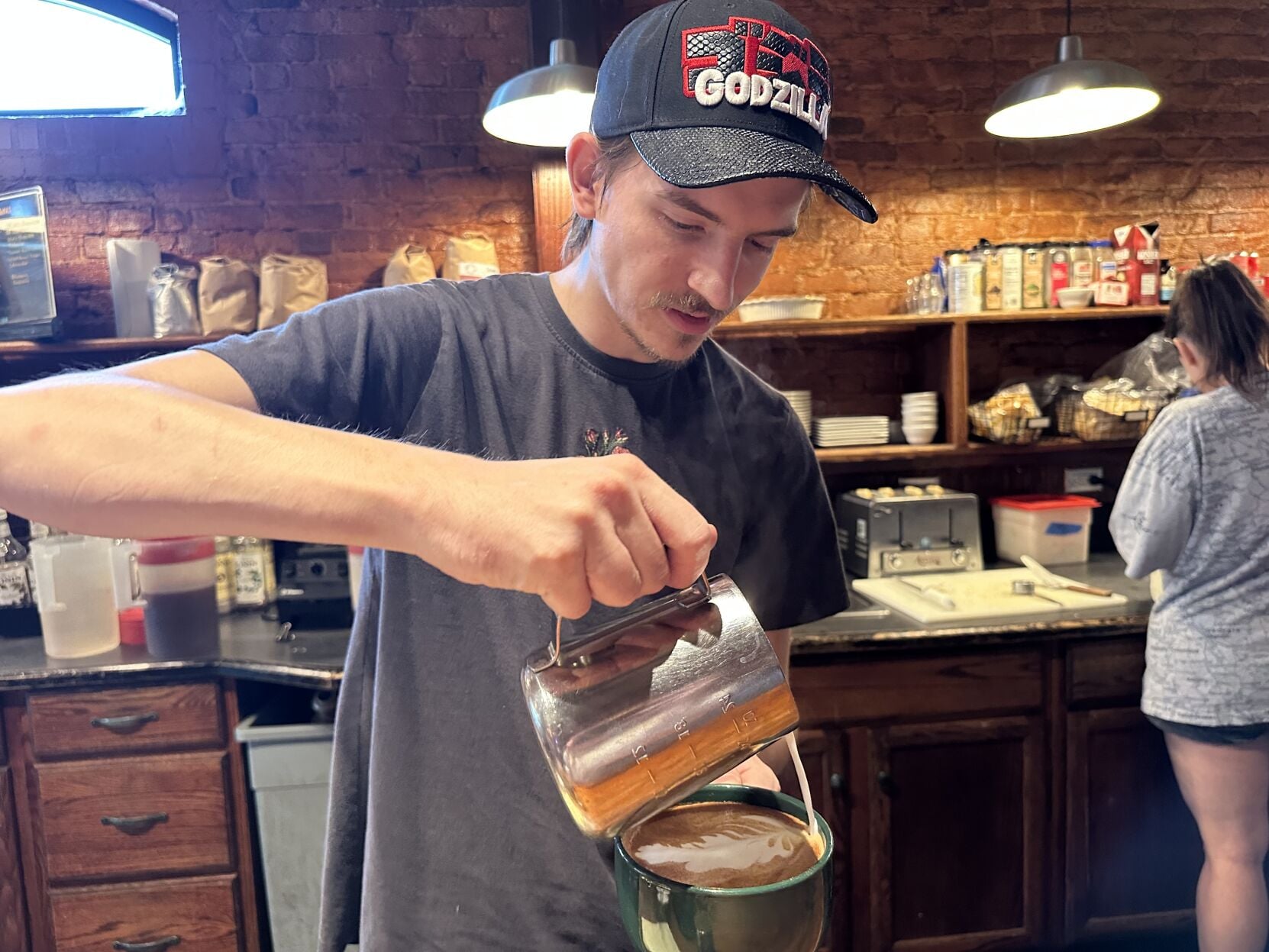
Barista Cooper Ebel has been working in the coffee industry for about a decade. He’s getting ready to kick-start his own business, a coffee cart that will travel around Morganton and surrounding areas.
Barista Lesley Robinson has been working in the coffee industry for about eight years. Not only does she work at The Grind Café, but she also assists Little Guatemala with the roasting process.
While coffee might take only a few minutes to brew, the craft behind it begins long before the first sip. From harvesting and roasting to grinding and brewing, each step influences what ultimately ends up in the cup.
Morganton’s coffee scene has continued to evolve, with locally owned coffee shops, national brands, and mobile businesses bringing new drinks and brewing styles to the area. Many businesses have hopped onto trends like curated cold foams, protein inclusions, espresso tonics, and more.
But for some of Morganton’s experienced baristas and coffee professionals, understanding coffee means getting back to the science, technique, and care behind the craft.
For Christian Ramazzini, owner of local roastery and café, Little Guatemala, a good cup of coffee starts on the farm, where altitude, soil, and processing all affect the flavor and quality of the coffee beans. Sourcing coffee from four different farms throughout Guatemala has taught Ramazzini how diverse flavors of coffee can be depending on the region it comes from.
Ramazzini said he prefers sourcing coffee beans from farms in more mountainous regions because the taste is better. He added that the plants take longer to grow with less oxygen in those areas and oftentimes farmers have to use mules to bring the coffee down because the farms are so deep in the mountains, but the time and effort is worth it for a quality coffee.
Not only does altitude change the taste of coffee, but the processing method can add other natural flavors, using fermentation. Ramazzini described working with farmers in Guatemala who took coffee cherries from trees and allowed them to ferment inside a sealed container for 76 hours, influencing the flavor of the coffee.
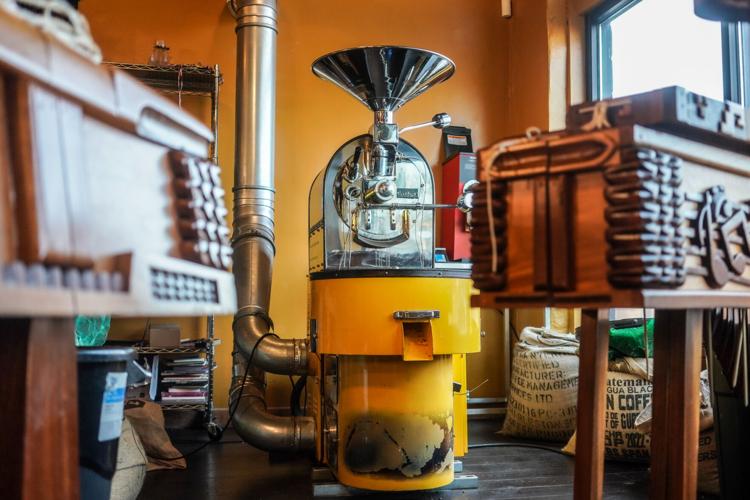
Erica and Christian Ramazzini own Little Guatemala in Morganton. Just in the last year, the roastery and café has distributed about 100,000 pounds of coffee throughout the United States.
LISA PRICE / THE PAPER
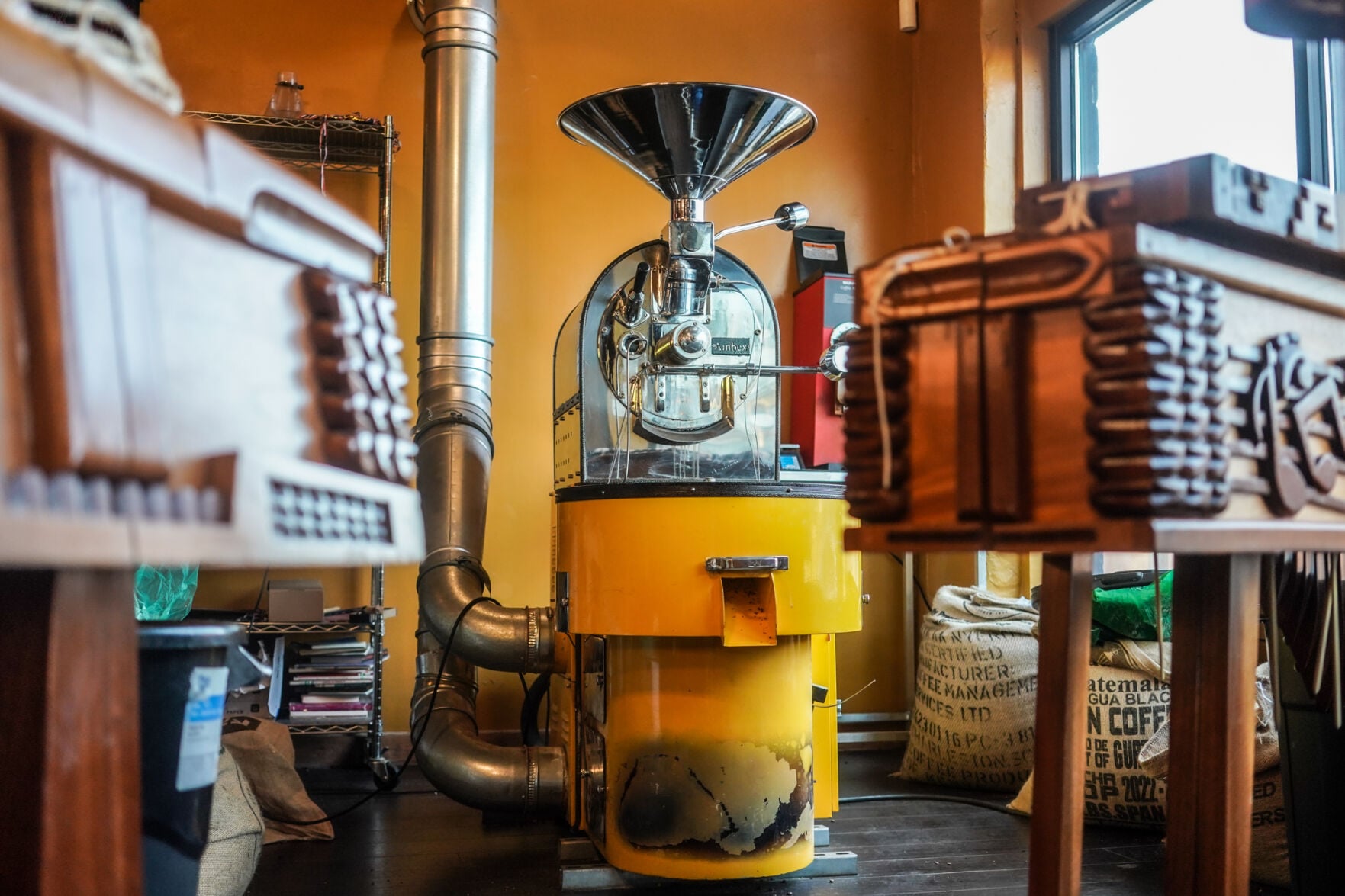
When the coffee finally arrives in Morganton, Little Guatemala’s team tests for characteristics, including density, humidity, and acidity levels, before roasting. Just last year, the company distributed 100,000 pounds of coffee throughout the United States to states like North Carolina, Florida, Tennessee, New York, and Nevada.
Little Guatemala also supplies coffee to several businesses in the Morganton area, including The Grind Café, Blue Tag Coffee, Food Matters Market & Café, and more.
When roasting, Ramazzini said lighter roasts can bring out more floral and fruity notes, while medium and dark roasts can develop caramel, chocolate, and smoky notes.
“People are used to doing either medium roast or dark roast, and there’s so many different levels in between,” Ramazzini said, also adding that the darker the roast, the less caffeine is in the coffee, though many people think the opposite.
The craft of coffee also means knowing where it came from. As coffee evolves into the third wave, more consumers and business owners are focusing on sustainability and transparency, according to the International Coffee Organization. Ramazzini said Little Guatemala works with farms who pay their employees well and provide food and other resources.
“What that means to me is we care very much about growing the coffee ethically, and that we’re supporting our farmers and we are bringing stories to your cup,” Ramazzini said. “And, not just bringing stories, but traceability, where I could pull a sample of a coffee today, and we can trace it all the way back to the farm.”
He said he’s seen a lot of changes in the industry with more people paying attention to the coffee beans themselves and experimenting with lighter roasts, something also characteristic of the third wave of coffee consumption, according to the International Coffee Organization.
Consumption has evolved from the second wave, led by chains like Starbucks and Caribou Coffee, which heavily focused on flavored drinks and the café experience, to people looking for really fine coffee beans and paying attention to origin, Ramazzini said.
“Now, people are looking for a link from origin to a really clean cup of coffee,” he said. “They already understand what a natural coffee is, or honey, or anaerobic processes, or any fermentation of coffees. Most of the people have a general understanding of those terms, and they look for those coffees nowadays.”
Little Guatemala owners Christian and Erica Ramazzini focus on ethically sourcing coffee from farms in Guatemala that provide transparency about pay and other resources for their employees.
LISA PRICE / THE PAPER
Once the beans are imported, roasted, and distributed, then comes the barista, who serves up the coffee after balancing many different factors to craft a latte, cappuccino, cold brew, and more.
At The Grind, barista Cooper Ebel, who has been working in coffee for nearly a decade, said that, for espresso specifically, small adjustments can make a noticeable difference. Everything from the grind size to the timing of pulling an espresso shot can affect the final drink.
“I think a good espresso shot is a careful one,” Ebel said. “So, everything from the fineness or coarseness, the pressure it’s brewed under, the timing of the espresso shot itself as it pulls. Even things like weather can affect the outcome of an espresso shot, so a good one is the one you take the time to make sure is good.”
Ebel, who is getting ready to open his own coffee cart in Morganton, said the same coffee and equipment can produce different results depending on who is behind the bar.
“The coffee lives or dies by the person making it,” he said.
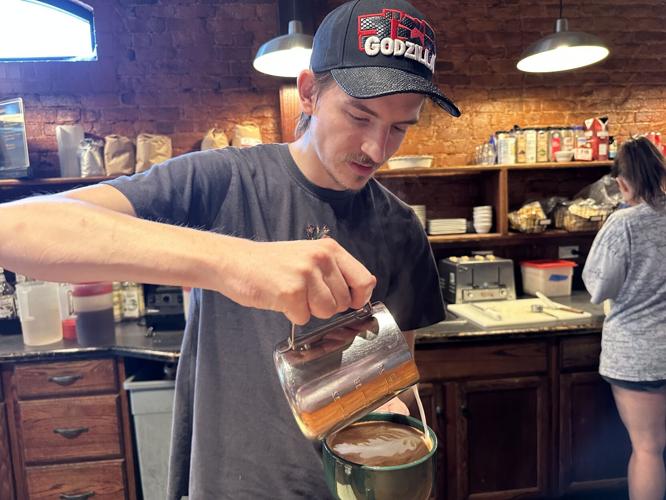
Barista Cooper Ebel has been working in the coffee industry for about a decade. He’s getting ready to kick-start his own business, a coffee cart that will travel around Morganton and surrounding areas.
MADISON LIPE / THE PAPER
For barista Lesley Robinson, who has been working in the coffee industry for about eight years, the craft is a blend of science and art.
“One of the things that I love about coffee in general, whether you’re looking at roasting or a barista extracting coffee, it’s technical and intuitive,” Robinson said. “There’s a part of it that is very technical and scientific, you know, there’s a lot of chemical reactions in roasting, but it’s also intuitive and a matter of preference to some extent.”
Younger customers tend to be more adventurous, trying flavored drinks with caramel, cookie butter, and more, while also substituting with different alternative milks like oat and macadamia milks, Robinson and Ebel noted. Their customers from older generations typically prefer more simple orders like a medium or dark roast with cream and sugar.
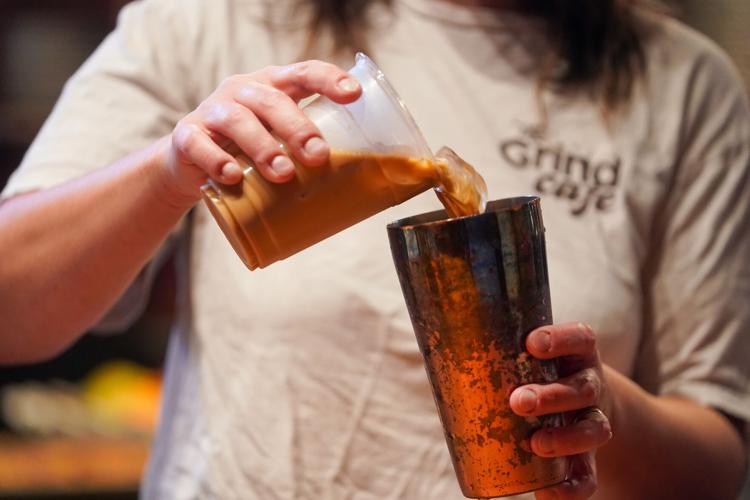
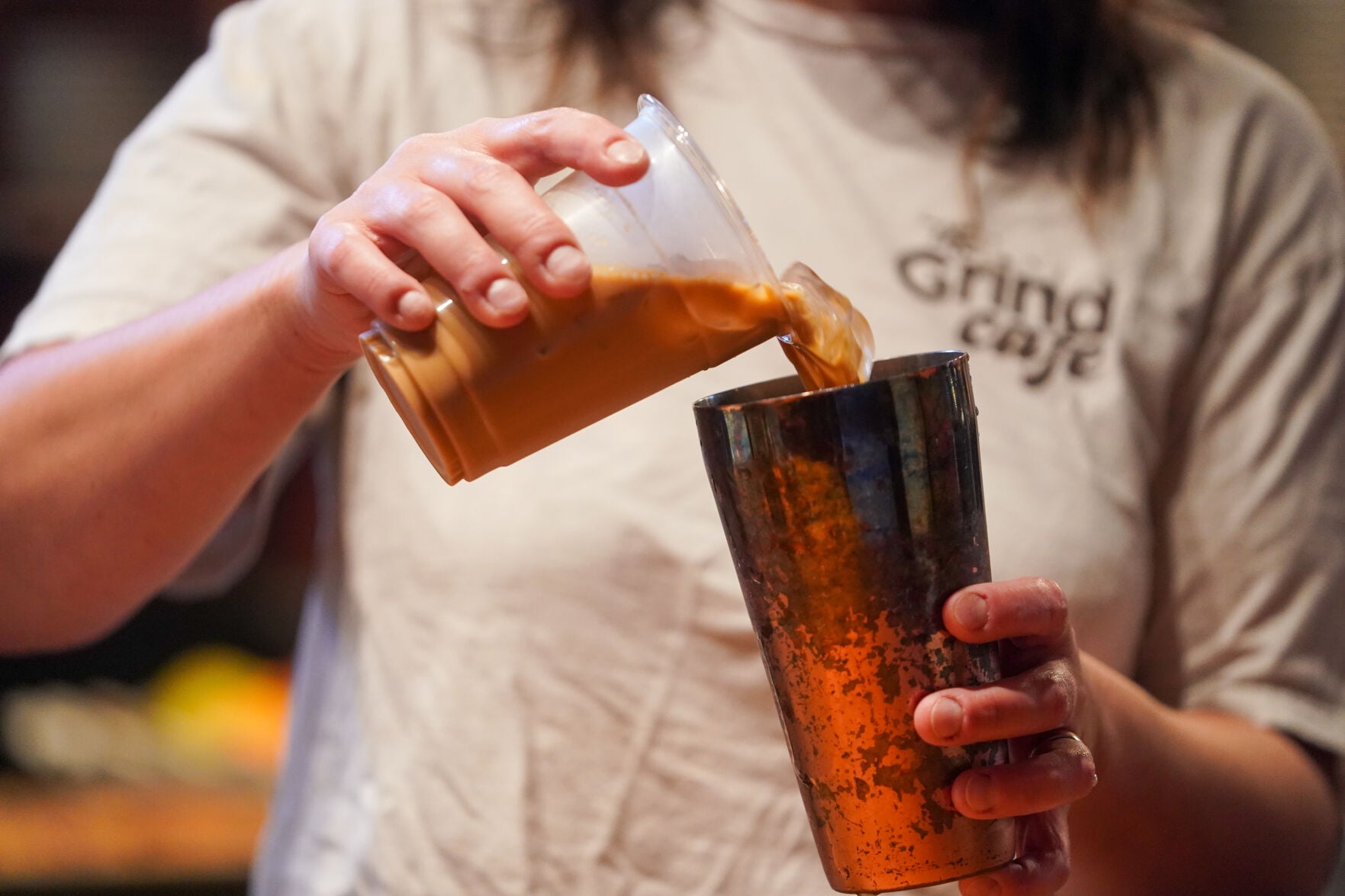
Barista Lesley Robinson pours a butter pecan latte for a customer at The Grind Café in downtown Morganton.
LISA PRICE / THE PAPER
While everyone has a different idea of the perfect cup of coffee, Robinson said there are techniques and standards that should be followed to create a good cup of coffee that honors the work of farmers and the processing that’s done to those coffees.
“You have to know all of the rules before you break them, so I think there are standard practices that help you make an objectively better coffee, and then once you get a grasp on those, you know what ways you can deviate from them,” Ebel said.
For Robinson and many others who have dedicated years to roasting and serving coffee to their communities, it’s a passion.
“I think if you have a deep respect for the history of coffee, and the people that have spent their entire lives learning how to grow it and produce it in countries that can be really harsh environmentally and politically, you want to honor that,” Robinson said. “I think that when you want to honor that coffee’s qualities and the people that put so much hard work into making it what it is, that shows up in your cup.”
Keep it Clean. Please avoid obscene, vulgar, lewd,
racist or sexually-oriented language. PLEASE TURN OFF YOUR CAPS LOCK. Don't Threaten. Threats of harming another
person will not be tolerated. Be Truthful. Don't knowingly lie about anyone
or anything. Be Nice. No racism, sexism or any sort of -ism
that is degrading to another person. Be Proactive. Use the 'Report' link on
each comment to let us know of abusive posts. Share with Us. We'd love to hear eyewitness
accounts, the history behind an article.




























(0) comments
Welcome to the discussion.
Log In
Keep it Clean. Please avoid obscene, vulgar, lewd, racist or sexually-oriented language.
PLEASE TURN OFF YOUR CAPS LOCK.
Don't Threaten. Threats of harming another person will not be tolerated.
Be Truthful. Don't knowingly lie about anyone or anything.
Be Nice. No racism, sexism or any sort of -ism that is degrading to another person.
Be Proactive. Use the 'Report' link on each comment to let us know of abusive posts.
Share with Us. We'd love to hear eyewitness accounts, the history behind an article.