



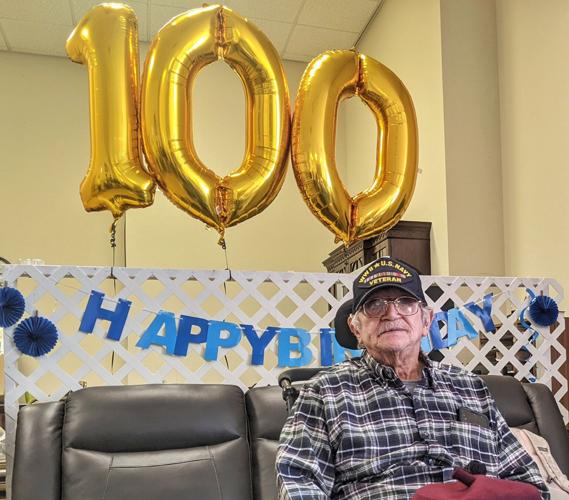
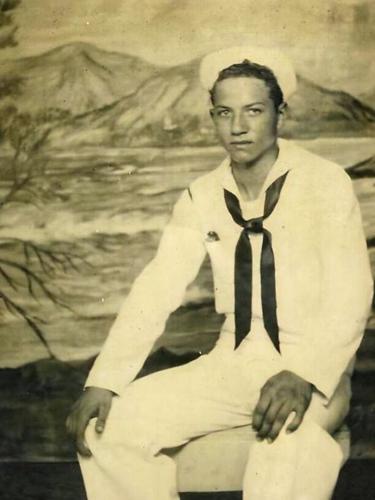
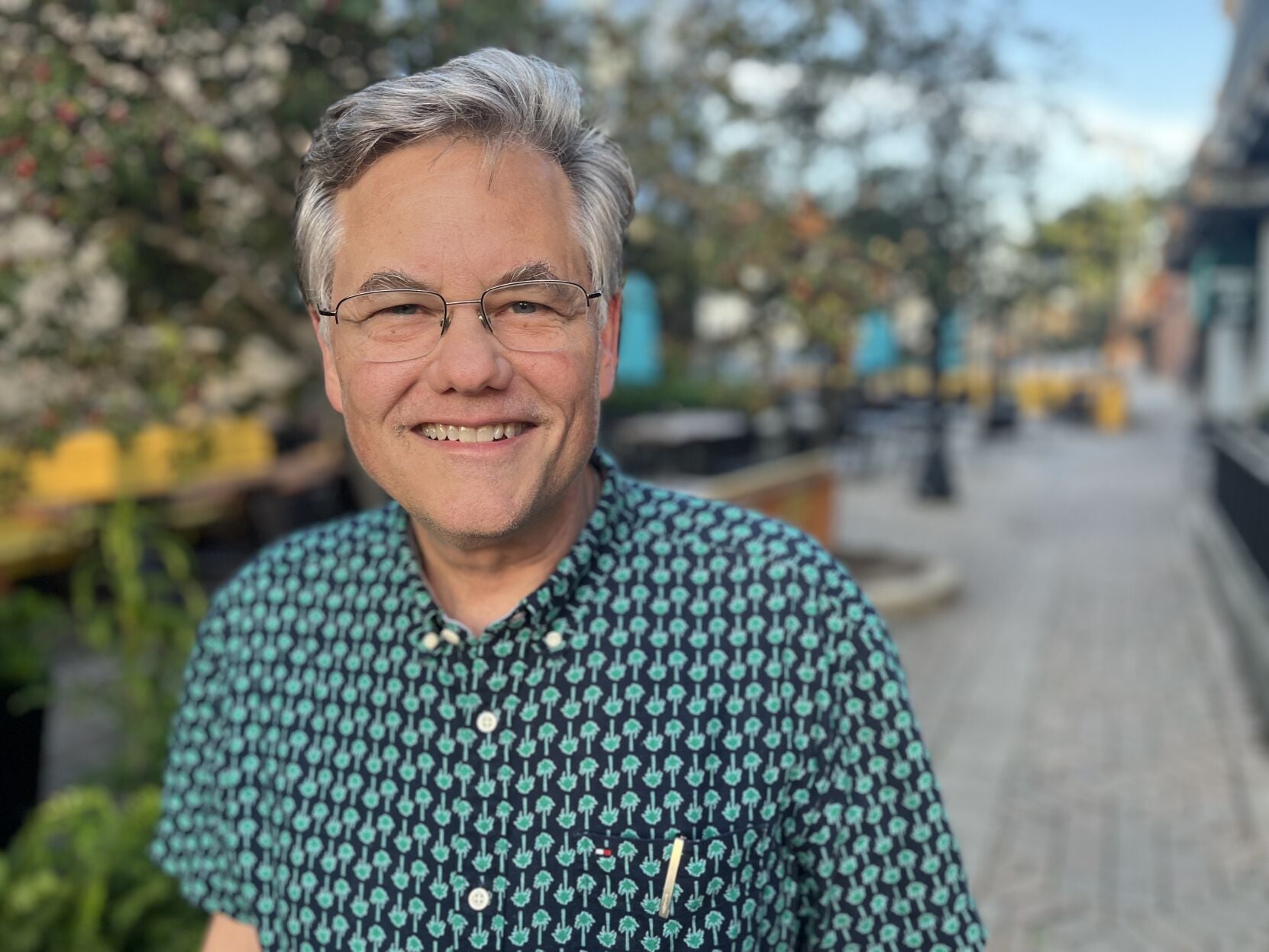
William Elliott Woodard Sr., better known as Bill Woodard, recently celebrated his 100th birthday, which was on Feb. 20, 2026.
Woodard grew up on Gwaltney Road near the Oak Hill community, and attended Willow Tree, a two-room elementary school for grades one through eight, walking the eight-mile round trip to school every day.
He then went to Olive Hill High School in Morganton, graduating in 1943 at the end of the 11th grade, a common practice in North Carolina at the time.
“We lived 10 miles out of town,” Woodard said. “Black children were not allowed to ride the bus.”
Both Willow Tree and Olive Hill were funded in part by Julius Rosenwald, a Jewish businessman of German descent who was president of Sears, Roebuck and Co.
Rosenwald took on improving the education of Black Southerners as if they were his own people.
Beginning in 1912, he teamed up with Booker T. Washington, who was born into slavery and became President of the Tuskegee Normal and Industrial Institute in Alabama.
Together they set in motion the construction of 5,000 schools in the rural South, including the training of teachers to serve in them.
In 1944, Woodard was drafted into the Navy. While still in high school, he passed the test for officer training, but after his arrival at Great Lakes Naval Training Center, he learned that the session had already started.
Due to the demands of the war-time Navy, Woodard was offered training in aviation or diesel mechanics. He chose to go to diesel school, believing it would be a more useful trade when he returned to Burke County.
“When I was a little boy, I used to help my dad, handing him tools,” Woodard said. “He was always working on wagons and cars.”
On the island of Oahu, not far from Pearl Harbor, Woodard was assigned to the transportation maintenance supply depot and worked the night shift on heavy trucks, living and working with other Black sailors in a segregated section of the base known as Manana Barracks.
For decades, the hand of Jim Crow had had a stranglehold on the U.S. military, which continued to tolerate systemic abuse and disregard for Black servicemen and women.
News reached Hawaii in the middle of the night on Aug. 14, 1945, that World War II had officially ended. The same air-raid sirens that had marked the beginning of the war went off again, this time alongside everything imaginable that could make noise, including old cannons, along with searchlights sweeping the sky, in a massive celebration.
Woodard departed Hawaii on an over-crowded ship, sleeping on a cot on an exposed deck. Coming down the gang plank in San Francisco, he almost tripped, carrying his mattress tied around his seabag with a rope.
“Back home, I remember there were no cars for sale. People were converting old trucks into tractors. I bought the frame and engine of a stripped-down school bus, had a cab put on it, so I could go into business cutting and hauling pulpwood,” Woodard said. He held various jobs for a few years, until he opened Woodard’s Paint and Body Shop, which he operated for 53 years.
In 1965, Woodard became a Mason like his father and grandfather. When he reached the 32nd degree, he became a Shriner. Within 10 years, Woodard had become Potentate, the highest position in a Prince Hall Shriner Temple, which is a separate organization for Black Shriners.
On his mother’s side, Woodard’s great-grandfather, Samuel Black, born in 1818, became a sergeant in the 11th Regiment of the North Carolina Infantry. Burke County supplied officers and men to Company B, known as the Hornet’s Nest Rifles, and Company D, organized as the Orange Light Infantry.
On his father’s side, Woodard’s grandfather was Durant Woodard, who married Emily Crisp in 1873. Her mother, Mourning Crisp, was a free woman of color, having been born of a white woman, Eliza Crisp, around 1826.
Mourning Crisp married Underzine Pelot in 1850, who was born as a slave about 1820. His master was Alexander Sackett Greenlee of Morganton, who had owned him since he himself was a teenager.
Even though Crisp was married to a slave, her children, who were listed in the Burke County census as mulattoes, were also free, as children inherited the legal status of their mother, not their father.
Pelot went to Knoxville in 1865 to enlist in the 40th U.S. Colored Regiment, which was part of the Union Army. Thus, one of Woodard’s great-grandfathers, Samuel Black, who was White, fought in the Civil War in the Confederate Army, while another of his great-grandfathers, Underzine Pelot, who was not only Black but a slave, fought in the Union Army. They were, essentially, fighting against each other.
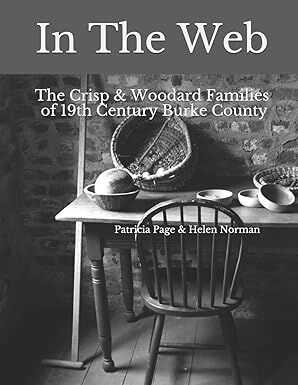
These and many other details of the Crisp-Woodard family history are included in the book, “In the Web – The Crisp & Woodard Families of 19th Century Burke County,” by Patricia Page and Helen Norman, published in 2019. It is available in the Burke County Public Library in Morganton.
For longevity, Woodard recommends starting the day with a crossword puzzle. “It keeps your mind straight, keeps it working,” he says. “Then I eat my breakfast. An egg, three slices of turkey bacon, six cloves of garlic, a quarter of an onion, grits, a little livermush, and applesauce. A glass of milk and a cup of coffee. Three shakes of ground ginger in my coffee, two teaspoons of raw honey, and a little coffee creamer.
“I always get cinnamon-flavored applesauce,” he continued. “Cinnamon is good for pain, and if you take a pinch of ground ginger every morning instead of a pain pill, you’ll forget you’ve got arthritis. No side effects that I know of. It works for me.”
















(0) comments
Welcome to the discussion.
Log In
Keep it Clean. Please avoid obscene, vulgar, lewd, racist or sexually-oriented language.
PLEASE TURN OFF YOUR CAPS LOCK.
Don't Threaten. Threats of harming another person will not be tolerated.
Be Truthful. Don't knowingly lie about anyone or anything.
Be Nice. No racism, sexism or any sort of -ism that is degrading to another person.
Be Proactive. Use the 'Report' link on each comment to let us know of abusive posts.
Share with Us. We'd love to hear eyewitness accounts, the history behind an article.