

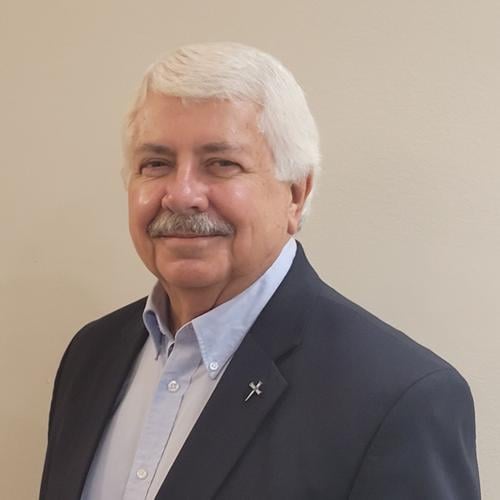

Mike Ruhlen
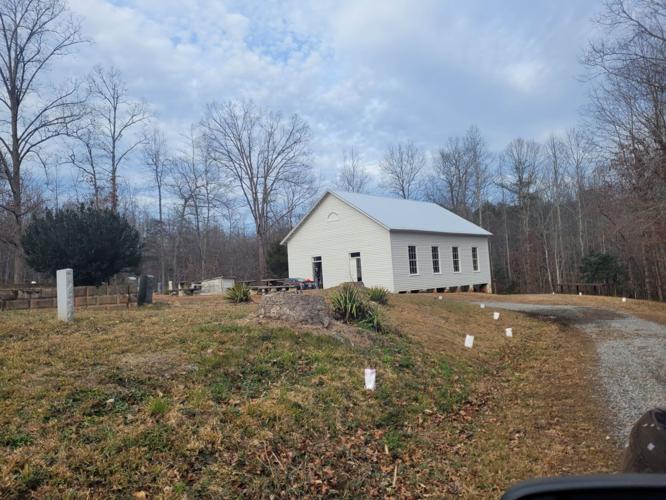
The historic Gilboa Methodist Church is a few miles south of Morganton off U.S. 64 S.
FOR THE PAPERIn a quiet wooded setting southwest of Morganton, Gilboa Methodist Church is among the most significant surviving landmarks of early Methodism in the American South.
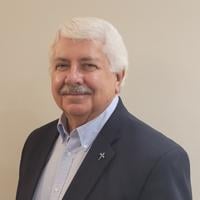
Mike Ruhlen
The Methodist faith had already taken root as a reform movement within the Anglican Church when Methodist Lay Preacher Francis Asbury arrived in British Colonial America in 1771.
Asbury soon pursued a rigorous horseback circuit, spreading Methodism throughout the Upper and Middle Atlantic Colonies and North Carolina.
He eventually came to preach at Gilboa, as documented in Asbury’s own journal and secondary sources.
Gilboa’s founding Methodist congregation traces its origins to 1793, when the first log structure was built. Faithful members of the Gilboa family started being laid to rest in its cemetery in 1825.
Burke County had been formed only a few years earlier when the first congregation organized, and the county extended all the way to the Tennessee border.
Because of Asbury’s visit, the church has often been called the Mother Church of Methodism in Burke County and, by extension, Western North Carolina.
After the first log structure and a second had been lost to fire, the present building was erected in 1879. Gilboa School was also located on the property for a time.
While it no longer serves an active congregation, Gilboa Methodist Church remains a simple rectangular frame church reflecting the plain style of rural religious life in the 19th century.
The American Revolutionary War played a crucial role in shaping the Methodist movement and Asbury’s leadership.
When the conflict erupted, most Anglican-connected clergy — Methodists among them — returned to Britain or ceased activity. This meant that many Methodists could not receive the Sacraments, as only ordained clergy could administer them.
Asbury notably remained in America throughout the war, continuing in his circuit despite political turmoil and a distrust of English preachers.
His decision to stay earned him the trust of American Methodists and positioned him as their de facto leader by the war’s end.
In the immediate aftermath of independence, the separation from the Church of England created an urgent need for a distinctly American Methodist structure.
This culminated in the “Christmas Conference of 1784” in Baltimore, where the Methodist Episcopal Church was formally organized.
Asbury was ordained deacon, elder, and then bishop, at this Conference, becoming the first Bishop of American Methodism.
The Revolution thus helped transform Methodism from a colonial movement tied to England into an independent American denomination and Asbury from a Lay Preacher to a Bishop.
When Gilboa was formed in 1793, Asbury had already been made a Bishop. Yet, he continued to serve in the capacity of a circuit rider to set an example for both lay and ordained clergy.
Over a half century of service, he traveled 270,000 miles, preached 16,425 sermons, presided over 224 conferences, and ordained 4,000 preachers.
His journals and regional histories verify repeated visits to North Carolina — at least 72 trips in total — and confirm that he preached before the early Gilboa congregation during his journeys in Western North Carolina.
Though modest in size, Gilboa Methodist Church still stands as a cherished historic site lovingly maintained by the Historic Gilboa Foundation, (“HGF”) a nonprofit dedicated to preserving its physical structure and cultural story for future generations.
Preservation work is ongoing and quite active. The church’s exterior was repaired and repainted last fall. Interior painting was completed in June of this year. These efforts were funded through the auspices of Partners for Sacred Places, along with other supporting grants that aid the HGF’s mission.
Workers were supplied through the B.R.I.D.G.E. Program (Building, Rehabilitating, Instructing, Developing, Growing, Employing), a cooperative effort between the N.C. Forest Service and the N.C. Department of Adult Correction.
All HGF Board members have contributed generously of their time, talents and money to this comprehensive effort. Special thanks are offered to volunteers Wayne and Pat Kiser for road repair work and to Pat for assistance with ceiling preparation.
With painting complete, the building is preparing for replacement of electrical wiring, as the structure was fully electrified during the early 1900s.
Funding for this initiative has been generously provided through a grant from The WNC Foundation. HGF is attempting to locate historically appropriate overhead lighting fixtures to replace those stolen from the sanctuary many years ago.
Historic Gilboa Methodist Church endures as more than an architectural relic. It represents the convergence of frontier faith, Revolutionary-era transformation, and enduring community stewardship.
From the horseback ministry of Francis Asbury to the careful preservation work of today, the church continues to bear witness to generations of faith and history.
Mike Ruhlen is a member of the Colonel Alexander Erwin Chapter SAR.













Success! An email has been sent to with a link to confirm list signup.
Error! There was an error processing your request.


Sorry, an error occurred.
Already Subscribed!
Cancel anytime
Thank you .
Your account has been registered, and you are now logged in.
Check your email for details.
Submitting this form below will send a message to your email with a link to change your password.
An email message containing instructions on how to reset your password has been sent to the email address listed on your account.
No promotional rates found.
Secure & Encrypted
Thank you.
Your gift purchase was successful! Your purchase was successful, and you are now logged in.
| Rate: | |
| Begins: | |
| Transaction ID: |
A receipt was sent to your email.




(0) comments
Welcome to the discussion.
Log In
Keep it Clean. Please avoid obscene, vulgar, lewd, racist or sexually-oriented language.
PLEASE TURN OFF YOUR CAPS LOCK.
Don't Threaten. Threats of harming another person will not be tolerated.
Be Truthful. Don't knowingly lie about anyone or anything.
Be Nice. No racism, sexism or any sort of -ism that is degrading to another person.
Be Proactive. Use the 'Report' link on each comment to let us know of abusive posts.
Share with Us. We'd love to hear eyewitness accounts, the history behind an article.