

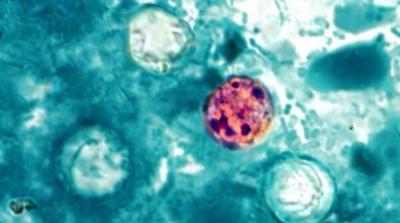


The origin of a parasite that’s been causing a multi-state outbreak of intestinal issues is now known.
The Centers for Disease Control and Prevention and the Food and Drug Administration have traced the issue back to shredded iceberg lettuce from Mexico used in Taco Bell restaurants in Indiana, Kentucky, Michigan, Ohio, and West Virginia.
Despite not being listed, North Carolina has had 307 cases of cyclosporiasis and 13 hospitalizations since May 1, as reported Tuesday by the North Carolina Department of Health and Human Services.
Burke County Public Health tracks confirmed cases, but officials have not said whether any have been identified locally. UNC Health Blue Ridge officials said there have been no reports of hospitalizations associated with the illness.
Cases within Wake County account for the largest portion of those infected at 236 and 5 hospitalizations as of Thursday, according to the county’s website. Charlotte media outlets reported that in Mecklenburg County, there have been 19 cases reported this year, most of which have been linked to international travel.
North Carolina public health officials still urge caution when it comes to handling and consuming fresh herbs and produce.
The illness is caused by consuming food or water contaminated with a microscopic parasite called cyclospora, according to health officials. It usually takes a week after infection to notice symptoms, which typically include watery diarrhea with frequent bowel movements, loss of appetite, weight loss, stomach cramps/pain, bloating, increased gas, nausea, and other flu-like symptoms.
“If you are experiencing severe or persistent diarrhea, you should reach out to your healthcare provider,” said State Epidemiologist Dr. Zack Moore. “It is also important for everyone to follow routine safety practices like washing your hands with soap and water before and after handling or preparing food and washing all fresh produce under clean running water.”
The state has experienced a consistent level of cyclospora cases from 2024 to 2026, with 2024 marking an uptick over the previous year, according to public health officials. While a single product has not been identified as the source of cases within the state, NCDHHS is working with local partners to keep North Carolina residents informed.
“Many individuals may not even realize they have consumed the ingredient that is making them sick, which makes tracing the source of contamination more difficult,” said Dr. Carl Williams, State Public Health Veterinarian. “For example, someone may recall that they had pico de gallo with their dinner, but not that it included cilantro.”
Cyclospora originates from a particular ingredient where it is grown, not from contamination at a restaurant or food establishment, according to NCDHHS. Michigan’s Department of Health and Human Services, which is tracking the largest outbreak, is urging people to prioritize cooking when possible, heating food to 158 degrees Fahrenheit or higher to kill the cyclospora.
However, the parasite is often associated with fresh herbs and produce that are served uncooked, like parsley or cilantro, making prevention much more challenging, according to health officials. Cyclospora can survive the trip from the field, where produce is grown, to the plate, particularly if the produce is not cooked or cleaned.

























(0) comments
Welcome to the discussion.
Log In
Keep it Clean. Please avoid obscene, vulgar, lewd, racist or sexually-oriented language.
PLEASE TURN OFF YOUR CAPS LOCK.
Don't Threaten. Threats of harming another person will not be tolerated.
Be Truthful. Don't knowingly lie about anyone or anything.
Be Nice. No racism, sexism or any sort of -ism that is degrading to another person.
Be Proactive. Use the 'Report' link on each comment to let us know of abusive posts.
Share with Us. We'd love to hear eyewitness accounts, the history behind an article.