

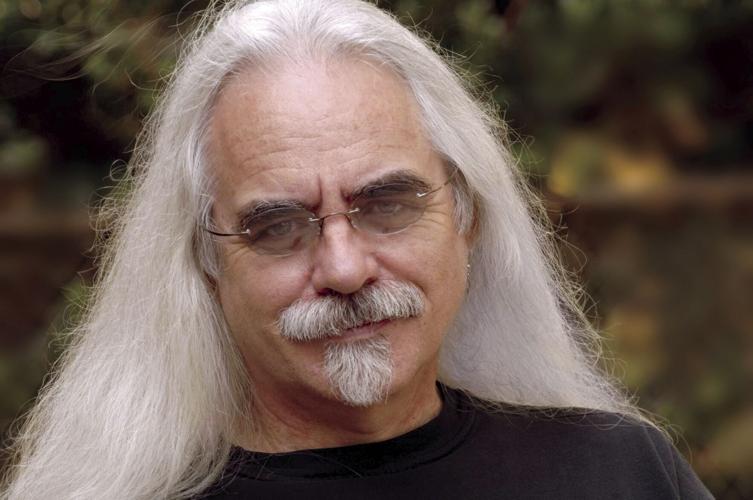

Our lives sometimes turn on a single moment. And often we never know what the circumstances were, or even that the moment occurred.
The story I offer relates to just such a moment that led to what was to become a new artform that has spread across America. And unbeknownst to me, that moment was to have a profound effect on my life as well as many others.
This event occurred in a car in January of 1973. In that vehicle was a high school journalism teacher and four of his students from Science Hill High School in Johnson City, Tennessee.
They were on their way to print the next edition of their school newspaper in nearby Jonesborough, Tennessee. I happen to know the particulars of this event for the fact that I later knew and became a friend of the teacher, the late Jimmy Neil Smith.
I also know two of the students in that car, David and Amy Cortner who have long been married, and are good friends of my wife and me. David has done the artwork for several of my recordings, has been my photographer and webmaster for over 20 years.
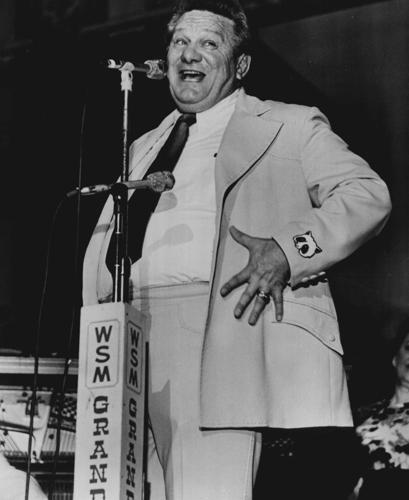
As the story goes, while on the way to Jonesborough, Jimmy Neil had the radio tuned to a local country music station when a well-known country comedian named Jerry Clower came on.
Clower was a bigger than life character who hailed from Yazoo, Mississippi and was known for his hilarious stories about the Ledbetter family who had been his neighbors growing up.
As Amy and David recall the events of that day Mr. Clower was telling a story about a coon hunting escapade that was one his most famous tales called, “Knock Him Out John!”
Jimmy Neil was a resident of Jonesborough and was always looking for ways to promote the quaint little burg. As the story ended, he said, “I love that guy! We should have a storytelling festival and invite storytellers like Jerry Clower.”
Being not only a fan of well-told stories but also a man of action, he began pitching this storytelling festival idea to his cohorts in Jonesborough.
By 1973 bluegrass music festivals were becoming popular across the country so a storytelling festival seemed like it just might work.
And so it came to pass that those dedicated folks in the little town of Jonesborough went to work. They set a goal to have the festival take place on the first weekend in October.
They needed a name for the event, and several ideas were kicked around but nothing seemed to have the right ring to it. Finally, it was decided to call it The National Storytelling Festival. After all, the name sure wasn’t taken and why not dream big?
The main attraction was a Saturday evening concert held at the local high school gymnasium. Estimates run as high as 1,200 folks attended. The opening act was Bill Monroe and The Bluegrass Boys.
Mr. Monroe was not exactly known as much of a talker, but when the festival committee contacted the talent agency who booked Mr. Clower, the agent insisted that they would need an opening act.
By all accounts the East Tennessee audience thoroughly enjoyed the music, but Jerry Clower brought down the house.
On Sunday afternoon the festival moved outdoors to the courthouse square where a few hay bales and an old farm wagon served as the stage and decor.
Ray Hicks from Beach Mountain was invited to tell stories, which he did from the makeshift farm wagon stage. Ray was a real mountain man who told Jack Tales which had come over with the English settlers in the 1700s.
“Jack and the Beanstalk” being but one of a series of stories about the boy who got by on his wits.
But in Ray’s versions the hero, the settings and situations had become Appalachian through the folk process. Ray who stood 6’ 11” was an amazing character himself and loved by everyone he encountered.
Also invited were two librarians from Chattanooga, Conny Regan and her cousin Barbara Freeman who later performed together as The Folktellers. They had become well known through telling folk tales at folk music festivals.
It was unanimously decided that what had taken place on Sunday should be what the subsequent festivals would be based on. And so, it was.
The National Storytelling Festival has thrived over time drawing some 10,000 listeners throughout the three-day weekend each year.
The average age of the attendees is in the mid-50s because the stories presented are not focused on kids. They are a blend of personal stories, humorous stories, historical accounts, Native American and African folk tales and legends aimed at an adult audience. Each storyteller brings his or her unique style to the stage.
The festival is presented in five large tents holding up to 1,600. Folks who attend for the first time almost always come back, with the average attendee having been there seven times. The event has spawned a multitude of storytelling festivals across America.
Somehow, I hadn’t been aware of all this until I was on a tour doing music concerts in Texas 20-some years ago. I returned to my motel room after a performance and tuned into PBS.
Playing was a documentary about The National Storytelling Festival. I was mesmerized by the performances and stunned by the fact that all this had been going on for all those years and that I had been unaware that such a thing even existed.
Being a singer/songwriter I told stories as introductions to my songs. I was sure that this storytelling thing could work for me. And it did.
I have been a featured storyteller there many times over the years and have performed at most every major storytelling festival across America because once a fellow happened to hear Jerry Clower on his car radio and had an idea.
And my life and so many other lives turned on that single moment.
















(0) comments
Welcome to the discussion.
Log In
Keep it Clean. Please avoid obscene, vulgar, lewd, racist or sexually-oriented language.
PLEASE TURN OFF YOUR CAPS LOCK.
Don't Threaten. Threats of harming another person will not be tolerated.
Be Truthful. Don't knowingly lie about anyone or anything.
Be Nice. No racism, sexism or any sort of -ism that is degrading to another person.
Be Proactive. Use the 'Report' link on each comment to let us know of abusive posts.
Share with Us. We'd love to hear eyewitness accounts, the history behind an article.