

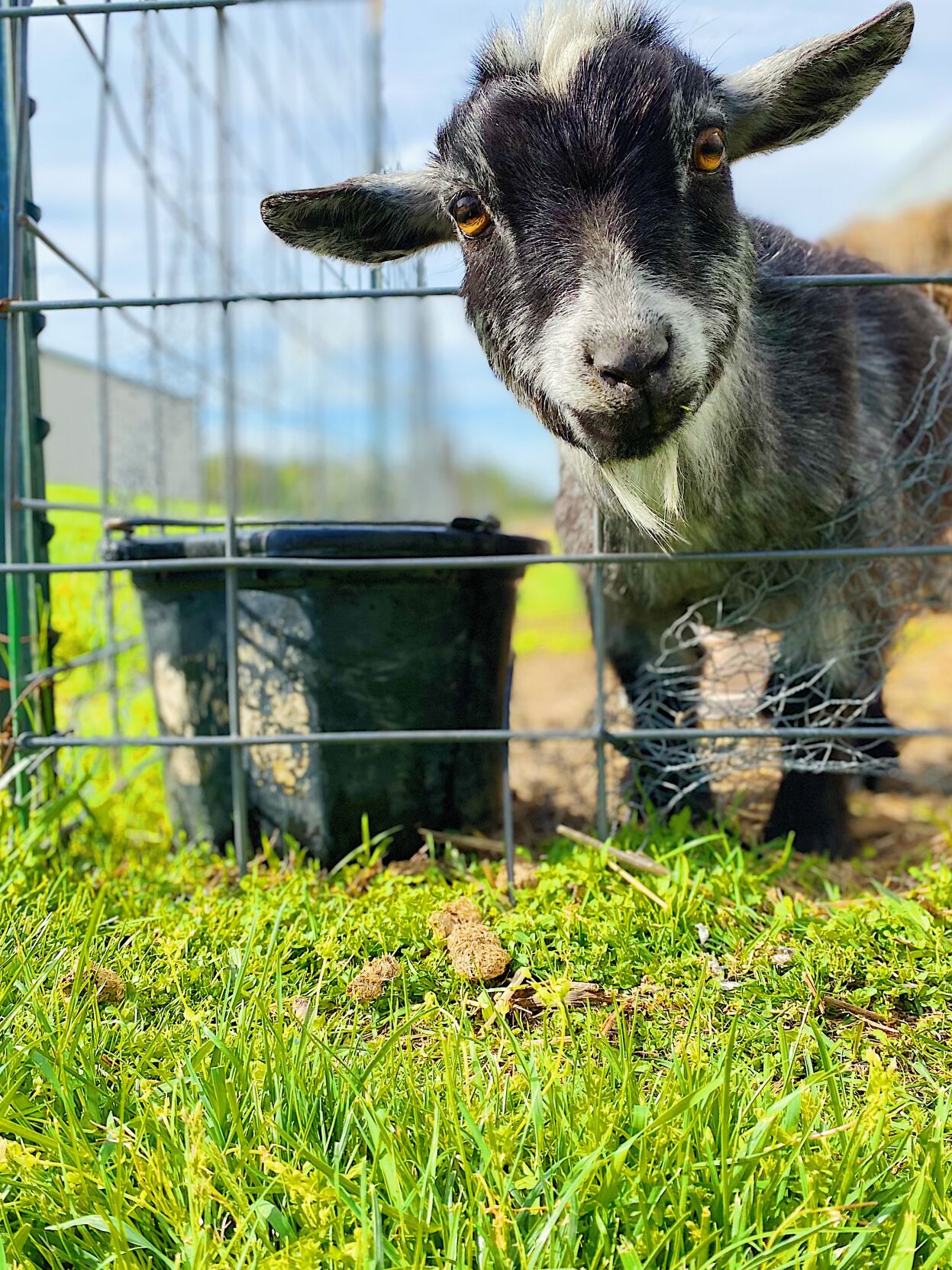
Burke County health officials are providing preventive rabies treatment to people who attended a private event in Burke County near Hickory after three goats from a mobile petting zoo tested positive for the disease.
No human cases have been identified, but officials are still attempting to reach everyone who may have had contact with the animals.
According to Burke County Public Health, the petting zoo was present at a private event Aug. 9 on Miller Mills Road in the part of Hickory which extends into Burke County. BCPH declined to release other information about the event.
“This was the only known location where the mobile petting zoo visited within Burke County, and no cases of human rabies have been identified in Burke County,” said Burke County Public Health Educator Samantha Simmons.
Citing “privacy considerations,” Simmons said Burke County Public Health will not release the number of individuals who contacted the department or received treatment, but she said post-exposure rabies vaccination has been provided to individuals who reported attending the event.
Simmons said her department is monitoring those who reported exposure and is working with the N.C. Department of Health and Human Services to continue contacting all individuals who were in attendance.
The North Carolina Department of Agriculture was first notified of the rabies cases on Aug. 27 when a private veterinarian reported euthanizing one of the goats suspected of rabies, according to Heather Overton, assistant director of public affairs at the NCDA.
Emily Herring, a public health veterinarian with the North Carolina Division of Public Health, said her department was first notified on Aug. 27. Test results were positive in three of the goats by Aug. 28.
Herring said symptom onset in the goats was first reported Aug. 12. Since animals can be infectious up to 15 days before showing symptoms, the “period of interest” began with exposures on July 28, she said.
The Burke County event is one of 10 that took place in the region from July 28 to Aug. 23, according to NCDHHS.
There are no state regulations specific to petting zoos, said Overton, but there is a 2023 compendium on the subject that public health officials share with anyone who owns an animal exhibit, she said.
The compendium recommends “staff and visitor education, attention to hygiene, and appropriate facility design as well as proper care and monitoring of animals and their enclosures.”
There is also no rabies vaccine approved for use in goats, and it is not recommended to vaccinate baby goats, said Overton. However, farmers will sometimes give their goats rabies vaccines approved for sheep, she said.
NCDHHS said in a news release the goats were “most likely exposed to rabies by a skunk that had entered the pen where they were kept in late July.”
The petting zoo in question, Farm Adventures, is located in Harmony. A phone call and text to the farm were not immediately returned. The farm’s website displays a message that says it is “temporarily offline.”
While rabies exposures occur relatively commonly among wild “vector species” like raccoons, skunks, foxes, bats, coyotes, and bobcats, the disease is rare among livestock, said Herring.
“They’re not a primary rabies reservoir, but they will pick it up from wild animals if they have contact,” Herring said. “Every year we do have a handful of livestock that are submitted … and test positive. It’s not unheard of.”
According to NCDHHS, rabies is almost always fatal in all mammals, including people, unless they are treated before symptoms develop. The department said symptoms, which can include weakness, fever, headache, and a prickling or itching sensation at the exposure site, can begin from weeks to months after exposure.
It is critical for people exposed to rabies to get treatment, which entails a series of vaccines and rabies antibodies, said Herring.
“It’s highly effective as long as it’s applied at the right time,” she said. “Our ability to administer this treatment after someone is exposed to rabies is the reason rabies is so incredibly rare.”
Herring said people should use caution when interacting with animals of any kind.
“Petting zoos and any sort of venue where kids can see and have contact with animals, including livestock, can be really great educational opportunities,” she said, “but any time there’s an opportunity for contact between animals and people … keep in mind there are diseases that can be transmitted.”
Illnesses like salmonella and E. coli are easy to pick up from animals but can be prevented by handwashing and not eating or drinking in places where animals are present, she said.
“The main message is that if anyone is concerned they may have been in contact with these goats from this petting zoo, they should get in contact with their local health department,” said Herring.

























(0) comments
Welcome to the discussion.
Log In
Keep it Clean. Please avoid obscene, vulgar, lewd, racist or sexually-oriented language.
PLEASE TURN OFF YOUR CAPS LOCK.
Don't Threaten. Threats of harming another person will not be tolerated.
Be Truthful. Don't knowingly lie about anyone or anything.
Be Nice. No racism, sexism or any sort of -ism that is degrading to another person.
Be Proactive. Use the 'Report' link on each comment to let us know of abusive posts.
Share with Us. We'd love to hear eyewitness accounts, the history behind an article.