



Alan Wood

Dr. Mike Swan

Welch
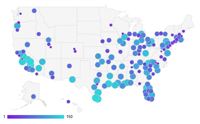
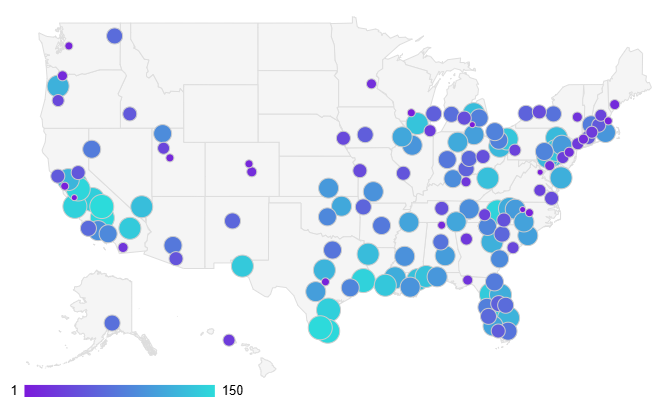
A recent national survey measuring education ranked the Hickory-Lenoir-Morganton region near the bottom of the 150 metropolitan statistical areas studied.
WalletHub, a personal finance entity, released the results of a study that analyzed the 150 largest metropolitan statistical areas (MSAs) in the country earlier this month. The Hickory-Lenoir-Morganton MSA is among them, ranking near the bottom at No. 144.
That said, local community and education leaders balk at the inclusion of Burke County as among the least educated in the country, while others say the designation reflects an unbalanced emphasis on skipping four-year higher education institutions.
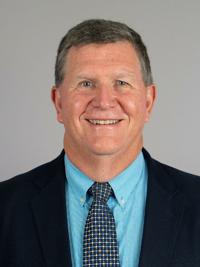
Alan Wood
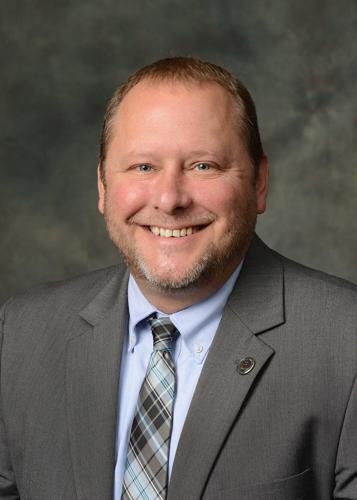
Alan Wood, president and CEO of Burke Development Inc., said the rating is unsurprising given the area’s priorities. Burke County leans toward technical programs and certifications that support the local manufacturing industry.
“This study slants more toward areas with colleges and universities. Our area is high in manufacturing with more technical programs and certifications,” Wood said. “Our community college does a great job providing opportunities for students.”
A bachelor’s degree or higher is not a requirement for a good-paying job, but it helps. The Bureau of Labor Statistics 2023 data show that, nationally, a high school diploma nets a median weekly wage of $899, and a 3.9% unemployment rate compared to a bachelor’s degree with a $1,493 median wage and 2.2% unemployment rate. Higher educational attainment has also been linked to increased life expectancy and overall better health outcomes.
The county is also combatting a declining graduation rate. The Burke school district is also still climbing out of the hole created by COVID-19. In 2020, the graduation rate was 91.7%. This past school year’s rate was 88.2%.
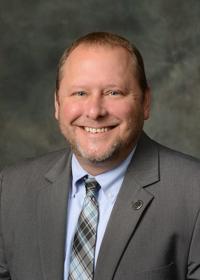
Dr. Mike Swan
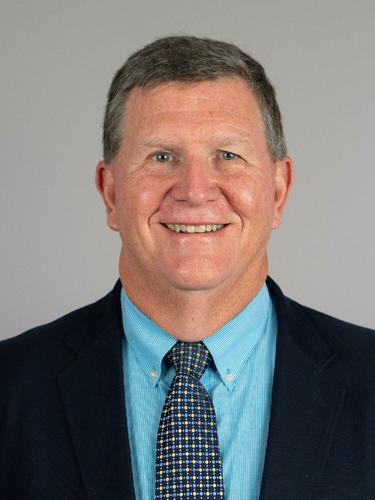
“Over the past decade, there has been a shift in the mentality that everyone has to go to a four-year college or university to get a high-paying job and/or fulfilling, successful career,” said Dr. Mike Swan, superintendent of Burke County Public Schools.
“What students and parents have realized over the last few years is that you can get a license, credential, or certificate in certain fields in less than half the time (think lineman, plumber, electrician), come out making great money and not be strapped with mountains of college debt,” he said.
Christopher Pedro, a rising senior at North Carolina School of Science and Mathematics-Morganton, said students who leave Burke County tend not to return and lack of opportunities available is chief among the reasons why.
“There is a shortage of internships, job experiences, and other opportunities,” Pedro says.
A first-generation college graduate, Lily Laramie is now the director of the Small Business Center through WPCC. Laramie attended UNC-Asheville for her undergraduate degree and furthered her education at Lenoir-Rhyne University, where she received a master’s degree.
“As someone who lives in Lenoir, works in Burke, and has worked in Hickory, there are not enough jobs in those cities that one, pay enough, and two, justify students coming back to their hometowns. I’m a great example,” Laramie said.
According to Laramie, young professionals are having a tough time making ends meet with salary ranges in the Burke area. Earnings here lag behind similar work in other areas of the state, giving graduates no financial incentive to move back to the area.
Pedro added that the collective emphasis on trade schools and community colleges isn’t the only reason fewer Burke students might choose not to attend college.
“The application process for four-year institutions is not easy. It is complex and ever-changing, just look at the FAFSA fiasco,” Pedro said. “Students, especially in rural high schools across North Carolina, don't have access to the same opportunities or levels of education as students from richer families or bigger cities. This makes them believe that college isn’t for them and that it’s only for a certain group of people. It discourages them. … It should not be like that. Equal opportunity for all means for all.”
Pedro recalled a Hispanic club meeting when he attended Freedom High School. Students shared their names and plans after high school. Of nearly 30 students, he and one other student were the only ones not attending a trade school or community college after high school.
“There is nothing wrong with attending a community college, but it is also not the only option for students,” he said.
“In terms of education, North Carolina is not the best place for students to attend public schools. Teachers are underpaid, schools are overpopulated, and opposition from legislators to fund public schools and instead fund private schools, among an array of other issues. If we want to attract professionals to our county we need a stronger educational system,” Pedro said.
Local leaders say that despite the absence of four-year institutions, partnerships with these schools offer students an avenue to earn credit toward bachelor’s degrees.
Dr. Joel Welch, president of Western Piedmont Community College (WPCC), said he agreed with the assessment of BDI’s Alan Wood, and that progress is being made.

Welch
“Our economy was historically based in manufacturing, which did not require education credentials and many of our residents did not pursue education but went to work instead,” he said. “Our economy is shifting, and our workforce will need credentials in the future.”
“It takes time to increase educational credentials, but our work on articulation agreements for bachelor’s degrees and on industry-recognized short-term credentials in fields such as construction, manufacturing, and health care will increase the overall educational attainment in our region and lead to strong career paths with life-sustaining wages,” Welch said.
“We have developed strong articulation agreements with universities such as Lenoir-Rhyne, Appalachian State, and Western Carolina. These partnerships along with Appalachian State’s new campus in Hickory and the location of the western campus of the North Carolina School for Science and Mathematics in Morganton promote education in our region,” Welch said.
In August 2023, Appalachian State University opened a new Hickory campus offering more than 100 degree programs. According to an article published by Appalachian State in 2023, Hickory was the largest metropolitan area in the state without a public university campus.
The first year open, App State’s Hickory campus enrolled a total of 363 students, comprising 21% racially and/or ethnically underrepresented students, 58% first-generation undergraduate students, and 71% rural students.
Lenoir-Rhyne University serves the Hickory area as a co-educational, private liberal arts institution that enrolls approximately 2,300 students.
According to BCPS officials, programs like GEAR-UP, NCSSM Connect, and Work In Burke, along with programs at NCSSM-Morganton, are resources that encourage post-secondary education, apprenticeship programs, and training for educators.
BCPS and WPCC have partnered with MyFuture NC to address credentials and post-secondary degrees. The Burke County Board of Education formalized the collaboration at its June 24 meeting.
“North Carolina’s educational attainment goal states that we are ensuring that by 2030, 2 million North Carolinians, ages 25 to 44, have a high-quality credential or post-secondary degree. Both two and four-year degrees, as well as high-quality credentials, count toward the 2 million by 2030 goal,” said Kim Case, regional impact manager at MyFuture NC.
At the other end of the spectrum, Durham-Chapel Hill came in at No. 4 and Raleigh-Cary placed No. 7. Those MSAs have multiple public and private four-year colleges and universities. Ann Arbor, Mich., ranked No. 1. Lenoir-Rhyne University, a private institution, and Appalachian State University’s newly opened Hickory campus are the only university campuses in the Burke County area. There are three community colleges in the MSA.
The percentage of adults with at least a bachelor’s degree and the quality of public education were among the 11 metrics that influenced the ranking. Data was collected on June 4 from the U.S. Census Bureau, Greatschools.org, Yelp, and WalletHub research.
Charda Pearson is the education and business reporter for The Paper. She may be reached at 828-445-8595, ext. 2012, or charda@thepaper.media.















Success! An email has been sent to with a link to confirm list signup.
Error! There was an error processing your request.


Sorry, an error occurred.
Already Subscribed!
Cancel anytime
Thank you .
Your account has been registered, and you are now logged in.
Check your email for details.
Submitting this form below will send a message to your email with a link to change your password.
An email message containing instructions on how to reset your password has been sent to the email address listed on your account.
No promotional rates found.
Secure & Encrypted
Thank you.
Your gift purchase was successful! Your purchase was successful, and you are now logged in.
| Rate: | |
| Begins: | |
| Transaction ID: |
A receipt was sent to your email.





(0) comments
Welcome to the discussion.
Log In
Keep it Clean. Please avoid obscene, vulgar, lewd, racist or sexually-oriented language.
PLEASE TURN OFF YOUR CAPS LOCK.
Don't Threaten. Threats of harming another person will not be tolerated.
Be Truthful. Don't knowingly lie about anyone or anything.
Be Nice. No racism, sexism or any sort of -ism that is degrading to another person.
Be Proactive. Use the 'Report' link on each comment to let us know of abusive posts.
Share with Us. We'd love to hear eyewitness accounts, the history behind an article.