

America is rapidly expanding school choice, voucher systems, educational savings accounts, charter schools, and privatized education options.
Many families support these programs because they are searching for something better for their children. I understand that frustration. Parents want safety, attention, flexibility, and opportunity.
But there is one dangerous question lawmakers across America are avoiding:
What happens to IDEA when public accountability disappears?
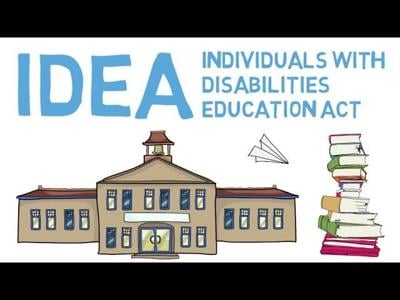
The Individuals with Disabilities Education Act (IDEA) was never designed for a fragmented educational marketplace. IDEA was built around a public responsibility model — meaning public schools must identify, evaluate, serve, and protect students with disabilities through enforceable legal rights.
Once public dollars begin flowing into loosely regulated private systems, those protections begin to weaken.
That should concern every American family.
Many parents do not realize that when they voluntarily place their child into certain private schools using vouchers or scholarship systems, they may unintentionally waive major IDEA protections.
The school may not be required to provide the same services, staffing, therapies, interpreters, transportation, or procedural safeguards that public schools must provide under federal law.
The difference between “access” and “choice” suddenly becomes very real.
In public schools, parents can demand evaluations, due process hearings, IEP enforcement, and legal accountability. In many private settings, those rights become limited, reduced, or nearly impossible to enforce.
And while charter schools are technically public schools in many states, enforcement varies dramatically.
Some provide excellent services. Others quietly discourage enrollment of students with intensive disabilities because those students require staffing and resources that impact budgets and performance metrics.
The ugly truth is this:
Special education is expensive.
And whenever education becomes tied to competition, enrollment targets, branding, and profit incentives, there is enormous pressure to reduce high-cost populations.
That includes Deaf students.
That includes autistic students.
That includes students with intellectual disabilities, behavioral disabilities, mobility impairments, and complex medical needs.
This is why IDEA matters.
IDEA was created because America once abandoned disabled children entirely. Before federal protections, countless students were denied education altogether or hidden away from society. Congress recognized that disability rights are civil rights.
But today, we are entering dangerous territory again — not through open exclusion, but through fragmentation.
A student leaves the public system with a voucher.
The public funding follows.
But the accountability may not.
The services may not.
The transparency may not.
And the parents often do not discover this reality until their child is already struggling.
For Deaf education specifically, this danger is enormous.
North Carolina already faces major questions involving charter expansion, resource distribution, residential schools, early intervention systems, and statewide language-access accountability.
If public funds continue dispersing into systems without strong IDEA enforcement, the state risks creating a patchwork structure where services depend more on geography, marketing, or institutional preference than actual student need.
That is not educational freedom.
That is educational instability.
School choice advocates and disability advocates do not have to be enemies. Families absolutely deserve options. But if taxpayer money funds education, then taxpayer accountability must follow the child.
The solution is not eliminating choice.
The solution is ensuring that IDEA protections, disability data transparency, due process rights, and accessibility standards follow every publicly funded student — regardless of where they attend school.
Civil rights should never become optional based on ZIP code or institutional label.
If America truly believes every child matters, then disability protections cannot be treated as negotiable fine print hidden beneath political slogans.
Because once accountability disappears, the most vulnerable children are always the first to pay the price.

























(0) comments
Welcome to the discussion.
Log In
Keep it Clean. Please avoid obscene, vulgar, lewd, racist or sexually-oriented language.
PLEASE TURN OFF YOUR CAPS LOCK.
Don't Threaten. Threats of harming another person will not be tolerated.
Be Truthful. Don't knowingly lie about anyone or anything.
Be Nice. No racism, sexism or any sort of -ism that is degrading to another person.
Be Proactive. Use the 'Report' link on each comment to let us know of abusive posts.
Share with Us. We'd love to hear eyewitness accounts, the history behind an article.