


Rae Ross, assistant manager at Morganton’s Marquee Cinemas, is gearing up for the theater’s 25th anniversary and the unveiling of its modern renovations.

The updates to Marquee Cinemas include a fresh paint scheme for inside the theater and the building’s exterior.

All seven screening rooms now feature large electric recliners for improved comfort.
This summer, Morganton moviegoers will notice a more modern experience at Marquee Cinemas as the theater unveils major renovations ahead of its 25th anniversary.
The theater’s seven auditoriums now feature larger electric recliners and a reserved seating system that allows customers to select seats online or in person before a movie begins. The auditoriums, hallways, and lobby also have a more modern color scheme, along with a kiosk that allows customers to retrieve online tickets without waiting in line.
A ribbon cutting celebration, hosted by the Burke County Chamber of Commerce, is planned for 11 a.m. on Tuesday, June 2.
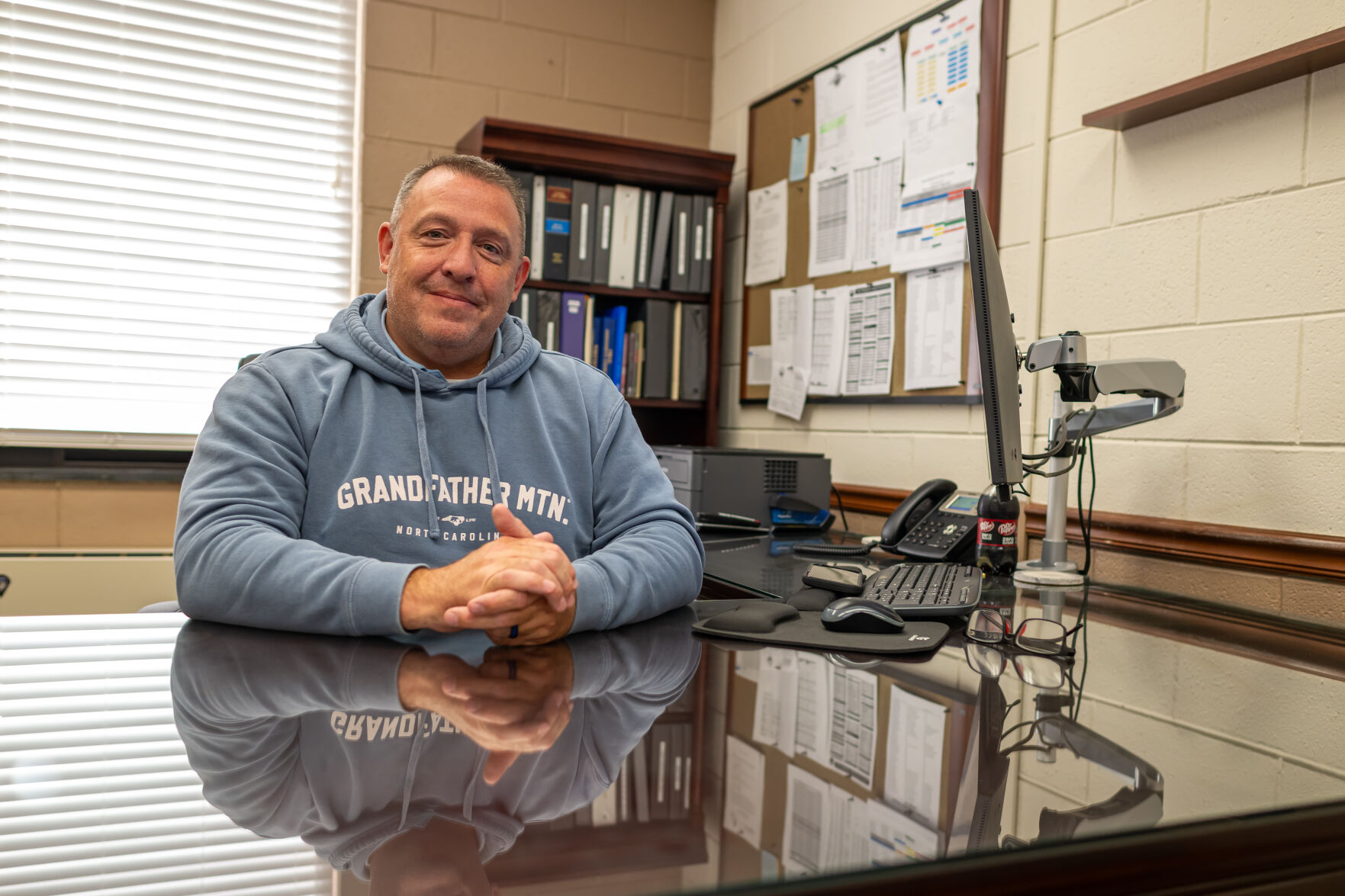
“The idea is to provide a luxury experience instead of just general admission seating,” Manager Garland Roberts said. “Everything is definitely modernized in terms of appearance, luxury finishes, and much more subdued colors.”
“It’s not as festive looking, but it’s also much more in keeping with the luxury experience that we’re trying to provide,” he added.
Renovations began in March, with Norvell Properties, which owns the building, working alongside Marquee Cinemas to complete the roughly $2 million project in two phases while remaining open during construction.
Crews first renovated four auditoriums before moving to the remaining three.
So far, the community response has been especially positive toward the new seating, Roberts said.
“We look at the renovations as a vote of confidence in our location specifically, and in our industry in general, that they’re willing to invest the resources to update everything,” Roberts said. “Morganton’s Marquee Cinemas has always punched above its weight in terms of the size of the town that we live in.”
While the theater has received a makeover, Roberts said some longtime traditions remain.
Morganton’s Marquee Cinemas opened in December 2001 with 35mm film and then successfully switched to digital in July 2007.
“Our COO made the statement that he would rather be on the leading edge of that transition than a trailing edge, so we changed 100% to digital, rather than doing it in phases, unlike some of the larger places did,” Roberts said.
Over in concessions, the theater still has the original popcorn popper that it opened with nearly 25 years ago. While some competing theaters are switching to self-serve concessions, Morganton’s Marquee Cinemas is still prioritizing a hands-on experience.
“I always try to stress customer service skills with our staff,” Roberts said. He added that his team of about six is expected to double this summer with the kids summer movie series. In an industry notorious for high turnover, Roberts said he’s proud to have a solid team and that the theater continues to be a great place to work.
“We hire people when they’re 16 and keep them until they graduate college, and sometimes after that, until they find their way,” he said.
Roberts expects a busy summer season ahead, especially with several major releases on the schedule. Among the movies he said the team is most excited for is “Toy Story 5.” Roberts added that the summer box office is already off to a strong start with “Super Mario Galaxy” and “Michael.”