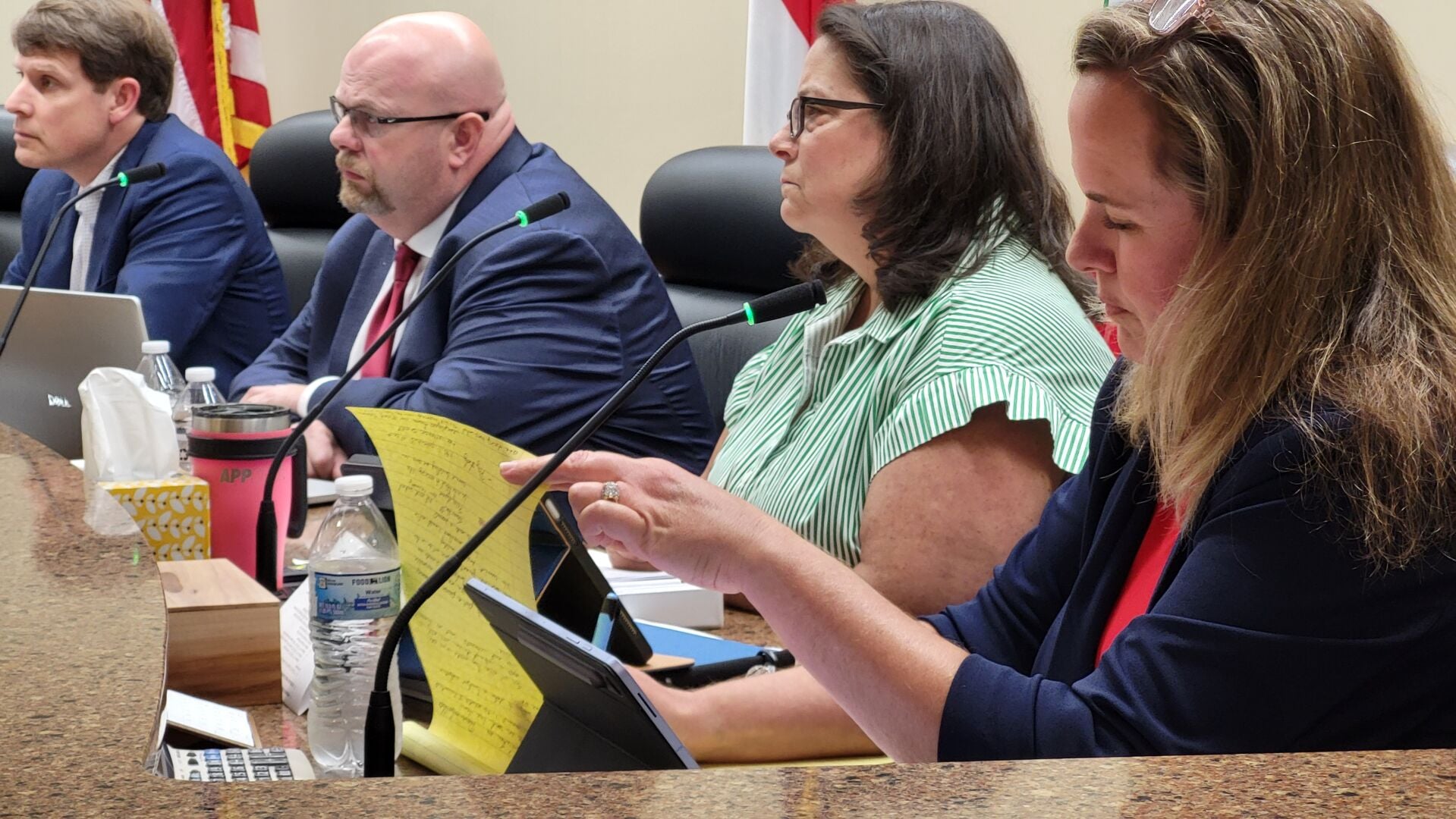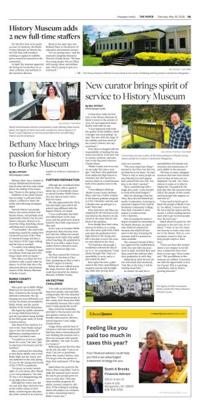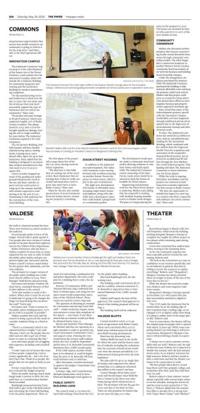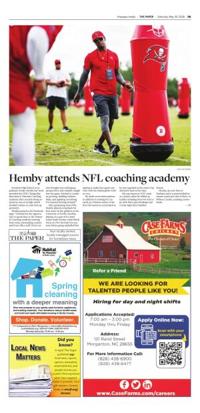




The Industrial Commons’ Erin Kizer leads Coffee at the Museum listeners through plans for the Innovation Campus. Infrastructure work and grading have been completed and vertical construction is expected to start soon.
After years of planning, fundraising, and site work, The Industrial Commons is preparing to begin vertical construction at its future Innovation Campus, marking a major step in bringing manufacturing back to a former Drexel Furniture site and creating new opportunities for businesses in Burke County.
During May’s Coffee at the Museum, The Industrial Commons’ Erin Kizer and Meredith Maiken outlined the status of several projects now underway through its “Land for the Commons” program, including an Innovation Campus on Fleming Drive, a workforce housing development just on the edge of downtown Morganton, and a new effort aimed at preserving locally owned commercial spaces.
The Industrial Commons is a Morganton-based nonprofit focused on rebuilding a diverse working class locally through workforce development, employee-owned businesses, and industrial cooperatives. Over the past decade, the nonprofit has supported more than 5,000 workers and 500 businesses across the region.
“We’re really focused on creating business opportunities that ensure that wealth created in our community is going to stick in it for the long term,” said Kizer, who is the chief operations officer.
INNOVATION CAMPUS
The Industrial Commons’ largest project is the redevelopment of the former site of the Drexel Furniture 3 and 5 plants into the Innovation Campus, which will include the Commons Building for community programs and training and the Accelerator Building for modern manufacturing companies.
“As the manufacturing sector and textiles has evolved over the last 20 years, the real estate and the structures that exist don’t necessarily support the type of businesses that are still in our community,” Kizer said.
The project also pays homage to Drexel Furniture, which once employed roughly 20% of Burke County residents. The plants closed in 2004, and a 2009 fire brought significant damage, leaving the site in rough condition for years before The Industrial Commons acquired it for redevelopment.
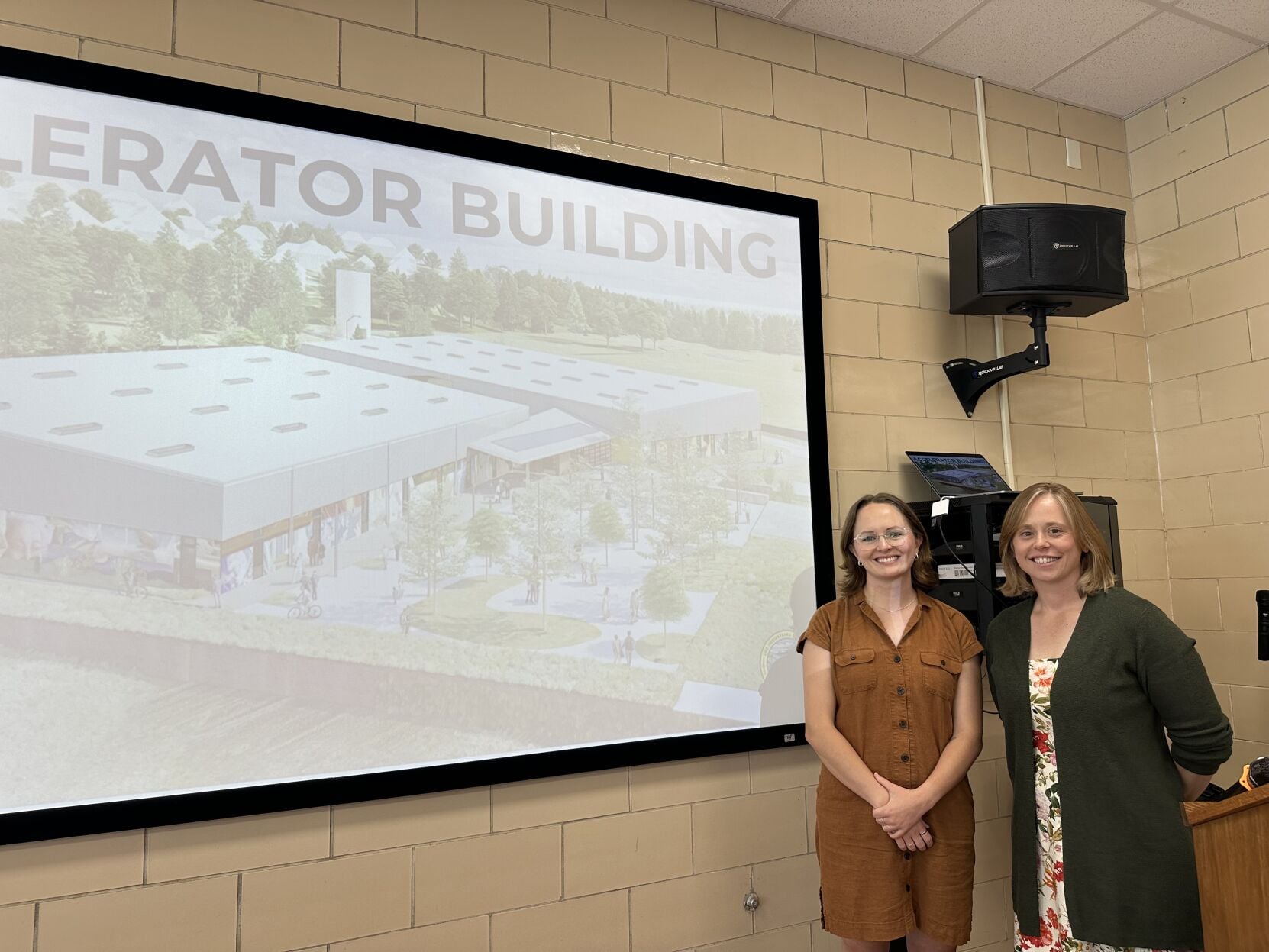
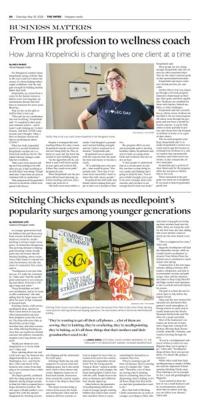
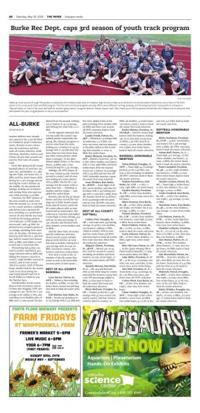
Meredith Maiken (left) and Erin Kizer lead the Industrial Commons’ Land for the Commons program, which focuses heavily on creating an Innovation Campus on Morganton’s Fleming Drive.
The Accelerator Building, now fully funded, will have flexible manufacturing spaces, loading docks, training areas, and a shared office space for up to four businesses. Kizer added that the building is designed to accommodate modern manufacturers that only need 20,000 to 30,000 square feet.
Crews recently wrapped up much of the grading and underground infrastructure work at the site and Kizer said she expects vertical construction to ramp up in the summer and fall, with tenants expected to start moving in by the end of 2027. Fundraising is still underway for the construction of the Commons Building.
The first phase of the project will occupy about five of the site’s 30 acres, leaving room for future expansion.
“The idea here is that folks that are coming out of the Accelerator, these businesses that are starting here, if they’re really successful and need more room to grow, they don’t have to leave Burke County,” Kizer said.
Plans for the site also include preservation of several elements from the former factory, including the property’s remaining silo.
DIXON STREET HOUSING
In addition to the industrial site redevelopment, The Industrial Commons is also moving forward with workforce housing on another former Drexel site parcel on Dixon Street, which is just to the east of downtown.
The eight-acre development will include 16 affordable units, including single-family homes and duplexes, along with sidewalks and a shared green space that could include a playground or a community garden.
The development would operate under a community land trust model, allowing residents to own their homes and build equity while The Industrial Commons retains ownership of the land. Future resale prices would be restricted to keep the homes affordable for future buyers.
Engineering and planning work for the Dixon Street project is underway, Maiken said, adding that the nonprofit is working with modular housing manufacturers to finalize home designs. The plan is to begin placing the units on the property in 2027. The homes are intended for buyers who earn 80% to 120% of the area median income.
COMMUNITY OWNERSHIP
Maiken also discussed another initiative that focuses on preserving locally owned downtown businesses through community ownership models. The effort began after a downtown bookstore in another Western North Carolina community faced uncertainty after both the business and building faced ownership changes.
Under the arrangement, employees purchased the business while The Industrial Commons purchased the building to help maintain affordable rents and keep the property under local control. Maiken said that project could serve as a model for future downtown preservation efforts as more longtime business and property owners approach retirement age.
Kizer noted that many of the redevelopment projects, specifically the Innovation Campus, would likely not have happened through traditional private development due to the high costs of environmental cleanup and infrastructure work.
To date, The Industrial Commons has raised $27.25 million in state, federal, and philanthropic funding for the Accelerator Building, which combined with $10 million from the Dogwood Health Trust for acquisition and renovation of the nonprofit’s Hopewell Road location, has allowed for an additional $8 million through the New Markets Tax Credit federal program. That funding will allow The Industrial Commons to invest infrastructure for future phases.
While the work is ongoing, both Kizer and Maiken said the projects are centered around long-term economic opportunities that remain in Burke County.
“We have the opportunity to rebuild this legacy in a new way, in a modern way that’s respectful and embraces our entire community,” Kizer said.