
The Battle of the Fork had Revolutionary War significance
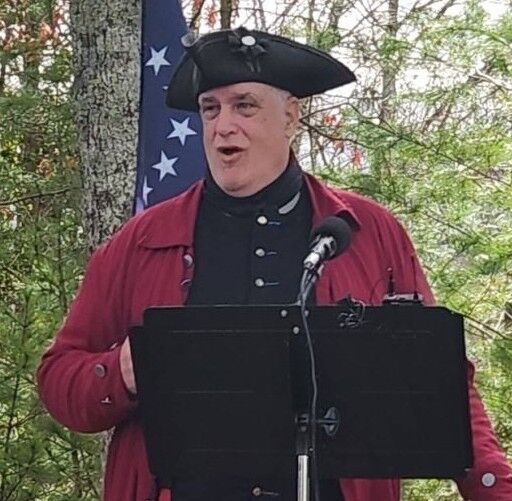
Brown
In the early summer of 1776, the Cherokee began coordinated attacks across the western frontier of North Carolina.
Prior to this major offensive, members of the local militia had been stationed at several of the frontier forts along the Catawba River; specifically Davidson’s Fort (in present-day Old Fort), Cathey’s Fort (on the Catawba River a few miles west of Marion), and the Quaker Meadows Fort (in the general vicinity of Freedom High School).
At the outbreak of the Cherokee offensive, the militia at Davidson’s Fort began to fall back under overwhelming odds. Their plan was to retreat, collecting local settlers along the way, and stay overnight at Cathey’s Fort. They planned to continue the next day, collecting more settlers, until reaching the relative safety of the Quaker Meadows Fort.
On the morning of 11 July, the retreating forces reached the confluence of the Catawba and the North Fork of the Catawba, and it was at this location that they were ambushed by a strong contingent of Cherokee.
This engagement, on 11 July 1776, became known as the “Battle of the Fork.” From the old pension files that mention this engagement, a narrative concerning the battle can be written.
Isaac Thomson, from his supporting statement in the Pension Application of John Carson, provides some background information about the Indians attacking:
“… the Indians broke out, killed & scalped several persons Captain Reuben White who had the command of some of the forts marched with his party & met the Indians at the mouth of the North fork of the Catawba River and there fought the battle of the Fork (as it is called) and where he bravely fell fighting.”
The Pension Application of Joseph McPeters gives the most concise description of the battle:
“… marched as an Indian spie to Samuel Davidson’s Fort on the fork of the Cautauber River he was Stationed at said Fort untill July Insueing When abody of Indians drove the Spies from said Fort, they then retreated to Kathys Fort. Stayed at Kathies Fort one night then retreated from Kathies Fort Met by the Indians at the north Fork of the Cautaber River had a battle with the Indians defeated the Indians Captain White was Killed in the battle, then marched to the quaker Meadows Fort …”
Jonathan McPeters, from his supporting statement found in the Pension Application of John Carson, provided the exact date of the battle:
“… the next tour of service was at the upper Fort on the Catawba where we were stationed for some time as a ranging company under Captain Reuben White who was killed in the Battle of the Fork the 11th July 1776 …”
Joseph Ford, in his Pension Application, relates how he was serving as a scout in the adjacent area and, upon his returning down the river was caught up in the battle:
“… we marched to the head of the Catawba River and after marching over adjacent country & seeing no sign of the Indians (Cherokees) we returned down the River and at the crossing of the North fork of the Catawba River we were met by a considerable number of Indian Warriors belonging to the Cherokee nation & had an engagement with them in which Zebulon Shelton a private was killed and seven or eight of our troops wounded among whom were captains White and Whitson, White afterwards died of his wounds and Whitson recovered — the Indians were vanquished in the engagement and fled and we could not ascertain how many of them were killed as they carried off their dead with them …”
The Pension Application of James McDaniel provides some information on the number of militias involved, as well as the number of Indians killed in the battle:
“… the company consisted of Eighty-two men and was ordered [by] Major Daniel McKisick & Colonel Charles McDowell to March to Davidson’s Fort on the Catawba River and was stationed at said Fort as a guard to keep the Indians off of the Frontiers … the first engagement they met with the Indians who lay in ambush at the North fork of the Catawba River they had a scrimmage with the Indians & defeated them in which scrimmage Captain White was killed together with several others who were privates. We killed Fourteen Indians upon the ground.”
The Battle of the Fork on 11 July 1776 was the first engagement of any significance fought in Burke County during the Revolutionary War.
While, in the big scheme of things, the battle wasn’t that large of a battle, its significance to the overall events in the resulting Cherokee Campaign had long-lasting effects for the settlement of the Upper Catawba Valley region.
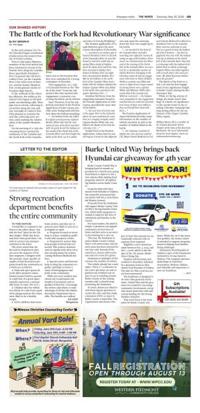
William Brown III is a member of the Colonel Alexander Erwin Chapter of the Sons of the American Revolution. For more information about the local chapter, check out colalexandererwinsar.org.