



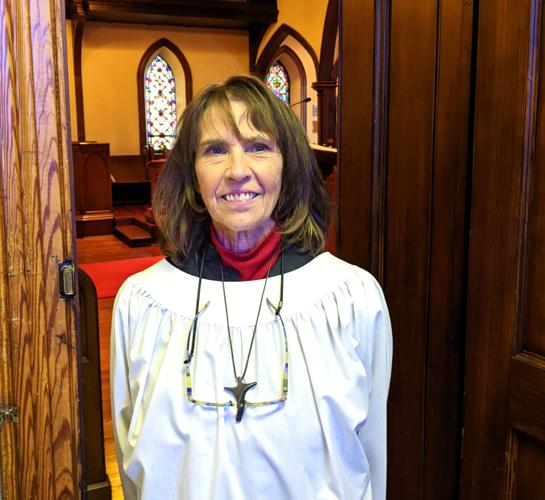
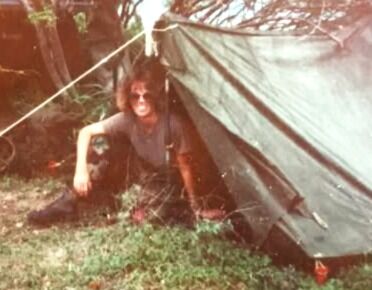
While growing up in a school district in Jonesborough, Tenn. that did not allow girls to play sports, Nancy (Jones) Hasty became a cheerleader.
When her high school sweetheart was drafted, they got married shortly before he went to Vietnam in 1969. When he returned two years later, they were transferred to Fort Ord, Calif.
From there, on a visit to Tijuana, Mexico, Hasty was impressed and envious about how a fellow serviceman’s wife used Spanish with grace and ease, sparking her love of the language and Hispanic cultures.
In 1972, Hasty enrolled at East Tennessee State University in Johnson City. A year later, she and her husband divorced. In order to fulfill an elective requirement, Hasty signed up for a Spanish class.
Two years later, she spent the entire summer traveling in Spain on a study abroad program.
The following year, Hasty studied in Puebla, Mexico for a full semester, and in 1976, spent a month in Guaranda, Ecuador as an ambassador in the Johnson City Sister City program, after graduating from ETSU with a double major in Spanish and Education.
Hasty took a job, first in Kailua-Kona, Hawaii, and then at Zihuatanejo, Mexico, as a hospitality coordinator for the same pharmaceutical company, arranging Continuing Education vacation trips for medical professionals.
Three years later, Hasty returned to Tennessee, working for Eastman Chemical in Kingsport, where she served as the liaison for international sales and marketing.
In 1982, Hasty looked into joining the Peace Corps, but there were no volunteer positions available except for technical and medical fields.
She also considered applying to the Army’s OCS (Officer Candidate School) program, but at 32, she was one year over the age limit.
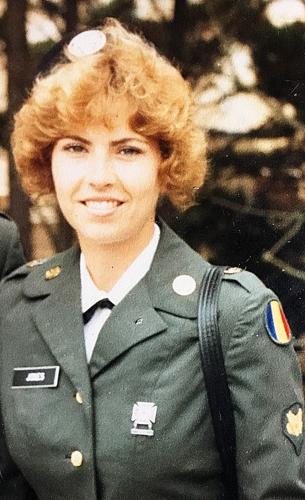
Hasty’s next move was to enlist in the Army in order to attend the Defense Language Institute Foreign Language Center in San Francisco as a military intelligence Spanish linguist.
During recruit training at Fort Jackson, S.C., the Army assigned her to be a Platoon Leader, based on her background as a college graduate and a triathlon athlete.
Despite being fluent in Spanish, Hasty was placed in the Korean section at the Defense Language Institute, as there was a need for Korean linguists. After six months, she was able to get reassigned to the Spanish section, where she excelled.
From there, Hasty went to advanced training in Texas as a signals intelligence voice intercept linguist (SIGINT), a military occupation specialty (98G) that requires the top level of security clearance.
Hasty’s base of operations for the next two years was at Fort Davis near the Gatun Locks in the Panama Canal Zone, close to the city of Colón, where she worked in a Sensitive Compartmented Information Facility (SCIF), an ultra-high security building, listening to and recording code messages in Spanish that were critical to the CIA’s covert operations in Central America in the 1980s.
In addition to monitoring numerous radio frequencies and transcribing messages, which were often long strings of numbers, Hasty’s unit, which operated around the clock, also attempted to determine the location of the broadcasts in order to better predict where the next military action would occur.
Hasty later spent a year at NSA (National Security Agency) in Washington, D.C., the headquarters for SIGINT.
After four years on active duty, she joined the reserves, where she was assigned to short-term duty at various SCIFs, including Charlotte, Atlanta, Chicago, San Antonio, Key West and Puerto Rico.
During this time, and also when she was in Panama, Hasty occasionally traveled on a space-available basis on the Embassy Hop, a diplomatic flight linking the capitals of South American countries, where she visited some of her international contacts from Eastman Chemical in places such as Brasília, Brazil as well as Rio de Janeiro; Santiago, Chile; Lima, Peru and Montevideo, Uruguay.
While she was in the reserves, Hasty was again working as the international liaison for Eastman Chemical, this time in Charlotte. In 1994, she met Joe Hasty, who had just returned from living in Europe for seven years as a musician and sports coach, and who, she says, changed everything. They were married in 1996.
Hasty had planned to stay in the Army until retirement but left after 12 years and switched careers by teaching Spanish at Table Rock Middle School for six years and then at Freedom High School until 2012, when she retired.
She then taught ESL (English as a Second Language) part time at Hillcrest Elementary School and continues to substitute as a Spanish teacher in the Burke County Public Schools.
For years, Hasty has worked as both a private interpreter in Burke County, as well as an interpreter for the public schools.
Hasty mentors with Big Brothers Big Sisters, where she is paired with Latino families, and also volunteers at numerous service organizations, including Habitat for Humanity, Good Samaritan Clinic, Friends for Animals – Humane Society of Burke County, Outreach Center, Burke County Literacy Council, and Hands of Hope, where she is a board member.
Hasty has been a leader on mission trips to the Dominican Republic, Panama, and Puerto Rico for youth and adults through the Episcopal Diocese of Western North Carolina.
She sings in the choir at Grace Episcopal Church and has also served on the Diocesan Youth Council.















(0) comments
Welcome to the discussion.
Log In
Keep it Clean. Please avoid obscene, vulgar, lewd, racist or sexually-oriented language.
PLEASE TURN OFF YOUR CAPS LOCK.
Don't Threaten. Threats of harming another person will not be tolerated.
Be Truthful. Don't knowingly lie about anyone or anything.
Be Nice. No racism, sexism or any sort of -ism that is degrading to another person.
Be Proactive. Use the 'Report' link on each comment to let us know of abusive posts.
Share with Us. We'd love to hear eyewitness accounts, the history behind an article.