



Not many months ago, I interviewed a student about his first year at the Morganton campus of the North Carolina School of Science and Mathematics. As he reflected on his junior year, he admitted to initially second-guessing his decision to attend the school.
The Confederate flag he saw waving near the border of Catawba and Burke counties on his drive in from Charlotte made him uneasy. This White teen worried that the county was home to antiquated philosophies associated with the flag. He wondered whether he would be accepted or labeled an outsider.
Our conversation back in May got me thinking about my reaction to the flag I saw on the other end of the county.
My husband and I decided to move to Western North Carolina from Texas (and Colorado before that) to be closer to family. After nearly two decades of living two or three days' drive away from loved ones, losses during the pandemic taught us that life is short and we need to see family more often.
We packed up our two dogs and everything we owned and moved into a rental house in Black Mountain in January 2022 with the hope of soon purchasing a home.
Looking at Burke
Burke County was not originally on our radar. We looked at homes from McDowell County to Haywood County and Madison County down to Henderson County. We spent most weekends following our realtor to potential places to buy.
Months went by without finding something that we liked and could afford. We decided to broaden our search, looking at homes in Valdese, Glen Alpine, and Morganton.
Each time we drove from Black Mountain to Burke County on I-40, I’d stare at the Camping World-sized Confederate flag.
My chest would tighten each time. The truth is that I shared the same worries as the young man at NCSSM.
I’m not from here, but I am a Southern gal. I spent the first 18 years of my life in South Carolina, where I would catch crawdads in the creek near our rural home and build tree forts in the acres of woods that separated our place from the neighbors. The next 17 years were spent in Alabama. I attended Auburn University and then started my professional journey at the daily newspaper in Montgomery.
As a kid, I don’t remember having a reaction to the rebel flag. I didn’t know or comprehend the full meaning of the flag back then. The symbol was simply part of the landscape and my focus was school and friends.
As I got older — and developed a broader knowledge of history — I began to see that battle flag as a distortion of the American flag and something that promoted an ‘us vs. them” mindset.
As a young adult living in Montgomery, the color of someone’s skin seemed a part of every aspect of life. With the naivete of youth behind me, I became hyper-aware of how people were categorized by their race, religion, clothing, family background, what part of town they lived in, and a thousand other boxes that separated us. The fact I wasn’t from Montgomery meant I could never say I was from Montgomery, even if I lived there for 50 years, or so I was told. All of the boxes exhausted me.
When my now-husband and I got engaged, I moved to where he lived in Colorado. At the age of 35, I lived outside the South for the first time. The view of the Rocky Mountains wasn’t the only thing I noticed. The Centennial State is no panacea and has its own boxes for people, but the move did give me time to exhale from the daily Black-White racial divide I had previously absorbed.
With the benefit of time and age, I began to reflect on my own life experiences.
Remembering the past
I’ve not often shared this story because it isn’t one of my shining moments. I was a young coed at Auburn University in Alabama. I was out drinking with friends when we decided it was time to move the party down the road.
At the next stop, I realized I had left my purse at the first place. Panic set in. Without telling anyone, I took off alone, walking on the side of the four-lane state highway that connected the two bars.
Somewhere along this couple-mile journey, a cop car pulled over onto the shoulder near me and turned on his flashing blue lights. He got out of the car and approached me. He asked what I was doing and I explained my situation.
He said walking late at night on the side of the highway wasn’t safe (duh). I sat in the front passenger seat as he gave me a ride to that first bar. I successfully retrieved my purse, which miraculously still hung on the back of one of the stools. He then drove me to the second bar, walked in with me, and told my friends to make sure I got home.
Since that night, I have wondered what would have happened if I had not been a White female. What if I had been a young Black female? What if I were a Black man who left his wallet at a bar? Would I have been arrested for public intoxication and spent the night in jail? Would the interaction have become violent? I don’t know.
My questioning is not an indictment of law enforcement. It is not. I have great respect for the men and women who wear that uniform. When I worked in communications for a Colorado town, the police department was my favorite to work with and, at times, made me wish I were a detective.
Any possible alternate outcomes that could have occurred if I had been Black aren’t just on the side of the officer. I believe that we bring our personal histories to every encounter, every decision, even when we don’t realize it.
On the side of Highway 14 three decades ago, I never once thought the officer would harm me in any way. At that point in my life, I doubt I had ever had a speeding ticket. There were no tales from my family about negative interactions with police. My guess is that I would have brought a different history to that interaction if I had not been, well, me.
New perspectives
All that is to say that I am trying to see things from more perspectives than my own. Those flags flanking this beautiful county bring to mind harmful attitudes and beliefs.
That young man I talked to at NCSSM also told me that his fears were put to rest as he got to know the community. Once again, I agree with him.
I have grown to love Burke County in the 12 months I have lived here. The landscape and quaint downtowns initially drew me in. Over time, the county has revealed itself to be much more than that. Whether transplants or lifelong residents, the people are what I appreciate most of all.
I still want those flags gone.
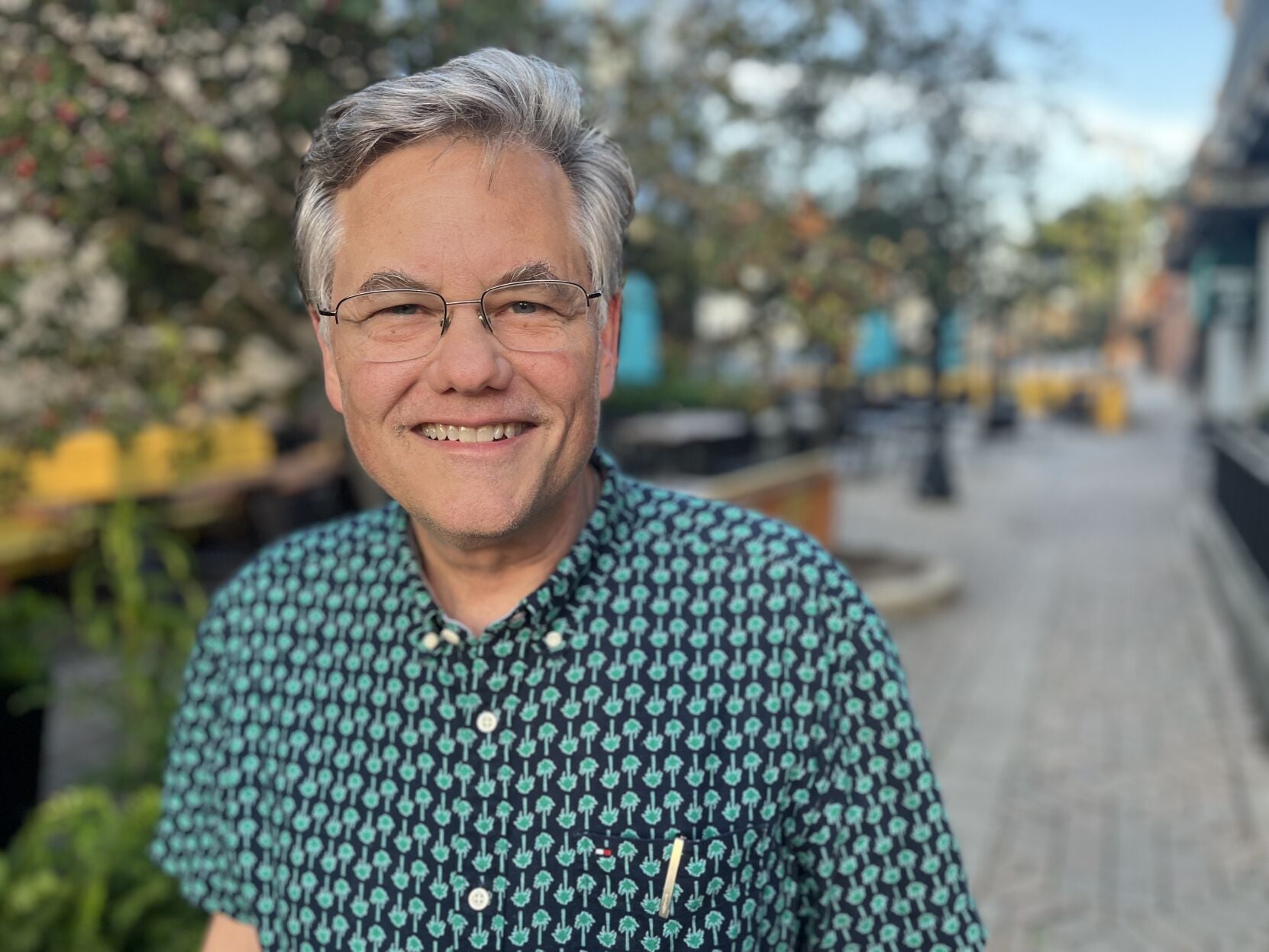
Angela Copeland is the Arts and Entertainment Editor for The Paper. She may be reached at 828-445-8595 or via email at angela@thepaper.media.




















(0) comments
Welcome to the discussion.
Log In
Keep it Clean. Please avoid obscene, vulgar, lewd, racist or sexually-oriented language.
PLEASE TURN OFF YOUR CAPS LOCK.
Don't Threaten. Threats of harming another person will not be tolerated.
Be Truthful. Don't knowingly lie about anyone or anything.
Be Nice. No racism, sexism or any sort of -ism that is degrading to another person.
Be Proactive. Use the 'Report' link on each comment to let us know of abusive posts.
Share with Us. We'd love to hear eyewitness accounts, the history behind an article.