

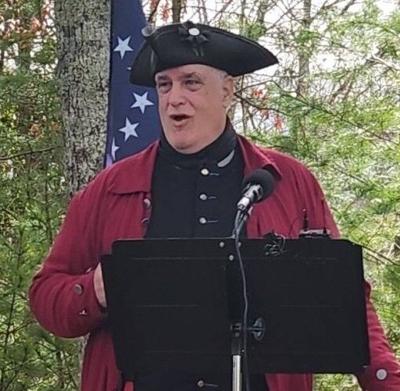
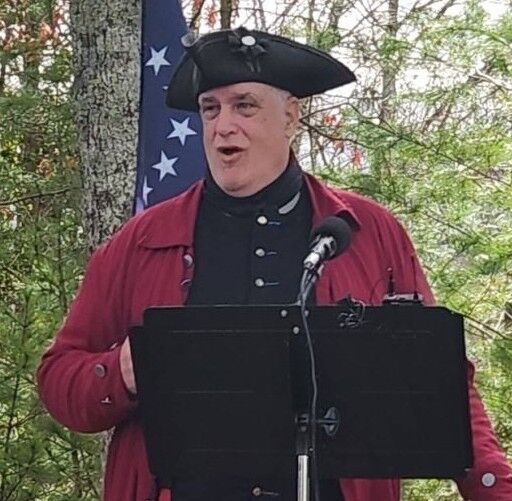
Brown
Brown
FOR THE PAPERAfter the fall of Charleston in May 1780, Lord Cornwallis dispatched Major Patrick Ferguson into the backcountry of South Carolina and into the Upper Catawba Valley of North Carolina.
His mission was to recruit Loyalists (“Tories”) for service to the King and to quench the fire in the Whig (“Rebel”) spirit. What he and his men encountered at times was the fire and spirit of the Whig women of Burke County; something he was not entirely prepared for.
Lt. Anthony Allaire of Major Ferguson’s Command kept a diary during the summer and fall of 1780. Lt. Allaire recorded on Friday, 15 September 1780 some of his views concerning the Upper Catawba Valley of North Carolina and its inhabitants
“Pleasant Garden is a very handsome place. I was surprised to see so beautiful a tract of land in the mountains. This settlement is composed of the most violent Rebels I ever saw, particularly the young ladies.”
Along the Catawba in Burke County lived Grace Greenley Bowman, widow of John Bowman and the future wife of Col. Charles McDowell.
Ms. Bowman, who had earlier exhibited her worth by taking her infant child and riding from her home along the Catawba to comfort her dying husband who had been mortally wounded at the Battle of Ramseur’s Mill, found herself the subject of Tory raiders in the early fall of 1780.
Hearing a commotion outside her home she came out to see a mounted Tory under the command of Maj. Ferguson. Inquiring of his intentions, the Tory said to Mrs. Bowman, “the King hath need of your horse, madam.”
Mrs. Bowman retreated to the inside of her house and the Tory went to the barn and secured her horse. As he rounded the corner of the house, he was met by Mrs. Bowman who had retrieved her late husband’s firelock and was leveling it at the Tory’s chest.
“Madam,” the Tory nervously stated, “the King hath no further need of your horse.” He returned the horse to the barn and quickly departed her home.
One of the finest examples of the frontier woman’s spirit and character can be found in a series of events that occurred in September and October of 1780.
Following the Whig and British engagement at Cane Creek in Burke County, a group of Maj. Ferguson’s officers paid a call on the widowed mother of Charles and Joseph McDowell at her home at Quaker Meadows.
The British officers and their men spent at least one night at the Quaker Meadows plantation, where they pillaged and plundered most of the contents and food supplies of the house. They gave the elderly Mrs. McDowell a rather rough time, especially taunting her with what they would do when they captured her two beloved sons, Charles and Joseph.
The British informed Mrs. McDowell that they would kill Charles outright, but Joseph, they would humiliate first by making him beg for his life on his knees, then they would kill him.
Mrs. McDowell, a grand old lady native to Ireland who possessed a keen understanding of right and wrong, as well as her share of a hot temper so characteristic of her heritage, talked back to her antagonist.
She told them that through the whirlings of life, the fortunes of war may change, and they may find themselves in a position to beg. Less than a month later, on the victorious return from King’s Mountain, the Whig forces stopped at Mrs. McDowell’s home at Quaker Meadows.
Mrs. McDowell’s son, Joseph, brought with him to the house a group of the captured British officers. Among this group of pitfall retches were some of the very men who had so roughly treated Mrs. McDowell earlier.
They were now entirely at the mercy of her and her sons. She surely must have smiled as she, after some strong convincing from Joseph McDowell, allowed the officers to remain at their home and, in the manner exemplifying her character, did her best to make them as comfortable as possible, under the circumstances.
These are but a few of the recorded instances of women’s actions in support of the Revolution in the backcountry and the frontiers of Burke County. I feel it safe to say that there were many more accounts of heroism and bravery that have, unfortunately, been lost to the passage of time.
William Brown III is a member of the Colonel Alexander Erwin Chapter of the Sons of the American Revolution. For more information about the local chapter, check out colalexandererwinsar.org.










Success! An email has been sent to with a link to confirm list signup.
Error! There was an error processing your request.


Sorry, an error occurred.
Already Subscribed!
Cancel anytime
Thank you .
Your account has been registered, and you are now logged in.
Check your email for details.
Submitting this form below will send a message to your email with a link to change your password.
An email message containing instructions on how to reset your password has been sent to the email address listed on your account.
No promotional rates found.
Secure & Encrypted
Thank you.
Your gift purchase was successful! Your purchase was successful, and you are now logged in.
| Rate: | |
| Begins: | |
| Transaction ID: |
A receipt was sent to your email.





(0) comments
Welcome to the discussion.
Log In
Keep it Clean. Please avoid obscene, vulgar, lewd, racist or sexually-oriented language.
PLEASE TURN OFF YOUR CAPS LOCK.
Don't Threaten. Threats of harming another person will not be tolerated.
Be Truthful. Don't knowingly lie about anyone or anything.
Be Nice. No racism, sexism or any sort of -ism that is degrading to another person.
Be Proactive. Use the 'Report' link on each comment to let us know of abusive posts.
Share with Us. We'd love to hear eyewitness accounts, the history behind an article.