Resilience isn’t about coming out of the other end of struggle unharmed; it’s about developing the tools to cope with struggle and rise above it in the future.
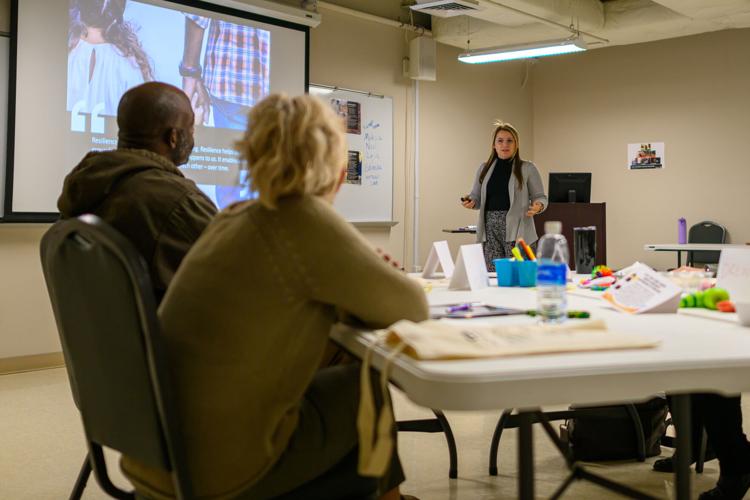
Western North Carolina-based nonprofit Resources for Resilience (RFR) brought those tools to town on Thursday, hosting a full-day training event called “Leading Through Hard Times” at the Foothills Higher Education Center.
Earlier this year, RFR received a grant from the Governor’s Recovery Office for western North Carolina (GROW NC), which distributed funds through the Department of Health and Human Services.
GROW NC is guided by Gov. Josh Stein and is focused on collaboration, communication, and recovery within Hurricane Helene-affected communities.
Through that grant, RFR provides techniques to “helpers” of hurricane relief, targeting the 25 most-impacted counties in the state for training.
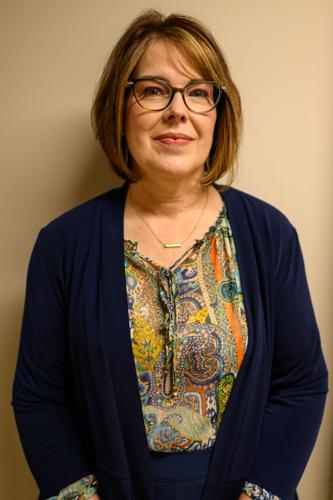
“We’ve been going out in the communities like we have here in Burke County, training and teaching and doing this at no cost,” RFR Community Collaboration Specialist Melissa Ledbetter said. “We don’t want to charge. We just want to get our helpers in because we feel like this can benefit folks, for sure.”
Ledbetter
JACOB CHRISTOPHER / THE PAPER
A group of women in Buncombe County founded RFR in 2017, based on research and informed evidence regarding the Adverse Childhood Experiences Study performed in 1994. According to Ledbetter, the study discovered a strong correlation between childhood trauma and later physical health problems such as heart disease and cholesterol issues.
That understanding translated into awareness training for RFR. As time went on, RFR focused certain training events around leaders and their ability to recognize when team members are struggling and respond accordingly.
“What are those hard times?” she said. “What have been the good times? If you take some of the things we teach you back to your teams, what are some things you can implement with them when you know people are just not doing well? How do you know when people aren’t well?”
While RFR offers a collection of programs, “Leading Through Hard Times” educates leaders on rebalancing the nervous system — whether that’s focusing on their own awareness or assisting others in stabilizing theirs. Often, exercises take as little as 20 seconds and can have a lasting impact.
“The day is fun, but it’s full of learning,” Ledbetter said. “There’s lots of activities, people don’t just come and sit through a seven-hour lecture.”
This year’s beachy lighthouse theme is meant to reflect the fortitude of the lighthouse and draw a comparison to the longevity of resilience tools during turbulent times.
“Lighthouses are very resilient,” Ledbetter said. “They stand strong even through the toughest times and the toughest storms — like many of us.”
At the end of each training, participants go home with a booklet full of activities and quick references for the real-life application of their newly learned tools.
The nonprofit’s resilience tools utilize research-based methods to calm people down in troubling times, whether they’re at work, at home, or surrounded by others. It’s not therapy, but resilience training focused on practical actions and achievable steps.
When participants think of a traumatic moment in their life, they’re asked when they knew they were OK. During the hurricane, if someone reached out to help, how did they help? Did they bring food? When, and what food did they bring?
If a colleague is struggling to self-regulate, coaxing them to slow down and take note of their surroundings and the sensations in their body helps to ground them in the reality of the moment.
For example, Ledbetter requests participants take a sip of water and pay attention to the way it feels flowing through their mouth and down their throat. Is it cold? Is it warm? How does it feel going into the stomach?
“What we say is you’re widening that gap of resilience with the brain,” Ledbetter said. “It’s not to downplay anything somebody’s gone through. Hard times are hard times. But it is to also help them notice the positives, too. Even in the midst of that hard time, there was that glimpse of hope.”
RFR intends to host another free “Leading Through Hard Times” training at the Foothills Higher Education Center on April 16 from 9 a.m. to 4 p.m.
The nonprofit also offers company-specific training upon request.
Jacob Christopher is the courts and education reporter for The Paper. He can be reached at 828-445-8595.
Keep it Clean. Please avoid obscene, vulgar, lewd,
racist or sexually-oriented language. PLEASE TURN OFF YOUR CAPS LOCK. Don't Threaten. Threats of harming another
person will not be tolerated. Be Truthful. Don't knowingly lie about anyone
or anything. Be Nice. No racism, sexism or any sort of -ism
that is degrading to another person. Be Proactive. Use the 'Report' link on
each comment to let us know of abusive posts. Share with Us. We'd love to hear eyewitness
accounts, the history behind an article.
























(0) comments
Welcome to the discussion.
Log In
Keep it Clean. Please avoid obscene, vulgar, lewd, racist or sexually-oriented language.
PLEASE TURN OFF YOUR CAPS LOCK.
Don't Threaten. Threats of harming another person will not be tolerated.
Be Truthful. Don't knowingly lie about anyone or anything.
Be Nice. No racism, sexism or any sort of -ism that is degrading to another person.
Be Proactive. Use the 'Report' link on each comment to let us know of abusive posts.
Share with Us. We'd love to hear eyewitness accounts, the history behind an article.