

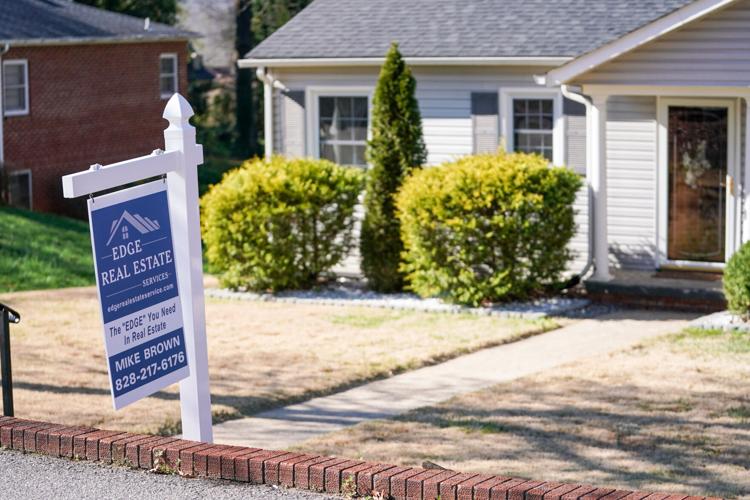





If there’s a silver lining attached to the dark cloud of the housing shortage, it might be that the crisis didn’t sneak up on Burke County the way it has other communities.
Officials have known for some time housing was a problem, and they started searching for solutions decades ago.
Morganton first began offering housing incentives in the early 1990s. City Manager Sally Sandy said the program was the brainchild of former Director of Development and Design Lee Anderson.
It has evolved into the current model, which helps builders defray some of the costs associated with infrastructure — water, sewer, and electricity.
She noted the initiative enjoyed some success, although at the time, more energy and resources were focused on the city’s outlying areas because that’s where home buyers wanted to be at that time.
Today’s lively, rejuvenated downtown district has folks trying to move closer to the hub.
In addition to the incentives it offers, the city decided to use many of the federal dollars it received via the American Recovery Act that followed the COVID-19 Pandemic for infrastructure expansion that specifically addressed housing needs.
It has taken time to change the governmental mindset. Sandy said in the 1980s and 90s, early in her career, local governments focused primarily on industrial recruitment.
“It (housing) wasn’t the first priority at all,” she said.
Now, she said, it has to be.
That’s because the cost of land development — like virtually every other financial endeavor — has been hit hard by inflation. That means in areas close to the heart of Morganton, a window that was once wide open may have closed for good.
Sandy said a study that was part of the city’s 2017 master plan showed the “ring” around Morganton could support 1,000 new housing units within a 10-minute walk of downtown.
“And we haven’t made a dent,” Sandy said.
Alan Wood, President and CEO of Burke Development Inc., whose task is to recruit industry to the county, has studied the dilemma’s trends since he first came to BDI nearly a decade ago.
He said the shortage first took root in the mass exodus of the once-predominant furniture industries that began in the early ’90s, so it didn’t come as a surprise to him to find out the county is now 5,000 housing units behind the desired pace.
“I think it goes all the way back to when we started losing furniture, the genesis of it,” Wood said. “Until that time, you had people who were building, and after that left, you essentially saw a cessation in building. That’s borne out by the fact we have the oldest housing stock in the region and close to the oldest in the state.”
Wood cited a report the city released as part of the development process for its IMAGINE Morganton 2040 Strategic Land Use Plan that revealed the average house in the city was built in 1972.
“That’s 50 years old, and if they haven’t been renovated, they’re functionally obsolete,” Wood said.
He added the problem only got worse during the housing bubble and Great Recession that hit in the late 1990s. Since that time, widespread development in Burke has essentially been confined to the high-end enclaves along the exclusive shores of Lake James.
But Wood says he’s optimistic Burke can at least stop the bleeding.
“It’s going to take something pretty special; a concerted effort from a lot of different sources to start bringing this gap down,” Wood said.
“I will say this on a positive note: We were ahead of the curve when we started looking at this, and I think we still are ahead of the curve in trying to look for solutions. I know that across the state, we started focusing on this and on the workforce long before many larger communities with more assets started shining a light on it.
“Many people know they have a problem. They’re just not cognizant of how deep a problem it is and haven’t even started looking for solutions.”
But, as with most systemic societal problems, sweeping solutions have proven difficult to find.
For now, it seems, the problem can only be tackled house by house.
“I’ve been looking at this for nine years now, with a lot of different people,” Wood said. “It’s going to take a multifaceted approach. We’ve seen increased building, we’ve seen increased growth, we’ve seen multifamily where we weren’t seeing any before, but it’s incremental, and I think it’s going to continue to be incremental.
“We’re not talking about astronomical growth. We’re just talking about steady, sustainable, growth, to maintain a labor market that allows us to continue a pace of life which we’re accustomed to.”
County Manager Brian Epley said supporting the labor market is vital to Burke’s interests, particularly when it comes to the most disadvantaged residents.
“Housing is going to be the key to keeping talent, and talent is going to be the key to attracting economic development, and economic development is going to be the key to raising that poverty line,” Epley said.



















(0) comments
Welcome to the discussion.
Log In
Keep it Clean. Please avoid obscene, vulgar, lewd, racist or sexually-oriented language.
PLEASE TURN OFF YOUR CAPS LOCK.
Don't Threaten. Threats of harming another person will not be tolerated.
Be Truthful. Don't knowingly lie about anyone or anything.
Be Nice. No racism, sexism or any sort of -ism that is degrading to another person.
Be Proactive. Use the 'Report' link on each comment to let us know of abusive posts.
Share with Us. We'd love to hear eyewitness accounts, the history behind an article.