

Hurricane Helene and the historic floods she brought are long gone, but damage the devastating storm left behind has put Lake James at risk of further flooding.
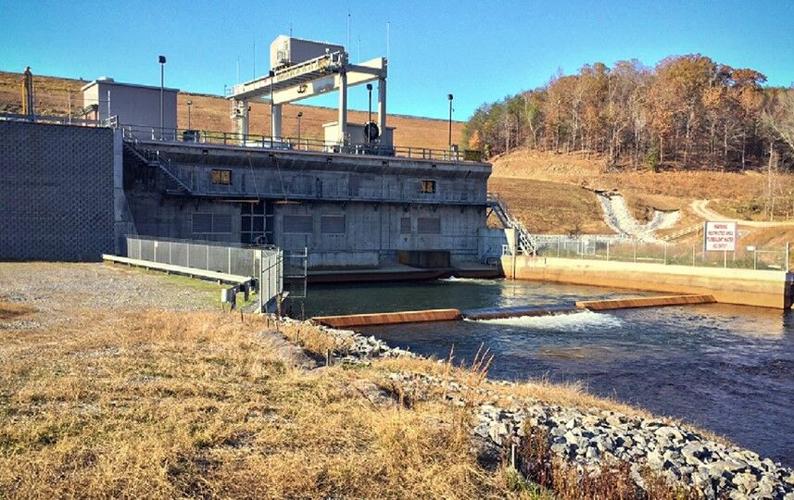
The two main turbines inside the Bridgewater Powerhouse sustained significant water damage when Helene passed through Sept. 27, and will be offline until at least next spring, according to Duke Energy.
As a result, Duke can’t draw the lake down in order to offset a major rain event should one occur between now and the time the repairs are completed.
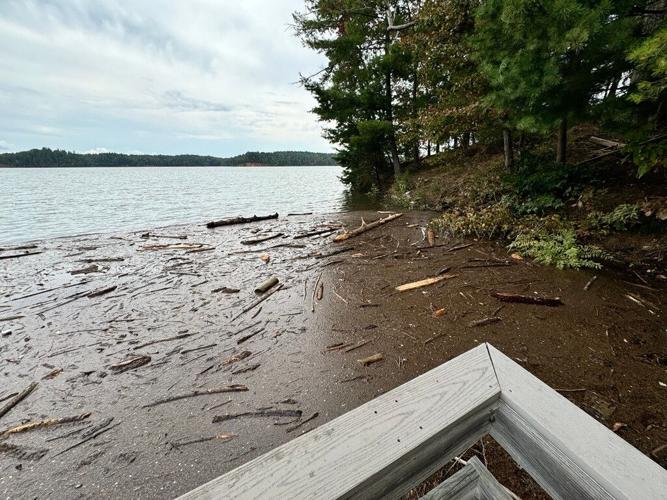
Numerous boats, boathouses, and docks on the lake broke loose from their moorings and were set adrift during the hurricane. Camper trailers were also swamped or swept away, and lakeside homes were flooded.
Burke County swiftwater crews performed several rescues on the lake (see related story on page 5A) as the waters rose.
Enough rain over a short period of time, and some of those things could happen again.
Duke expects Unit 1 to be back online by March 31, 2025. Unit 2 won’t be functional until June 30 of next year. The dam’s minimum flow valve should be back up by Nov. 30. Its restoration will allow some control of flow.
But Unit 3, a much smaller minimum-flow unit, was completely submerged by flooding and likely won’t be operational until the end of 2025.
“Restoring the units at Bridgewater is a high priority for Duke Energy, but we do expect repairs to take an extended period of time,” said Duke spokesperson Ben Williamson, who added assessments and repairs began immediately after the storm.
Williamson said the projected dates for completion of the work are subject to change due to a number of factors, including additional rain events and supply chain issues.
Duke’s ability to provide electricity will not be affected, Williamson said, since the company utilizes many sources of power and is not dependent upon a single unit or station.
Grant Buckner, Northern Basin Director for the Catawba Riverkeeper, said lake residents should be aware of the situation.
“According to Duke Energy’s estimated timeline for repairs on the Bridgewater Powerhouse, lake levels will remain at or above full pond until at least April 2025,” Buckner said.
“Without the ability to preemptively draw down the lake, major rain events will have a greater impact on lake residents and residents directly downstream of the dam. We encourage Duke Energy, local governments, and emergency services to work together and increase communications to residents about flooding when large rain events occur.”
The Lake James Environmental Association issued a caution via its Facebook page, saying there’s a risk to lakeshore homeowners if there is a major rainfall event.
The lake is currently at 100.3 feet. It’s considered full pond at 100, and levels are likely to remain at or above full pond until repairs to the turbines can be completed.
That means there’s essentially nowhere for excess water to go except over the spillways, so the lake could rise dramatically in the event of another large rain event.
It also means a delay in the start of next spring’s recreational releases into the tailrace (the portion of a river below a dam), which is known for its outstanding brown trout fishery.
Typically, Duke releases water starting the last full week in April and continuing through October. Scott Cunningham, one of the area’s top fly-fishing guides, said the lack of recreational flows shouldn’t affect anglers this year. In fact, Cunningham said the river fishes much better when the turbines aren’t running.
The North Carolina Wildlife Resources Commission stocks the 8-mile stretch of river below the powerhouse with nearly 9,200 brown and rainbow trout between March and July each year.
Once the Bridgewater Hydro Station’s minimum flow valve is working again, it will allow Duke to maintain minimum flow to the bypassed reach — the area between a dam’s intake and the tailrace that receives flow only from the spillway.
However, flow to the Linville River bypassed reach will not be maintained until the turbines are working again. Duke said it’s monitoring the Linville reach daily for fish kills and has recorded none so far.
Flow to the Linville River won’t be available until the dam’s ring jet valve — which dissipates water pressure, so discharges don’t exit the dam with too much force — is fully repaired.
Duke said the necessary repairs to the turbines include: “clean up and wash down, repair/replace cables and other station auxiliary systems, replace auxiliary transformer, rework/replace Unit 1/Unit 2 governor system, hydraulic brake system and controls equipment.”
During Helene, Lake James reached 110.3 feet, the highest level recorded in the history of the 101-year-old impoundment. Flooding downstream from the lake was catastrophic, destroying several homes in the Bridgewater community.
NOTE: Updates will be provided as conditions change. Lake level information is available at duke-energy.com/lakes, by calling 800-829-5253 and on the Duke Energy Lake View mobile app.























(0) comments
Welcome to the discussion.
Log In
Keep it Clean. Please avoid obscene, vulgar, lewd, racist or sexually-oriented language.
PLEASE TURN OFF YOUR CAPS LOCK.
Don't Threaten. Threats of harming another person will not be tolerated.
Be Truthful. Don't knowingly lie about anyone or anything.
Be Nice. No racism, sexism or any sort of -ism that is degrading to another person.
Be Proactive. Use the 'Report' link on each comment to let us know of abusive posts.
Share with Us. We'd love to hear eyewitness accounts, the history behind an article.