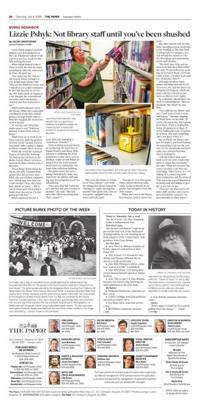

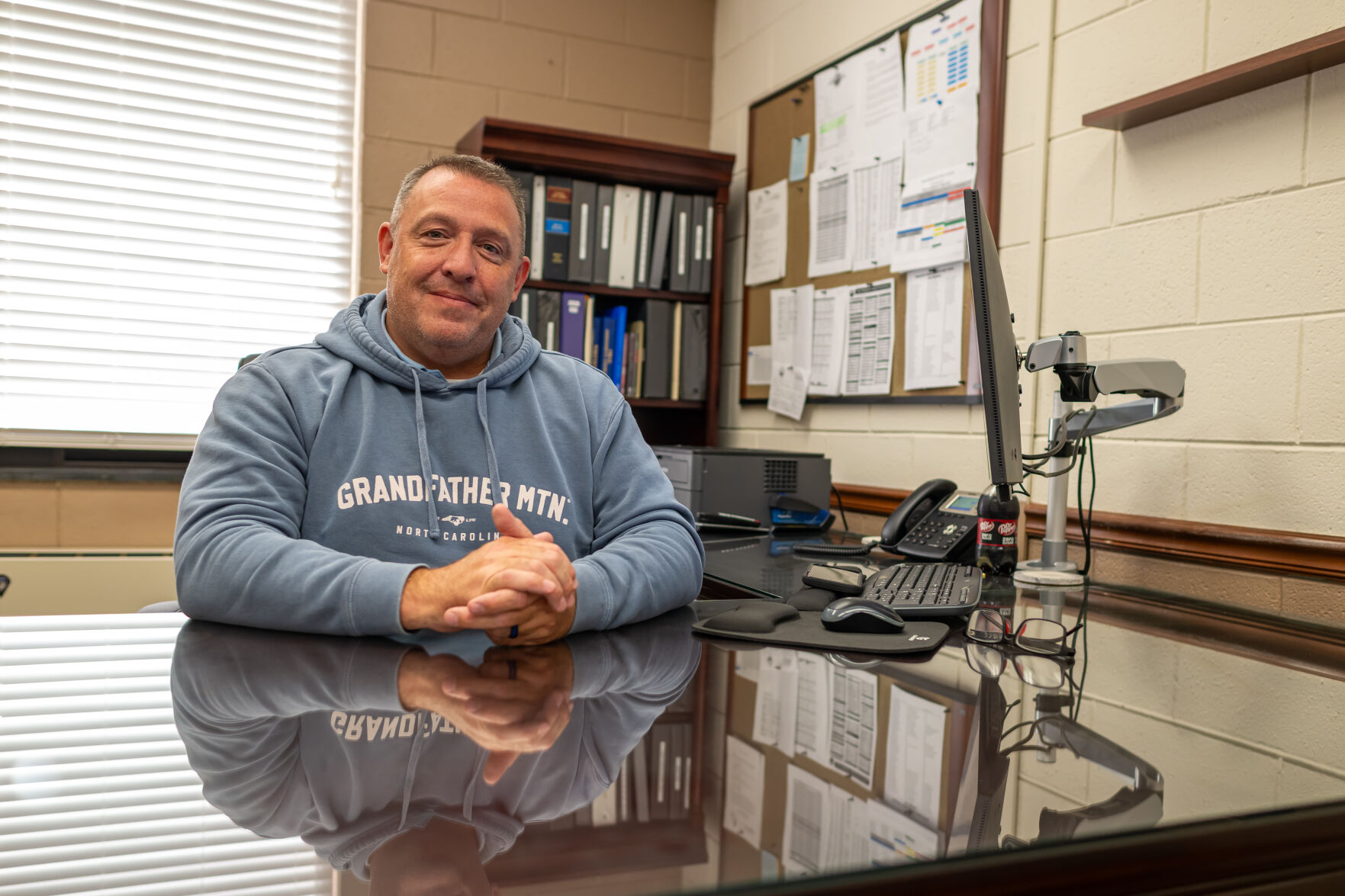
The retiring captain sits comfortably at an empty desk, enjoying his final working day. Brown at desk
Brown at desk
The retiring captain sits comfortably at an empty desk, enjoying his final working day. Brown at desk
Brown at desk
The retiring captain sits comfortably at an empty desk, enjoying his final working day. Brown at desk
Brown at desk
The retiring captain sits comfortably at an empty desk, enjoying his final working day. Brown at desk
Brown at desk
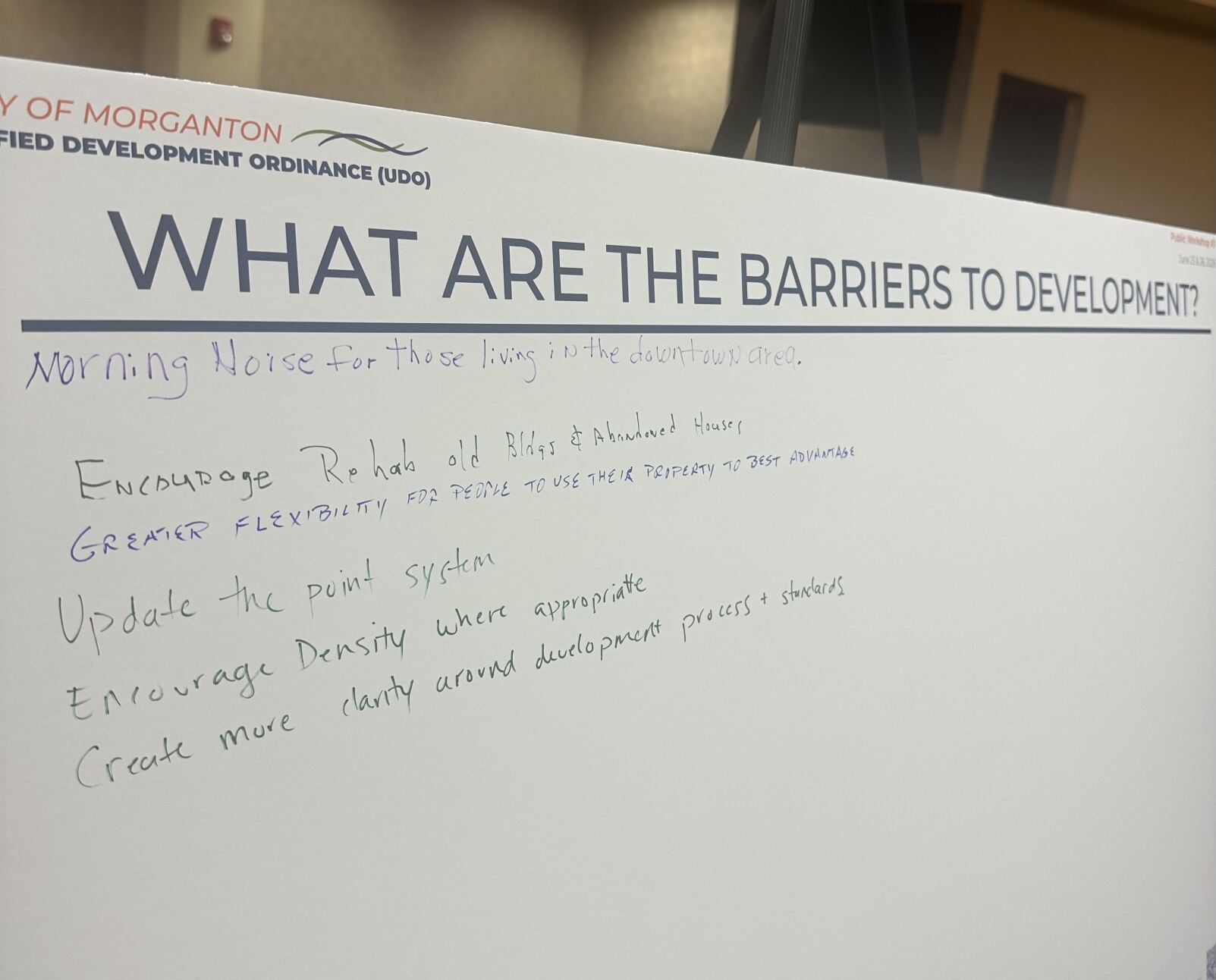
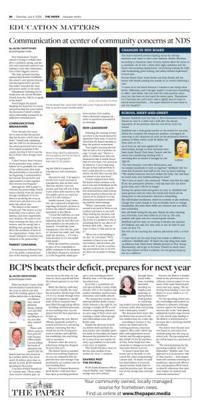
Project Manager Michael Berley talks to community members at the UDO meeting about what types of landscaping they would like to see in Morganton.
As Morganton navigates the early stages of creating a Unified Development Ordinance, some community members say more options and flexibility could positively impact how the city attracts development in years to come.
Wendy Smith, director of Development and Design Services, says the process is all about striking the right balance between the flexibility that community members want and maintaining Morganton’s unique character, especially in the downtown area.
“What is right is what is right for Morganton, and that’s why we want input,” Smith said. “We don’t want Morganton to look just like Marion or just like Lenoir or just like any other city in North Carolina. What makes us special and why do we want people to move here instead of those other places?”
The city has been working with Kimley-Horn, an engineering, planning, and development firm, to create the Unified Development Ordinance, Morganton’s playbook for how land is developed for years to come. The ordinance will outline requirements for subdivisions, zoning, flood damage prevention, and more.
Kimley-Horn kicked off the 18-month process in April with stakeholder sessions that were closed to the public but involved members of the Planning and Zoning Commission and the Board of Adjustment. Members gave feedback on whether current rules on zoning and subdivisions strike the right balance between community goals and flexibility for developers.
Two stakeholders involved in the process, Pete Wallace and Johnnie Carswell, noted that they felt the city needed less restrictive regulations and more education surrounding permitting, zoning, variances, and more.
About 50 other Morganton community members shared their thoughts during a community engagement event on June 25, where Kimley-Horn staff provided a variety of interactive exhibits. They also held a pop-up event at the June 26 TGIF concert, where about 30 people attended.
Some participants’ comments expressed the desire for more flexibility and less restrictive landscaping requirements, while others expressed concern about the city’s ability to address nationwide issues, including the lack of housing.
One person cited lack of clarity around the development process and standards as a barrier to development within the city.
“Coming from the real estate field, it is very important that we listen to some of the issues that people have expressed to staff and some of the issues that have stopped developments, but not make it easy peasy,” Mayor Pro Tempore Wendy Cato said. “We still want to maintain the integrity of our community.”
Smith said she’s glad to see the excitement surrounding the creation of the UDO and welcomes community feedback.
“I want to be really clear that this is not Wendy Smith’s zoning ordinance,” she said. “The Department of Development and Design hasn’t just written this in a vacuum. We want to create what the citizens want.”
Smith said it’s all a balance because some of the standards that people say are too restrictive are the same ones that make Morganton’s character stand out among other neighboring cities. One of those areas is the city’s landscaping requirements.
“Loads of people drive down South Sterling Street and they see how it’s lined with Crape Myrtles and things that the city’s put in that look really lovely,” Smith said. “We’ve actually had comments that people decided to move to Morganton after driving through that way and how well we take care of the city.”
“How far do we go to recreate that?”
That’s what city staff and Kimley-Horn’s Project Manager Cindy Szwarckop and Planner Greg Feldman will work through after collecting community feedback. Smith said those comments will be paired with good engineering, design, planning principles, and building regulations.
The main themes that Szwarckop said she’s been hearing from stakeholders and the community so far have centered on parking, landscaping, density, the types of development that the city is seeing, and that the current ordinance is difficult to understand.
She said that the Kimley-Horn project team will be working to implement graphics, flow charts, and de-legalese the wording to make the UDO easy for the common person to understand. Typically, residents are generally looking for information about topics such as signage and lighting, she said.
There will be more opportunities for the community to provide input, including a meeting in July, September, and May 2027. For those who are unable to attend meetings in person, Kimley-Horn has created a website dedicated to Morganton’s UDO process, where the community can voice their thoughts on an interactive map.
“The ordinances right now aren’t broken. They just need a refresh,” Szwarckop said.
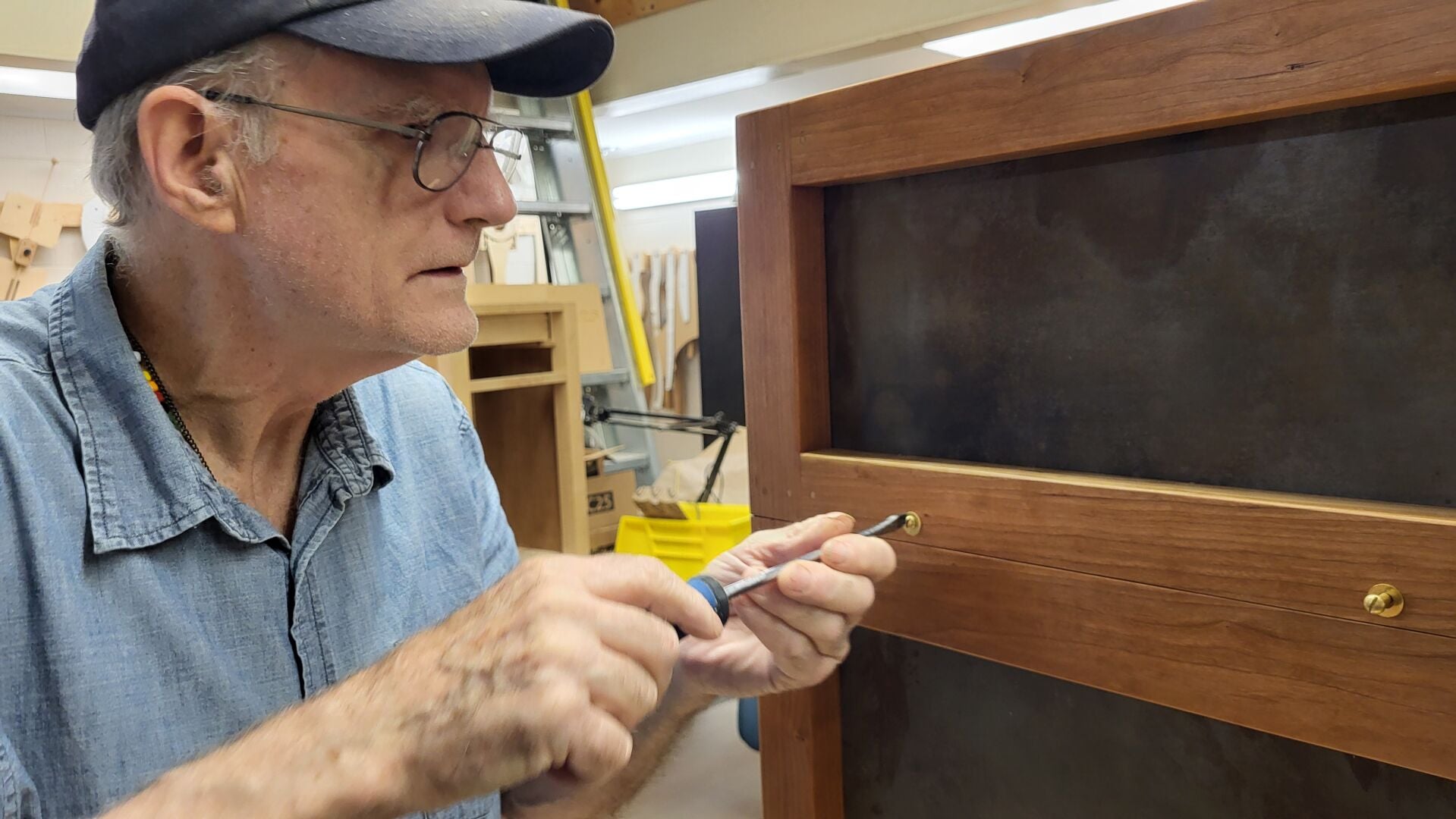
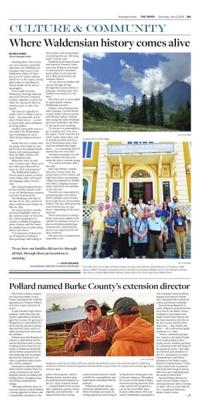
Western Piedmont Community College woodworking instructor John Ferguson tightens a screw into the Burke County America250 time capsule, demonstrating the fully assembled box.
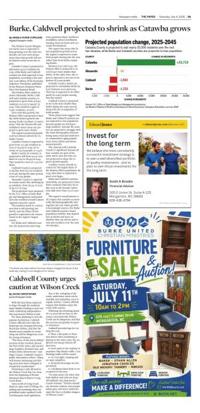
Encapsulating the cultural zeitgeist of Burke County in 2026 with a catalog of objects might be challenging, but it’s worth it so the next generation or two of history nerds can gaze upon the ancient artifacts of everyday objects used by their grandparents.
A pink Stanley cup, an iPhone, and Ingles coupons (that the next generations could, perhaps, finally use in Morganton) are just a few ideas for the Burke County America250 Committee’s time capsule.
The coupons are actually to show the price of food in 2026, said Committee Chairman Ed Phillips.
Although the time capsule will not be sealed by the nation’s 250th anniversary due to delayed shipment of the commemorative plaques, it will be sealed this year, Phillips said.
The concept is to seal the time capsule with objects representing life in 2026 until July 4, 2076 — The United States’ 300th anniversary. Until then, the time capsule will be on display in the Burke County Register of Deeds lobby.
Phillips said acquiring “hard artifacts” (tangible objects) in such a digital age has been challenging.
“We’re going to have a table of contents booklet that will list everything that’s in it, and maybe a reason why,” Phillips said. “(In case) 50 years from now, they see something they don’t recognize.”
Instead of focusing solely on the positive, Phillips also plans to include objects like opioid pill bottles to represent the opioid crisis and prints of photos he took in the aftermath of Hurricane Helene.
The time capsule was built by Western Piedmont Community College faculty, including John Ferguson and Steve Crawford, and students of woodworking and metalworking.
Ferguson said he and his team — the woodworkers — started with a prototype frame around February.
Because it involved students, it took a little extra time, Ferguson said, but it paid off.
“I took the liberty of writing the names of everyone who worked on it on the bottom,” Ferguson said. “In pencil, because graphite lasts a long time. I didn’t realize just how many people worked on it until then.”
Ferguson said it was a wonderful project to be part of.
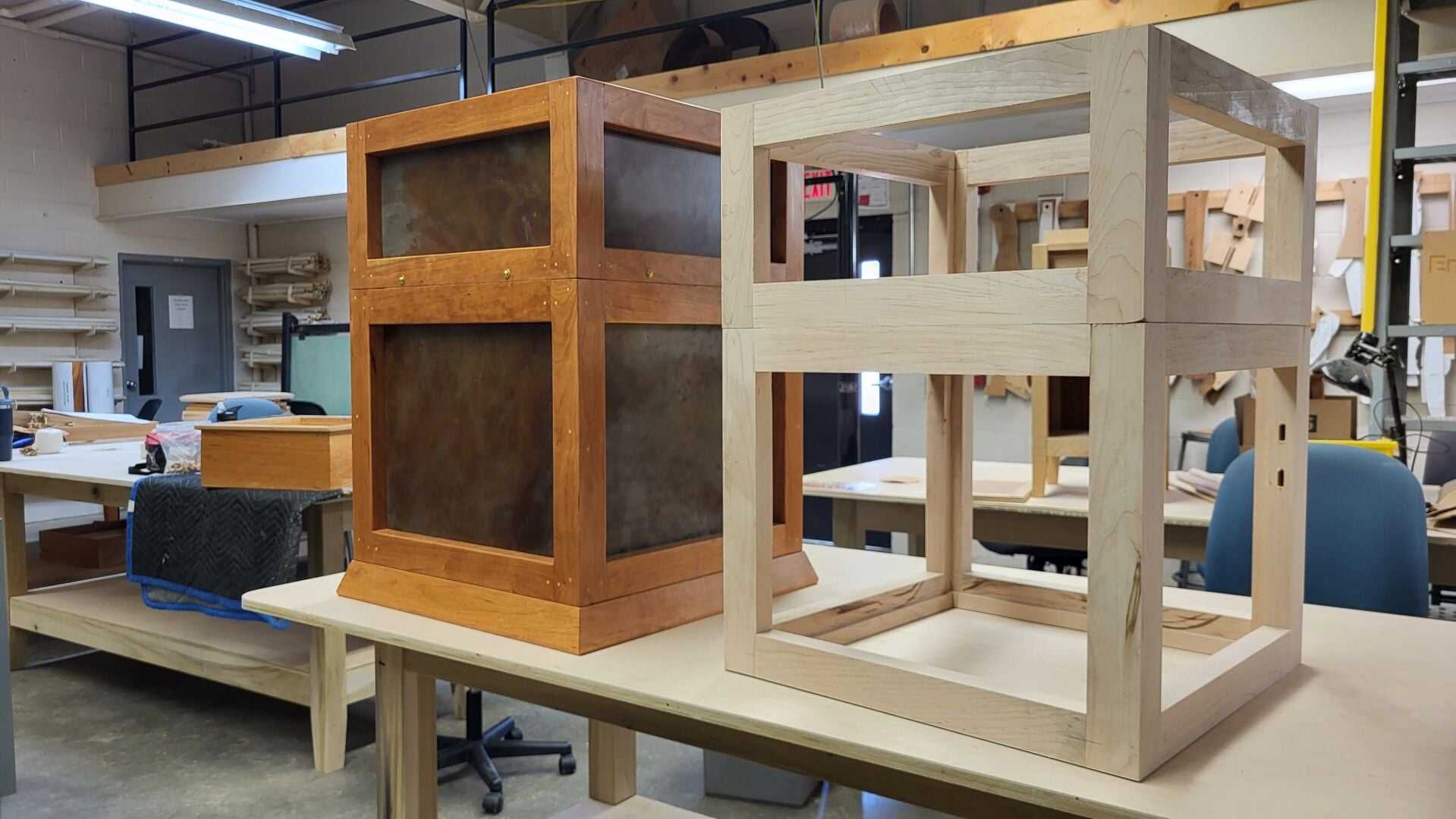
The final time capsule, left, sits on a table in Western Piedmont Community College’s woodworking workshop beside the prototype.
The capsule measures about 30 inches tall and 16 inches wide.
America250 is a national initiative to celebrate the 250th anniversary of signing the Declaration of Independence.
The America250 website said: “The journey toward this historic milestone is an opportunity to pause and reflect on our nation’s past, honor the contributions of all Americans, and look ahead toward the future we want to create for the next generation and beyond.”
John Konst (left) stands with Burger King employees (from left) Stacey Whitfield, Stephanie Taber, Jennifer Taber, Synthia Adams, Maria Matias, Debbie Dobson, and Emily Harmon. Konst is retiring after four decades with the restaurant chain.
John Konst fries apple pies during Burger King’s breakfast hours.
John Konst (standing) poses with current members of the Coffee Club, which has met daily for over 30 years. Pictured are (from left) Joe Franklin, Gene Franklin, Danny Lyles and his grandson Jessie Smith, Charlie Edge, Robert Pruett, and Wayne Grimm.
At 4 a.m. on a late June day, the kitchen lights of the Morganton Burger King are flicked on. The store’s general manager, John Konst, pours himself a Diet Coke and is ready to start what he calls “the most productive hour of the day.”
The doors to the restaurant won’t swing open to the public for another two hours, but there’s work to be done.
Switches in the office start the heating system, the fry station is assembled, buns are rotated by freshness, eggs and croissants are brought out to cook, and the equipment gets a close inspection.
After 40 years of serving as the general manager of the Burger King in Morganton, the 67-year-old has perfected his opening routine. Now he’s ready to take off his crown and retire.
The shaded glasses Konst wears barely covers the smiling face he dons on a regular basis. His full gray mustache and seasoned, athletic build add to his approachable demeanor, matching the energy he brings to the store every day.
To stay anywhere for 40 years takes a specific type of character, let alone the fast food service industry, in which jobs turn over more frequently than the burgers do. But to Konst the field can be, and usually is, a lot of fun.
He said that he’s seen a lot of miserable people in the field, but approaching everything with a smile has kept him going.
That and anticipating that somewhere along the line something will go wrong, either with people or equipment, have been his go-to reminders as he’s stayed in this line of work.
His reign started with a Burger King blitz, having been asked to move through stores in Niagara Falls, then Cleveland, before a promise to a hiring/district manager position where he would plant his feet for at least 20 years secured him a job in Morganton.
The transition to the South was smooth. Konst said that trading his usual workday trek through 12 inches of snow for the moderate climate of Western North Carolina was an undeniable perk.
The success of Morganton’s Burger King however, was not as immediate.
“When I got here we made $630,000 and lost the company $40,000,” he said.
The store opened in 1988 as one of only 50 Burger King training stores in the United States, meaning up-and-coming managers from across the nation would travel here to learn the skills they would need to run their own restaurants.
For the first few years, Konst, to the annoyance of his superiors, refused to hire and train anyone that would not be working with him in his store. He had to make sure his kingdom was stable first.
Now, under Konst’s management, the Morganton Burger King is one of the most successful stores in his district, earning a profit of $1.25 million last year alone.
But financial success is not the only thing proving that he knows a thing or two about management. His repertoire was also built by seeking to fill a seat at any table Burger King would let him fit in.
Throughout his 40 years in Morganton, Konst has helped to redesign the entire Burger King Corporation training programs.
“Most of the reason I stayed as long as I have is because they let me train the new managers that were coming in,” Konst said. “That made quite a difference as far as my interest and abilities.”
Konst has won General Manager of the Year twice in his career, a recognition given to him by the Burger King Corporation.
He’s been asked, and consequently declined, to take a Burger King corporate job three separate times. His quickest turn-down was in December 1990, when he was asked over the phone to pack up and go to Kalamazoo, Mich., in two weeks.
“If I go home and ask my wife if she wants to be in a U-Haul truck driving up to Kalamazoo, two weeks before Christmas, I know exactly what she’s going to say,” Konst said.
The real reason he’s stayed, however, is simple.
“I can’t ask people to do something I wouldn’t do myself,” he said. “I’m just not that kind of person.”
In the corporate world, that’s what it is all about. Konst, who still carries out his own trash, sweeps his own parking lot, and washes his own windows … wasn’t willing to compromise.
Several of Konst’s staff have worked for him for over 10 years and they say it’s his down-to-earth mentality that has kept them around.
“He’s very wholesome and good-hearted,” said Myra Moore, a longtime employee of Konst. Moore worked for Konst when she was in high school. Several years later, upon returning to Morganton to take care of her mother, she ran into Konst, shared her need for a job, and was told to come back and start the next day.
Konst’s caring heart extends to his community, too. When a group of men were searching for a spot to hold their social hour, Konst opened the Burger King doors to welcome them. Now the group, who call themselves the Coffee Club, have been meeting daily for over 30 years.
“It’s kind of bittersweet, his retirement,” a teary-eyed Moore said. “It’s not going to be the same without him and his little jokes.”
So, what does a man who has kept a similar routine for nearly half a century do with the freedom of retirement? Konst and his wife, Mary-Jo, will take to the Greek islands, continuing their retirement travel before settling down in their brand-new South Carolina home.