

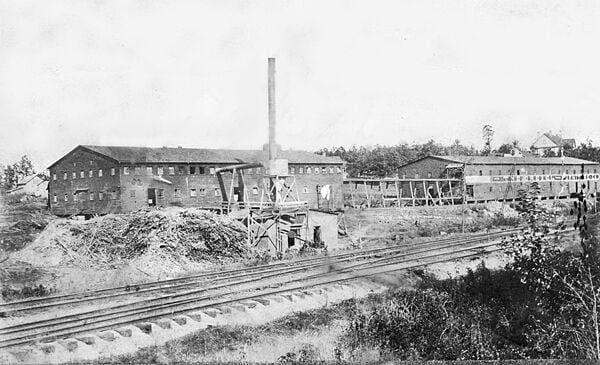



Sixty years ago, hundreds of people worked at the Drexel Furniture plant and offices in downtown Drexel.
Sixty years ago, Drexel Furniture was the largest employer in Burke County, its workforce exceeding even that of the state, in a county with three large state institutions: School for the Deaf, Broughton Hospital, and Western Carolina Center.
Sixty years ago, Drexel Furniture was the third largest furniture manufacturer in the world, a familiar and respected name in furniture stores and showrooms around the globe.
But … that was 60 years. Today, the site of Drexel Furniture is empty, the buildings long since razed, the parking lot a haven for weeds and puddles. And folks in the Grow With Drexel organization were fearful the company and its legacy would be forgotten.
It was that fear that prompted the group to form a committee tasked with securing placement of a historical marker for the site sanctioned by the N.C. Department of Natural and Cultural Resources.
And it was that fear that was assuaged recently when the department, through its Highway Historical Marker Program, approved a marker that will be placed in the downtown area within the next 14 months.
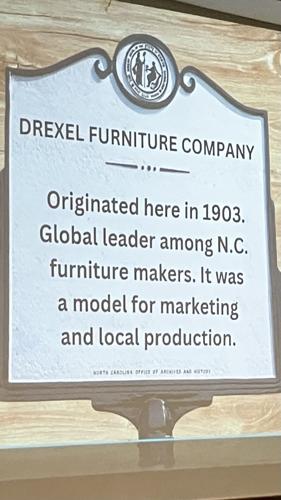
The marker will read simply: “Drexel Furniture Company. Originated here in 1903. Global leader among N.C. furniture makers. It was a model for marketing and local production.”
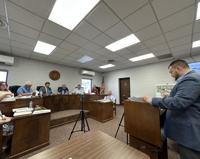
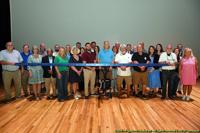
Nearly 30 members of Grow With Drexel gathered Tuesday evening in the fellowship hall of Drexel First Baptist Church to celebrate that accomplishment and to learn just how it came to be.
Taking the lead in that presentation, as they did in the marker effort, were committee members Phyllis Garrison and Laurie Johnston. Other committee members included Mahala Cannon, Madeleine Muir, and Carol Powell.
The committee was given a primary objective by the state: prove that Drexel Furniture not only had an impact on the local area but was impactful across the entire state.
“Our goal when we began,” Garrison explained, “was not to write the history of Drexel Furniture but to prove it had statewide significance.”
Specifically, the state required the writing of an essay detailing Drexel Furniture’s impact on the state, supported by photographs as well as primary and secondary sources.
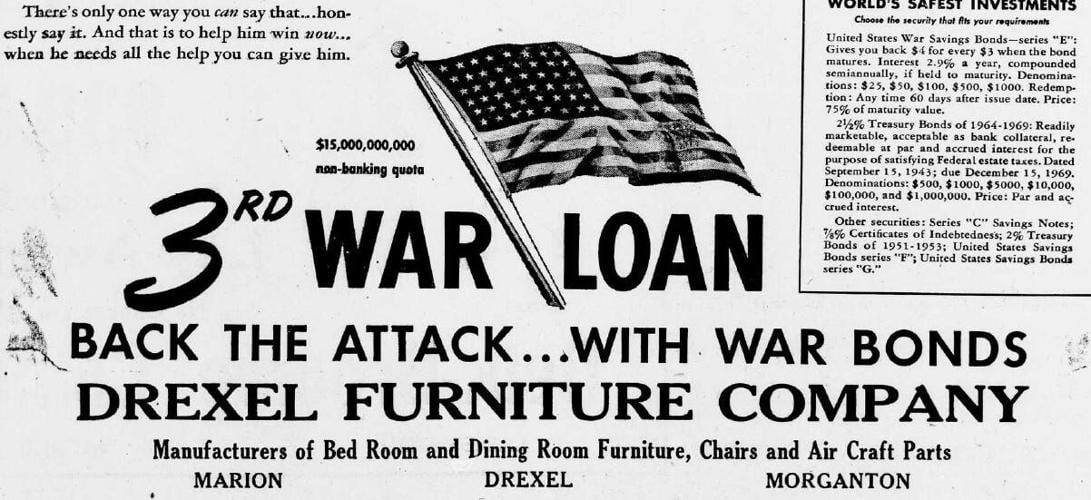
The group found stories about Drexel Furniture in newspapers around the state, ads for the furniture in national magazines, several books that detailed the company’s progress, and even an old TV ad that ran on NBC’s Today Show.
In the essay, the committee wrote about how Drexel paved the way for other furniture manufacturers in western North Carolina, was an early leader in providing insurance and retirement benefits for its employees and developed innovative marketing techniques that were emulated across the furniture industry.
The company’s historical role was also documented, noting that it participated fully in the World War II effort, including building 4,000-bedroom suits for use at the Oak Ridge nuclear development facility in Tennessee.
The committee that made the decision to approve the marker met in Raleigh last Dec. 3 and three members of the Grow With Drexel group were in attendance but were not allowed to speak.
Drexel Mayor Dennis Anthony was officially notified by email of the monument’s approval last week. Anthony said the marker, which will likely be erected early in 2026, will be as close to the original Drexel site as possible.
Drexel is currently working with Burke Development Inc. to redevelop the 100-acre site where Drexel Furniture stood by placing a new industry or industries there.























(0) comments
Welcome to the discussion.
Log In
Keep it Clean. Please avoid obscene, vulgar, lewd, racist or sexually-oriented language.
PLEASE TURN OFF YOUR CAPS LOCK.
Don't Threaten. Threats of harming another person will not be tolerated.
Be Truthful. Don't knowingly lie about anyone or anything.
Be Nice. No racism, sexism or any sort of -ism that is degrading to another person.
Be Proactive. Use the 'Report' link on each comment to let us know of abusive posts.
Share with Us. We'd love to hear eyewitness accounts, the history behind an article.