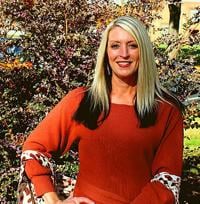
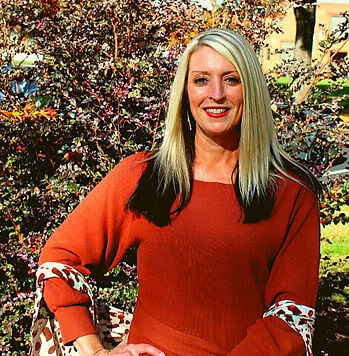
Dr. Katie Samuels returned to Burke County as the Opioid Settlement Coordinator in spring 2025, and among the many milestones passed, the county has negotiated a lower purchase price for naloxone kits provided free across the county, established a Post Overdose Response Team (PORT), created a safe space for recovery support, and propelled local partners into implementing opioid addiction treatment programs.
NALOXONE DISTRIBUTION
Funded by a BlueCross BlueShield grant, Samuels’ team now purchases the overdose reversal medication for $22 — approximately $13 less than the average over-the-counter price, and $16 less than they were paying previously.
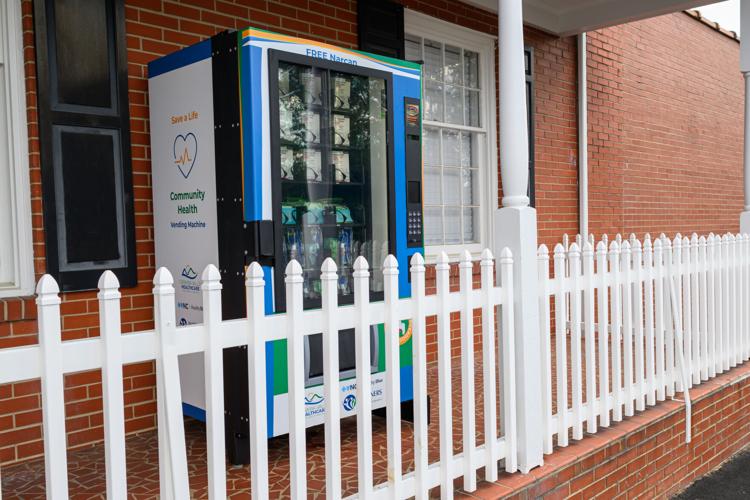
The naloxone vending machine in Valdese carries medicine and other donations.
JACOB CHRISTOPHER / THE PAPER
While the Burke County Opioid Response Deputy Director Brandi Greer clarified there are several places in Burke to get naloxone for free — Burke Recovery, the local health department, and many harm reduction services — the vending machine at 205 Morgan St. SE in Valdese seems to be a hotspot for pickup.
According to Greer, distributions through the vending machine hit 140 boxes within 14 weeks, as of Nov. 18.
“Brandi and company are keeping it stocked with lots of different things,” Samuels said. “It has naloxone. They put in some cold weather supplies when we had that cold snap (and) health products. We’ve had people that are really taking the opportunity to get some things that they might need, especially in the wintertime.”
POST OVERDOSE RECOVERY
Burke County also announced the new PORT members. PORT is a specialized group of responders that follow up with overdose victims following emergency treatment, connecting them with resources, counseling, and peer support.
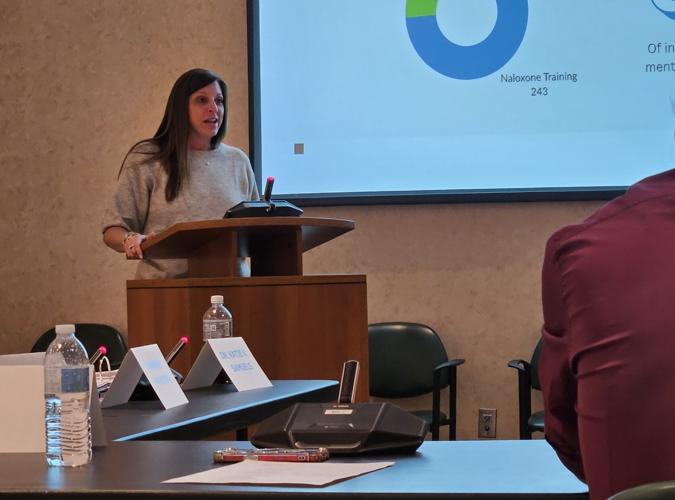
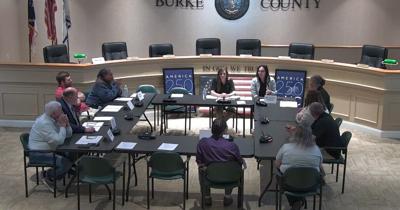
Samuels presents last fall about progress made.
JACOB CHRISTOPHER / THE PAPER
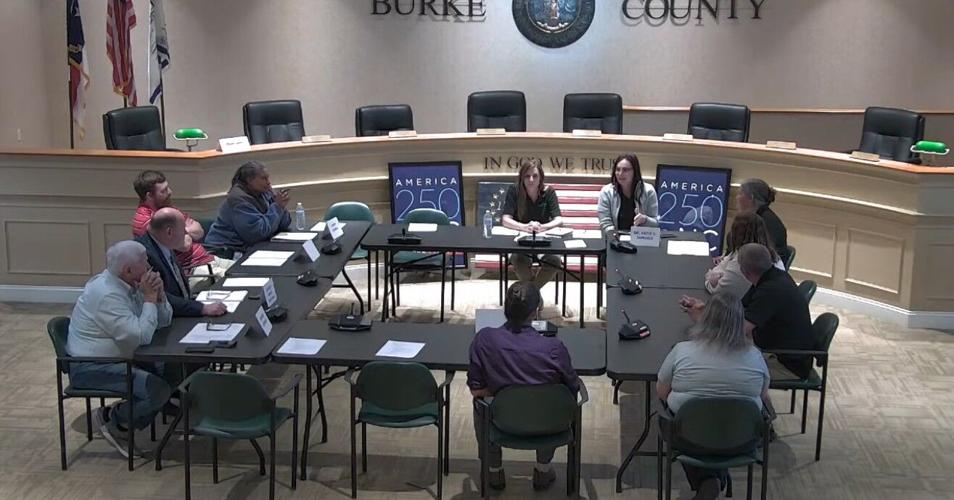
Samuels introduced the new hires at the opioid advisory committee meeting on Nov. 18. Their mix of experience in first responder, paramedic, and opioid-related work will bring expertise to the county’s crisis response.
At the end of December, Samuels said there are still four-night shift positions available: two peer support specialists and two community paramedics.
PEER SUPPORT
Samuels said in a September interview, “Our next phase is, let’s saturate the community (with) peer support specialists, which are your conduits to treatment. You have to have the infrastructure in place, so that when a peer support specialist connects with a person, they have a place to send that person that is a very warm handoff, easy referral system.”
Greer operates a monthly peer support group, PPE (Peers Partners for Excellence), where people who have struggled with addiction meet and help each other throughout their recovery process.
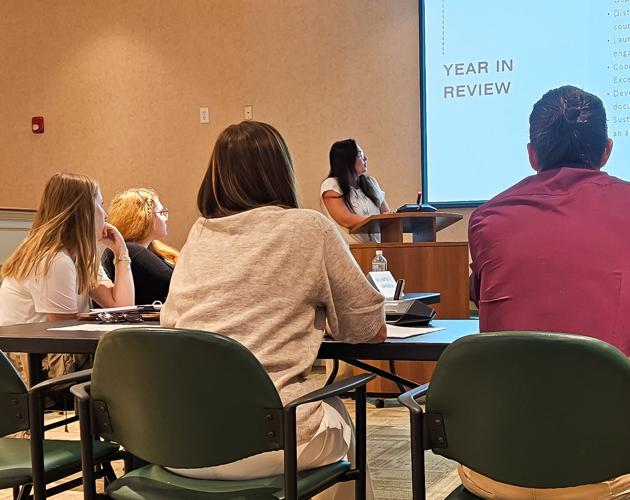
Greer presents information on PPE in fall 2025.
JACOB CHRISTOPHER / THE PAPER
As of November, Greer said PPE meets regularly at the new Burke United Christian Ministries Hope Center at 576 E Fleming Dr in Morganton. On the last Thursday of every month from 12-2 p.m., PPE opens its doors to the community, inviting specialists and those in search of support to come interact.
“We have an application for membership,” Greer said. “Our executive committee looks over those applications and accepts members who are certified peer support specialists or are intending and going and getting there … But anyone can come from the community.”
COMMUNITY PARTNERS
After bringing together a collection of committed residents to form the Burke County Opioid Advisory Committee, the team made quick headway, allocating more than $950,000 by August to three local community-based programs: $390,000 to SPARC (Supporting People’s Access to Reliable Care), $300,000 to A Caring Alternative, and $267,305 to High Country Community Health (HCCH).
According to Samuels, she meets one-on-one with the providers each month, reviewing services and fees.
“I don’t really review their financials,” Samuels said. “They invoice the county. I review their invoice to make sure it matches what they said they were gonna do, what’s in their contract, and then I track it on my end — how much they’ve drawn down, how much they have left, and so on.”
SPARC and A Caring Alternative bill the county for the families and people they’re serving based on contractual agreements with the county. HCCH is the only service that doesn’t operate on the same standard, since they don’t carry caseloads.
HIGH COUNTRY COMMUNITY HEALTH
In the HCCH program, behavioral health specialists, social workers, and addiction specialists prescribe medicines and provide counseling for individuals struggling with opioid use disorder.
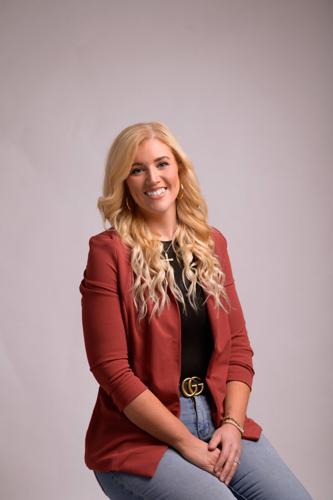
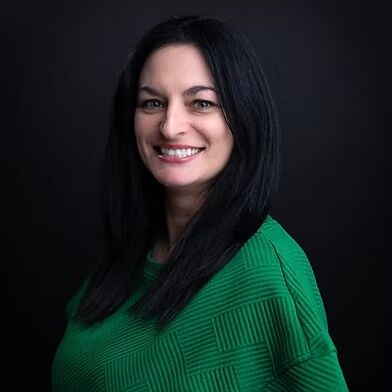
Clark
FOR THE PAPER
According to Sara Clark — who wears all of the hats above on top of being the medication for opioid use disorder program coordinator — HCCH is a federally qualified health center, providing low-cost care for the uninsured and underinsured.
Potential patients can establish care at the Morganton office, currently next to A Caring Alternative at 301 E. Meeting St., or at the Connelly Springs office at 560 Malcolm Blvd.
The office-based treatment includes behavioral health and medical assistance through buprenorphine distribution, Clark explained. Buprenorphine functions similarly to methadone, but not as strong. It stabilizes cravings and can be used long-term, she said.
Clark said the main goal of HCCH in the county is to eliminate care gaps through partnering with the PORT team for follow-ups and being proactive in an outreach program, headed by their nurse practitioner, Tim Nolan.
“He does outreach in the field,” Clark said. “So, he can meet people where they’re at — in their encampments, sort of outside of the office, and if they have barriers to transportation, which we see a lot in this area. When it’s appropriate or they’re able to, they can come to the office for the office-based addiction treatment that we provide.”
HCCH is still expanding and preparing for the full implementation of the funds.
SPARC
SPARC, on the other hand, has finished training and is functioning in its new role.
Prior to the settlement funding, SPARC specialized in family centered treatment (FCT). With the allocation, SPARC practitioners trained in family centered treatment recovery (FCT-R), which included fourteen extra modules of training in addition to the normal 18-module training for FCT.
The SPARC team visits families in-home to strengthen the entire household.
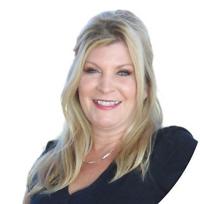
Tillery
FOR THE PAPER
“Just because dad went to treatment and came back and he’s all positive and ready to rock, the whole family was still left with the chaos before he left, right?” FCT and FCT-R Supervisor Faren Tillery said. “It’s working through that process that’s been building on that substance abuse — how everybody in the family kind of shifts their dynamic to live with that substance abuse. Whether they decide to ignore it or they get in their own bad habits, themselves.”
Through questionnaires, cooperation evaluations, regular visits, and mental health self-help methodologies, SPARC works with and equips families with the tools they need to operate as a unit against substance abuse.
A CARING ALTERNATIVE
A Caring Alternative offers intensive and comprehensive substance abuse outpatient treatment and programming.
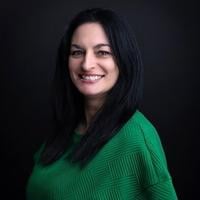
Brown
FOR THE PAPER
“It’s like partial hospitalization,” Chief Operations Officer Teagan Brown said. “The design, instead of people having to go off somewhere for treatment and rehab, missing work, missing school, missing their time with family, they can still participate in their community.”
A Caring Alternative focuses on behavioral health, highlighting the hand-in-hand nature of mental health issues and substance abuse struggles.
“This way, we can peel the layers of that onion back and hopefully get into that recovery period for the opioid use or the substance use, and then start treating this underlying trauma,” Brown said.
A Caring Alternative is still getting programs and training implemented but are almost finished with preparation.
Rhoney
FOR THE PAPER
President and CEO Melaina Rhoney said, “It’s important to note that here, we’re going to use every penny wisely … It’s a little bit more hoops to jump through — it’s a lot more, actually — but we’re gonna get it. Sometime at the beginning of the year, we’ll have those programs launched.”
Jacob Christopher is the courts and education reporter for The Paper. He can be reached at 828-445-8595.
Keep it Clean. Please avoid obscene, vulgar, lewd,
racist or sexually-oriented language. PLEASE TURN OFF YOUR CAPS LOCK. Don't Threaten. Threats of harming another
person will not be tolerated. Be Truthful. Don't knowingly lie about anyone
or anything. Be Nice. No racism, sexism or any sort of -ism
that is degrading to another person. Be Proactive. Use the 'Report' link on
each comment to let us know of abusive posts. Share with Us. We'd love to hear eyewitness
accounts, the history behind an article.























(0) comments
Welcome to the discussion.
Log In
Keep it Clean. Please avoid obscene, vulgar, lewd, racist or sexually-oriented language.
PLEASE TURN OFF YOUR CAPS LOCK.
Don't Threaten. Threats of harming another person will not be tolerated.
Be Truthful. Don't knowingly lie about anyone or anything.
Be Nice. No racism, sexism or any sort of -ism that is degrading to another person.
Be Proactive. Use the 'Report' link on each comment to let us know of abusive posts.
Share with Us. We'd love to hear eyewitness accounts, the history behind an article.