



Cothren
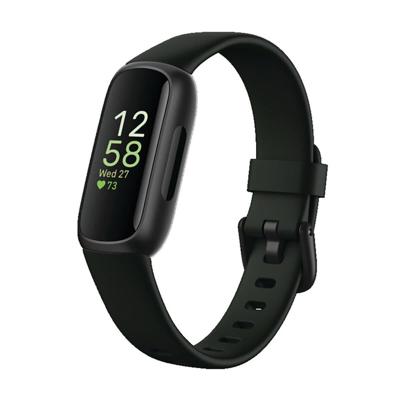
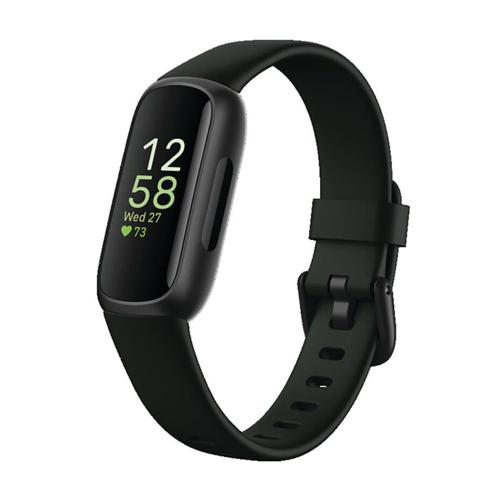
A fitness tracker helps the wearer understand everything from heart rate to sleep patterns, but also comes with privacy concerns.
FOR THE PAPERI grew up in the dark ages according to my now adult children.

Cothren
FOR THE PAPERWay back then we would get out of school early for heat in the afternoons (those classrooms had no AC), so we absolutely knew that summer was coming but that heat did not stop us from having an afternoon of extreme play. I did not need a fitness tracker to know how many steps I had taken, how much sleep I had gotten, what my pulse rate was, if I had taken a hard fall, or that my recovery was low. In fact, the technology had probably not even been considered at that point. Dark ages, remember?
Summer has arrived and Father’s Day was just a couple of weeks ago. Many of us may be considering buying a fitness tracker or upgrading an existing fitness tracker. Maybe you considered giving a fitness tracker as a gift. Does Dad really want one of those “new-fangled devices”? Who knows, but I can say my Dad would not approve.
I’ve been wearing a fitness tracker of some sort for at least 10 years. But why am I doing that and what’s the implications? You know when you get a new device or new software you are presented with the “Terms and Conditions”? Have you ever read those? I assure you that buried in those “terms and conditions” are some privacy concerns that might make your eyebrows raise including your location!
Being an IT security professional, I realize that most of us have given up on privacy in the age of devices that are always listening for us to ask them a question. I know that to be part of the mainstream and use any of the big tech brands, my ability to push back is limited. So, what’s the implications of using a fitness tracker on your personal health and privacy?
Big data. That’s what this is all about. Every step, every heartbeat, every “hard fall”, every sleep stat that you have will be logged, anonymized, and analyzed to find health trends, improve products, and even influence insurers and health care organizations in decision-making with how their services are offered to the greater population.
Think about this: A health insurer sees that the respiratory rate in a specific zip code is lower than the average in other, similarly sized areas. What could be the cause of that? Do they actually care, or will they use that data to decrease their reimbursement rates in that zip code for respiratory illnesses? Let’s hope they’re feeling generous because alternatively, that data could be used to help improve the population health in that zip code by trying to find the source of the issue. Similar techniques were used during the COVID-19 pandemic to find trends among populations.
Let me bring it back down a level and let’s talk about how these fitness trackers help us as individuals. Simple. Again, it’s data. If it has not been established with my previous articles, I am quite the nerd. I love data. Being in IT, I love how data is collected. I love how data is used. I love how data can help us make big decisions. I love how now artificial intelligence (AI) can help us quickly summarize and review that data. So, it’s natural that I want data about my body, my fitness level, and my overall health.
I am also slightly obsessed. Just ask any of my friends or family, most of which have watched me run around a parking lot, so my run is 4.02 miles rather than 3.95 miles or that at the end of the day I have greater than 12,000 steps rather than 11,895.
Overall, a fitness tracker brings awareness for us. It helps any wearer to build habits. Want to know that you are getting your 10,000 steps a day? Got it. Want to lower your BMI? Your smart scale can help. Want to know if you got enough sleep to be able to do that hard weight-training session later today? The data is there. Mindfulness is important and having data to support your healthy habits are important.
If you’re considering gifting a tracker to a friend or loved one, just know that they are very individual. The technology ecosystem matters. Does the person you’re gifting a tracker to have an iPhone or Android? Does the person want a technology-agnostic device they can use with any device? This is not just important for gift giving, it’s also important for you to consider when buying a fitness tracker for yourself.
Whether you’re tracking your steps, your sleep, or how many times you’ve gone to the kitchen to grab a snack (a true problem for those of us that work from home), a fitness tracker can be helpful, even if it tends to be a bit judgmental.
Just remember, it’s not about perfection — it’s about progress and habit building. And if your Dad didn’t want a fitness tracker … that’s OK. Like my own, he probably already knows he’s winning at life and does not need a device to prove it.
Leslie Cothren has been an Information Technology professional for more than 30 years, holds an undergraduate degree in Computer Information Systems, an MBA, and numerous Information Technology certifications. Leslie can be contacted for any IT-related information at leslie@refocusonit.com or by visiting www.refocusonit.com.

















Sorry, there are no recent results for popular videos.
Success! An email has been sent to with a link to confirm list signup.
Error! There was an error processing your request.


Sorry, an error occurred.
Already Subscribed!
Cancel anytime
Thank you .
Your account has been registered, and you are now logged in.
Check your email for details.
Submitting this form below will send a message to your email with a link to change your password.
An email message containing instructions on how to reset your password has been sent to the email address listed on your account.
No promotional rates found.
Secure & Encrypted
Thank you.
Your gift purchase was successful! Your purchase was successful, and you are now logged in.
| Rate: | |
| Begins: | |
| Transaction ID: |
A receipt was sent to your email.









(0) comments
Welcome to the discussion.
Log In
Keep it Clean. Please avoid obscene, vulgar, lewd, racist or sexually-oriented language.
PLEASE TURN OFF YOUR CAPS LOCK.
Don't Threaten. Threats of harming another person will not be tolerated.
Be Truthful. Don't knowingly lie about anyone or anything.
Be Nice. No racism, sexism or any sort of -ism that is degrading to another person.
Be Proactive. Use the 'Report' link on each comment to let us know of abusive posts.
Share with Us. We'd love to hear eyewitness accounts, the history behind an article.