



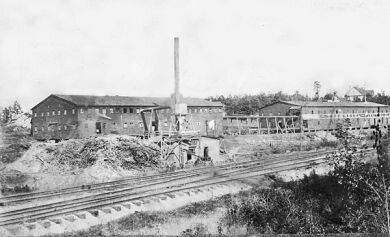
Home Furnishings has been a mainstay in North Carolina, and particularly Burke County and its surrounding neighbors, Catawba and Caldwell and Alexander counties, for almost the entire time the United States has been a country.
As our young country came of age in the early 1800s, the population migrated from north to south seeking more land, more resources from the land, abundant water, and perhaps a better way of life.
Industrialization in the late 1880s through the early 1900s increased the population growth of North Carolina, and legacy industries such as furniture, textiles and apparel left the North for cheaper labor, abundant wood and cotton, and waterpower.
And Burke County was right in the middle of this expansion. The Catawba River (and the confluence of the two rivers coming out of the mountains) provided fresh water for living and power for the mills.
The vast forests of the Blue Ridge and Appalachian Mountains provided the wood. The soil was fertile, and agriculture flourished. Just up the road in Asheville, Mr. Vanderbilt constructed the Biltmore House in the early 1900s and his fascination with the forests (now Pisgah National Forest) was one of the key drivers.
Great names in the furniture industry emerged in the region, as the Colletts and Bernhardts and Wilsons and Broyhills and VanNoppens and other families started and built great companies, like Henredon, Drexel Heritage, and Bernhardt Furniture.
In Hickory, the Shufords created Century Furniture and later built Valdese Weavers (in Burke County) into a major textile fabric mill. Many others came to Burke County or left the larger companies to create new ones: great names like EJ Victor.
As some companies disappeared or became right-sized, new players took their place, like Shenandoah Furniture, Kellex, Vanguard, and Stone & Leigh.
The global expansion and emergence of Asia in the late 1990s took a bite out of U.S. manufacturing, and furniture was hit hard. Many plants closed and the employee count dropped significantly.
Morganton and the surrounding areas were confronted with huge factory closures and the demise of many of the great legacy names. But an improving U.S. economy in the mid-2010s and tariffs and duties have leveled some of the competitive threats.
Today Burke Country remains a core part of the U.S. furniture industry and these companies are providing steady employment, career opportunities, dependable tax dollars, and a commitment to building for the future.
The resources remain a vital part of the ecosystem, allowing our local economy to grow, thanks to affordable power (thanks Duke Energy – and now solar farms), reforestation of the hardwoods, and continued strength in agriculture.
In High Point, the world’s capital for home furniture, there is a dining establishment called the String & Splinter Club, named for the cotton (string) and wood (splinter). An apt name for our industry and region.
Thanks to the many people who have built and continue to build the furniture industry into this strong pillar of Burke County’s economy.
Tim Stump founded the Charlotte-based Stump & Company that today is a family-owned global mergers and acquisitions firm with deep experience across Home Furnishings & Décor, Manufacturing, Direct-To-Consumer & E-Commerce, Showrooms & Real Estate, and Family Businesses.























(0) comments
Welcome to the discussion.
Log In
Keep it Clean. Please avoid obscene, vulgar, lewd, racist or sexually-oriented language.
PLEASE TURN OFF YOUR CAPS LOCK.
Don't Threaten. Threats of harming another person will not be tolerated.
Be Truthful. Don't knowingly lie about anyone or anything.
Be Nice. No racism, sexism or any sort of -ism that is degrading to another person.
Be Proactive. Use the 'Report' link on each comment to let us know of abusive posts.
Share with Us. We'd love to hear eyewitness accounts, the history behind an article.