


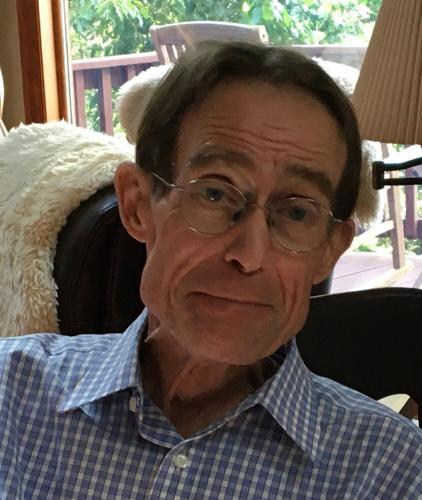

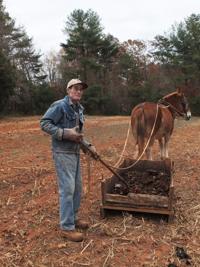
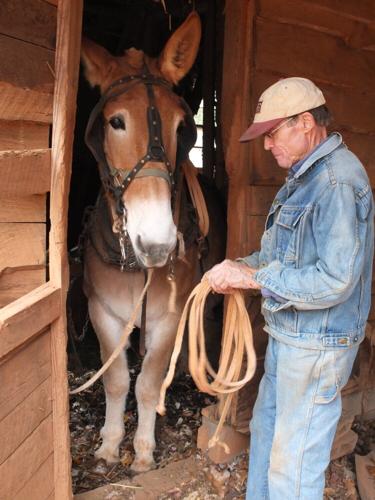
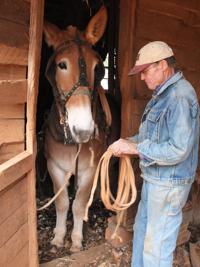
Dr. Robert McAdams was educated in Morganton Public Schools from first to ninth grades when his father worked at the N.C. School for the Deaf. He returned to Morganton in 1984, after his parents retired to Morganton in 1982.
The Burke County Schools needed a teacher for art and social studies. McAdams taught three years at Hildebran and George Hildebrand junior highs.
In the summers of 1985-86, he drove the mountain to ASU for a master’s degree in history education. By 1988, He had been accepted to a PH.D. program in history at UT Knoxville.
He did a residency there with educational leave in 1988-89. Upon returning to our community, McAdams taught art at the new East Burke Middle School, and then taught at East Burke High School, where he remained for the next 20 years until retirement in 2009.
He says, “We all need to find a niche and I found mine in the Humanities Program at East Burke. It was a ‘marriage’ of history, literature, and the arts for academically gifted students.”
McAdams always started each class with current events. His favorite saying was "Current events today are history tomorrow." Students gained some extra credit for participation in current events, the text readings, and attendance at the Lenoir-Rhyne Writers' readings or other events.
He reflects, “I used to tell students that we momentarily may not enjoy everything about the class, but that one day we would look back on all of it more favorably. I taught many great students who have gone on to interesting lives and have been kind enough to keep up with me all these years. Today, when meeting former students, I relate their graduation to their greeting. It was Mr. Mac before 1996 and Dr. Mac thereafter.”
This refers to his PH.D which was completed in 1996 and when he became Social Studies Department chairman at East Burke.
McAdams is proud that in 1999, he was in the charter class of teachers to achieve the National Board Teacher certification in social studies. McAdams continued to serve as department chairman and teach until his certification ended in 2009, after a teaching career of 38 years and having taught every grade level in either Art or social studies.
That spring, former students organized a retirement party and also Western Piedmont Community College began a scholarship in McAdam’s name. McAdams was awarded the prestigious Order of the Long Leaf Pine for service to North Carolina education.
A legacy of educators and farming
McAdams came from a family of educators. His maternal grandfather and grandmother, Levi Cecil and Inez Felder Cecil had Cecil's Business College during the 1920s to the 1950s in Spartanburg, S.C. His grandfather's brother had a school by the same name in Asheville.
McAdams’ father, Robert M., came to Morganton in June, 1937, straight out of Clemson College with a degree in vocational education to the N.C. School for the Deaf.
McAdams’ father served on the maintenance staff in the summers and as both a house parent and teacher at the school until moving to the S.C. School for the Deaf in Spartanburg in 1939 to be closer to his ailing parents on the farm in Anderson County.
When the United States entered World War II, he served as a lieutenant in the Army and did not return to the Morganton School until 1955, then married with three children and a fourth to come.
Dr. Ben Hoffmeyer had just taken the position as superintendent and recruited Robert’s father as principal. They had worked with each other while they both were at the Spartanburg School for the Deaf before the war.
Robert had enjoyed living in Anderson, S.C., surrounded by many relatives. He always had an affinity with the home farm, but when his father was appointed as Principal back to the Morganton School for the Deaf campus, it enticed him because of the farm and dairy, then still in operation. His family lived on campus in the principal's home. Although now demolished, it sat adjoining Goodwin Hall and in front of Rankin Hall.
In 1964, Robert’s father was appointed as Superintendent to the Eastern N.C. School for the Deaf in Wilson. There, Robert finished high school and college. While at Atlantic Christian College he majored in Art Education and minored in English Literature. Robert also apprenticed himself to two farm families.
One family still used mules for some tasks, and the older family lived in an unimproved tenant house without running water and cooked on a wood range. Both heated with wood or coal. Robert took note of this frugal lifestyle.
Farm living is the life for him
During Robert’s junior year in college, he borrowed a mule and some land and grew an acre of pickling cucumbers. He is grateful for the help from his two younger sisters (and any of their friends they could interest in the back-breaking picking for relatively little money).
Robert continued selling to Cates or Mount Olive Pickles for the next 10 years each summer, but on two different farms. In 1971, his senior year in college, he leased a seven acre farm bordering the Wilson city limits with a 1920 unimproved house, a tobacco barn, a stable, and a pack house for tobacco and corn storage.
There he grew an allotment of 1.8 acres of tobacco, filling out the rest of the land with garden, cucumbers, field corn, and field peas.
McAdams says, “My whole family helped peg out the tobacco in May. I graduated from college one morning and I hoed-out my tobacco crop that afternoon. I remained there for five crops with the tobacco allotment increasing to 2.1 acres until leasing another place, giving up the labor required for flue-cured tobacco and growing produce for the next nine years in Wilson County.”
When Dr. McAdams returned to Burke County to teach in the public schools, he bought the small farm where he still resides and he continued to sell produce at the Burke County Farmers' Market, where he also served as an officer, until health issues in 2016 ended 45 years of selling produce.
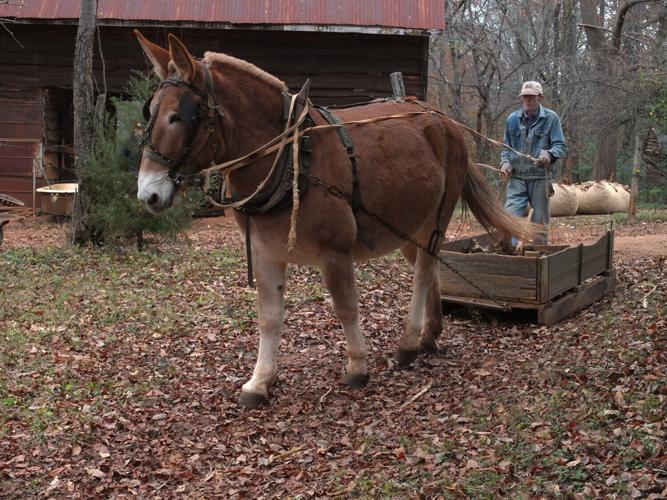
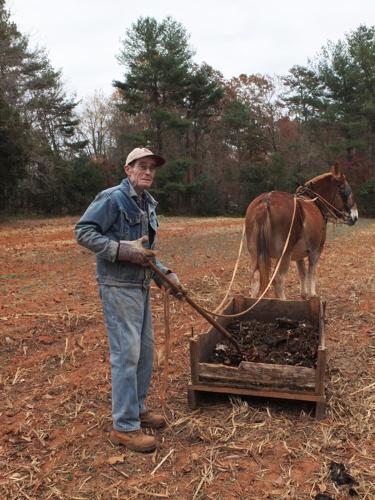
Since then, he has still worked the land with a mule, keeping a large garden for himself to can and freeze, a corn patch for mule and chicken feed and to grind for meal, and gradually placing more in pasture for his mule to graze.
McAdams is proud of the fact that he. “Made my 55th crop year of working the soil this past summer, although reactions to cancer treatments required help from some very kind people in Burke County. When diagnosed with cancer in 2014, I remember asking my surgeon in Charlotte if I should sell the mule. His reply was ‘Don't sell the mule!’ I didn't sell her and have continued to make nine crops since. Several doctors have said that the farm has been the best therapy I could have had.”
The Back-to-the-Land Movement
McAdams considers himself to be related to the Back-To-The-Land Movement of the late 1960s and early 70s. He was one generation off the farm from my grandparents, but remembers his father and his older sister, as well as other relatives, telling of their farming experiences.
Before beginning farming in earnest, McAdams planned out his efforts for several years, with learning apprenticeships and purchases of mule-drawn equipment at farm sales.
He says, “When I bought my first mule at the Rocky Mount Sales Barn in 1971, she was probably eight or more years older than I and knew what to do if I didn't.” In 1978 after farming for eight years, McAdams spent the fall harvest working as a farm hand with four different Amish families in New Holland. Pa. It was an unforgettable experience for him and led to longtime relationships.
McAdams reflects, “I have always joked that I have had the two poorest paying jobs, farming and teaching, that I never made much from either, but I saved a lot because I worked all the time, grew most of what I ate, and invested. But most importantly, I have had a great life of almost 75 years having done both jobs.”
Due to cancer treatment reactions, and McAdams admits, “probably age,” he now has to recruit help to get hay in the barn loft. He has a friend of 50 years who cuts the wood for heating and cooking, all jobs he used to do by himself.
A Real Education
McAdams tells an interesting story about combining education with farm living. He usually invited his senior class of Advance Placement history students out to his farm at the end of school.
Often, to his surprise, the students were eager to see the farm and livestock from the references he had made during class. In 2002 after several dry years, he had an opportunity to acquire an abandoned outhouse from across the road.
Since it took no water to work he thought it might be necessary if his well ever went dry. This outhouse was WPA-built from the 1930s or 40s with a cement base and toilet covered by the standard 4x4 feet building.
McAdams says: “I had been able to move all parts to my backyard by truck, but needed help in placing the heavy cement base over the hole in the ground. When the students were assembled I asked those who were willing to help position the base. They were eager to help! I later placed the building over the base and it remains ready and usable today. So my students got to help with an old-fashioned outhouse! I have always considered the student experience as a merging of history education and the reality of rural life.”
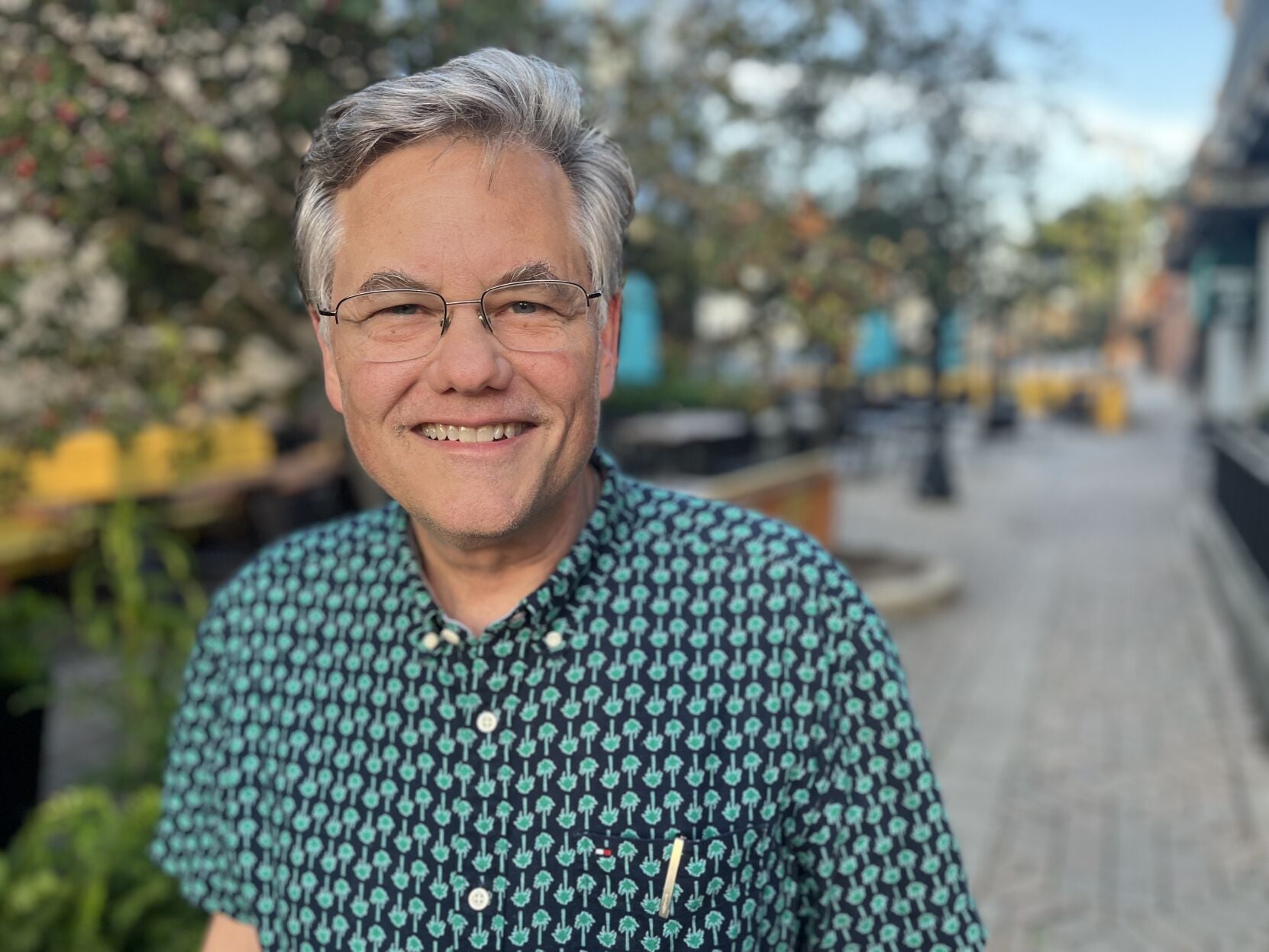
Fred Schuszler is a regular columnist for The Paper. He may be reached at fredschuszler@gmail.com.
















(0) comments
Welcome to the discussion.
Log In
Keep it Clean. Please avoid obscene, vulgar, lewd, racist or sexually-oriented language.
PLEASE TURN OFF YOUR CAPS LOCK.
Don't Threaten. Threats of harming another person will not be tolerated.
Be Truthful. Don't knowingly lie about anyone or anything.
Be Nice. No racism, sexism or any sort of -ism that is degrading to another person.
Be Proactive. Use the 'Report' link on each comment to let us know of abusive posts.
Share with Us. We'd love to hear eyewitness accounts, the history behind an article.