

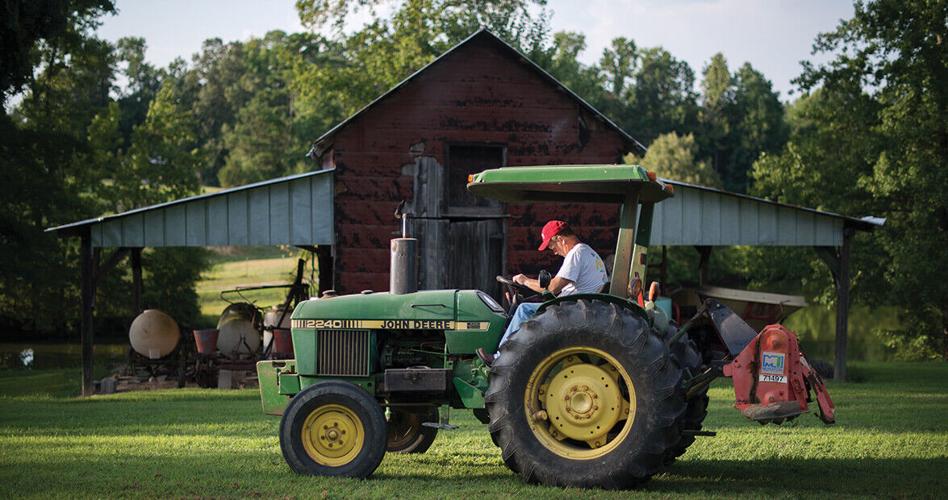



The farm has been teaching me a new language lately.
Not just the obvious words like tedder, bush hog, PTO shaft, and grease fittings, though I am learning those, too.
It is more the language of rhythm, patience, and timing. The kind of understanding that only comes from watching things long enough to realize you cannot force them.
These first really hot days of summer have settled over the farm quickly. Work starts earlier now. By midday, the heat presses down hard enough to send people and animals searching for shade. Even the rhythm of the land changes.
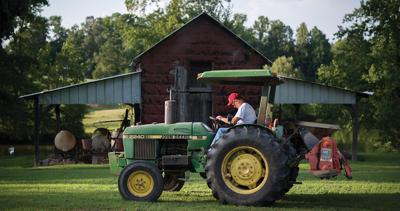
The dogs stretch out under porches, and sometimes the tractor gets parked beneath a tree with the hood popped open to cool off for a while too. Everything conserves energy until the sun begins to drop again.
I have spent these first weeks trying to learn the flow of it all. I watched hay being cut across the fields and learned how much timing matters. There is an urgency to hay season that I never fully understood before.
You cut while the weather is right, then you watch the sky constantly because one unexpected rain can ruin the entire crop before it is baled.
“Make hay while the sun shines” suddenly sounds less like an old saying and more like hard-earned wisdom passed down by tired people staring at weather forecasts.
I also got my first real lesson in farm equipment maintenance this week.
Maintenance is not glamorous work. It is grease fittings, blades, fluids, worn belts, and paying attention before something breaks in the field. The kind of work that quietly keeps everything moving.
While explaining the tractor controls, my mentor said something simple that has stayed with me ever since.
“Give your gears time to mesh.”
He was talking about switching the tractor from one gear to another. Sometimes the gears do not immediately engage to move the implement the way you intended. You have to let the tractor roll forward just a few inches so everything can line up and catch.
I have thought about that sentence all week because it feels true for far more than tractors.
Most of us move through life expecting instant transition. We leave one responsibility and immediately step into another without any pause in between.
Work to caregiving. Stress to dinner preparation. Grief to productivity. Conflict to normal conversation. We expect ourselves to switch gears smoothly without allowing our hearts, minds, or bodies time to catch up.
Then we wonder why we feel disconnected.
The older I get, the more I realize that people often need a few inches of rolling room too.
A little quiet before walking into the house after work. A slow morning before making big decisions. A drive with no podcast playing. Time to sit with disappointment before pretending everything is fine again. Space between what was and what comes next.
The farm does not seem interested in rushing any of this. Everything out there moves according to process and season. Hay dries when it dries. The rain comes when it comes. Equipment requires maintenance before it breaks.
Animals respond better to calm handling than force. Nothing responds well to being shoved abruptly from one thing into another.
And honestly, neither do people.
The lack of rain lately has made that even more noticeable. The grass has slowed down. The garden waits. The fields hold stress differently when water becomes scarce.
Life begins conserving itself when resources run low. I think people do that too, whether we admit it or not.
We push ourselves hard for long stretches and ignore the signs that we are depleted. We keep switching gears without giving ourselves time to line up internally.
Eventually we feel stuck, resistant, emotional, or exhausted, and we treat it like weakness instead of recognizing it as a natural response to constant strain.
But maybe it is not weakness. Maybe some things simply cannot engage properly without a little patience.
What strikes me most about farm life so far is how much of it depends on paying attention. The work is physical, yes, but it is also observant.
You notice sounds, weather shifts, changes in the field, how equipment feels, how animals move. Good tending requires attention before there is a problem.
I think a well-tended life probably works the same way.
Maybe tending yourself looks like recognizing when you need rest before burnout arrives. Maybe it means allowing yourself to be new at something without expecting immediate confidence. Maybe it means understanding that transitions deserve more gentleness than we often give them.
I am especially grateful for the people helping guide us through this transition into farm life. Mentors who answer questions, share knowledge, and patiently teach the things that only experience can teach, usually while gently explaining why one of my “great ideas” would actually create three weeks of extra work, fail because of drainage, or hit solid rock two inches below the surface.
I have learned that almost every dreamy farm vision has a practical layer underneath it that somebody wiser has already thought through.
They have also convinced me that a golf cart is not a luxury on a farm but practically a survival tool, and honestly, I am fully on board now.
We have even started a little video tutorial series because apparently there are enough things I do not know to create multiple episodes. There is something deeply valuable about people willing to walk alongside you while you learn unfamiliar ground, explain equipment without making you feel foolish, and casually save you from expensive mistakes.
In a world that often feels rushed and transactional, those relationships feel rare and worth tending too.
I am living in a season of transition myself right now. New rhythms. New land. New responsibilities. A different pace of life than the one I have known for years. Some days I feel energized by it all, and some days I feel like those tractor gears, trying to catch properly while everything shifts around me.
And maybe that is why that simple sentence landed so deeply.
Give your gears time to mesh.
Not because something is broken. Not because you are failing. But because smooth movement often requires a little space for everything to line up before moving forward again.
Turns out, the farm keeps teaching me that some of the healthiest things in life cannot be rushed.
Sometimes you just need to let yourself roll forward a few inches first.
























(0) comments
Welcome to the discussion.
Log In
Keep it Clean. Please avoid obscene, vulgar, lewd, racist or sexually-oriented language.
PLEASE TURN OFF YOUR CAPS LOCK.
Don't Threaten. Threats of harming another person will not be tolerated.
Be Truthful. Don't knowingly lie about anyone or anything.
Be Nice. No racism, sexism or any sort of -ism that is degrading to another person.
Be Proactive. Use the 'Report' link on each comment to let us know of abusive posts.
Share with Us. We'd love to hear eyewitness accounts, the history behind an article.