

This is an American history educational moment of those who made a difference during the Revolutionary War era and how they served our country.
George Clymer was born in Philadelphia on March 16, 1739, and was orphaned at seven. He was adopted and educated at home by his aunt and uncle, Hannah and William Coleman. Growing up, George was in socially prominent circles while working in his uncle’s business. During this era, he became acquainted with notable political and patriot leaders.
Clymer did not serve in the Revolutionary War. However, he did command a company of voluntary militiamen in the early 1770s, known as the Silk Stockings.
Later, working in politics as the Continental Treasurer, he used his acquired business acumen, leadership, and financial skills. He also served on councils supporting the troops as a member of the Continental Congress during the Revolutionary War (DSDI, 2023).
Questioning British taxes and business restrictions sealed George’s prosocial outlook toward independence. George was a member of the Pennsylvania Safety Council and headed a committee that forced out the overseers of Britain’s Tea Act.
While serving in the Continental Congress, Clymer served on committees dealing with commerce, financial, and military affairs. The British announced a reward for his capture because of his expert work in the militia, Congress, and improving the army.
During military hostilities, when Clymer’s colleagues were unwilling, he made in-person battlefield evaluations to ensure the soldiers received their needed warfare matériels, food, and other supplies.
Because of a bounty being offered for him, Clymer moved his family to relative safety in the countryside. George continued working in Philadelphia with a few colleagues, knowing the British were advancing (NPS, 2004).
Believing Clymer was at home, the British changed course and went to Chester County, Pennsylvania, to apprehend Clymer and his family, and destroy their home.
Surviving the War, George continued in public service until his death in January 1813. Among his positions after the Revolutionary War were president of the Philadelphia Bank, president of the Philadelphia Academy of Arts, and vice-president of the Agricultural Society of Philadelphia.
In addition to being a visionary, George was the quintessential statesman. As a judge, Clymer promoted reform of the penal code, including eliminating the death penalty. He was only one of six Founding Fathers to sign the Declaration of Independence and the United States Constitution.
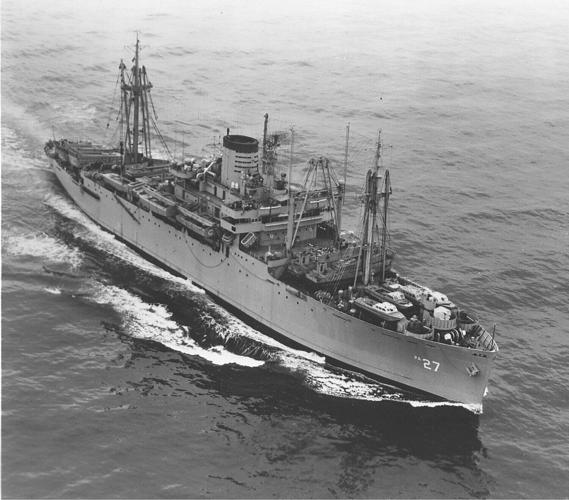
In Clymer’s honor, a Navy attack transport ship was named after him. The U.S.S. George Clymer, APA 27, saw operational campaigns in the Pacific, and Atlantic theaters during World War II, then in Korea and Vietnam. The U.S.S. George Clymer was decommissioned in 1967 and sold for scrap metal.
George Clymer was a fervent patriot. It was said of him that “his dearest wish was for independence.”
Please visit your Charters of Freedom settings at the Historic Courthouse, Morganton, and the Education Park, 227 Main Street W., Valdese.
A Charters of Freedom setting consists of the Declaration of Independence, the United States Constitution, the Bill of Rights, and the Civil Rights Amendments. They are on permanent display analogous to the Charters of Freedom in the National Archives, Washington, DC.
Visit our website (FoundationForward.com) to learn more about all existing settings. Vance and Mary Jo Patterson are the benefactors of Foundation Forward, 501(c)(3), a nonprofit educational organization, and sponsor every setting.
Teachers are encouraged to contact Dr. Streater for information and complementary student education materials to enhance experiential field trips to any Charter of Freedom settings. In addition, everyone is welcome to obtain a personalized legacy paver for placement at their local Charters of Freedom display. Please contact Dr. Streater (david.streater@mymail.barry.edu) for engraved legacy paver information and complementary educational materials.
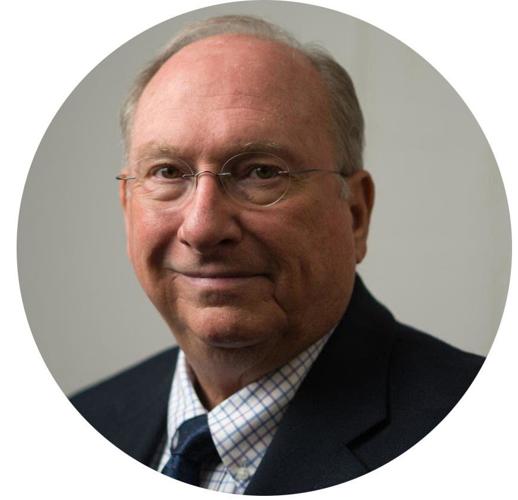
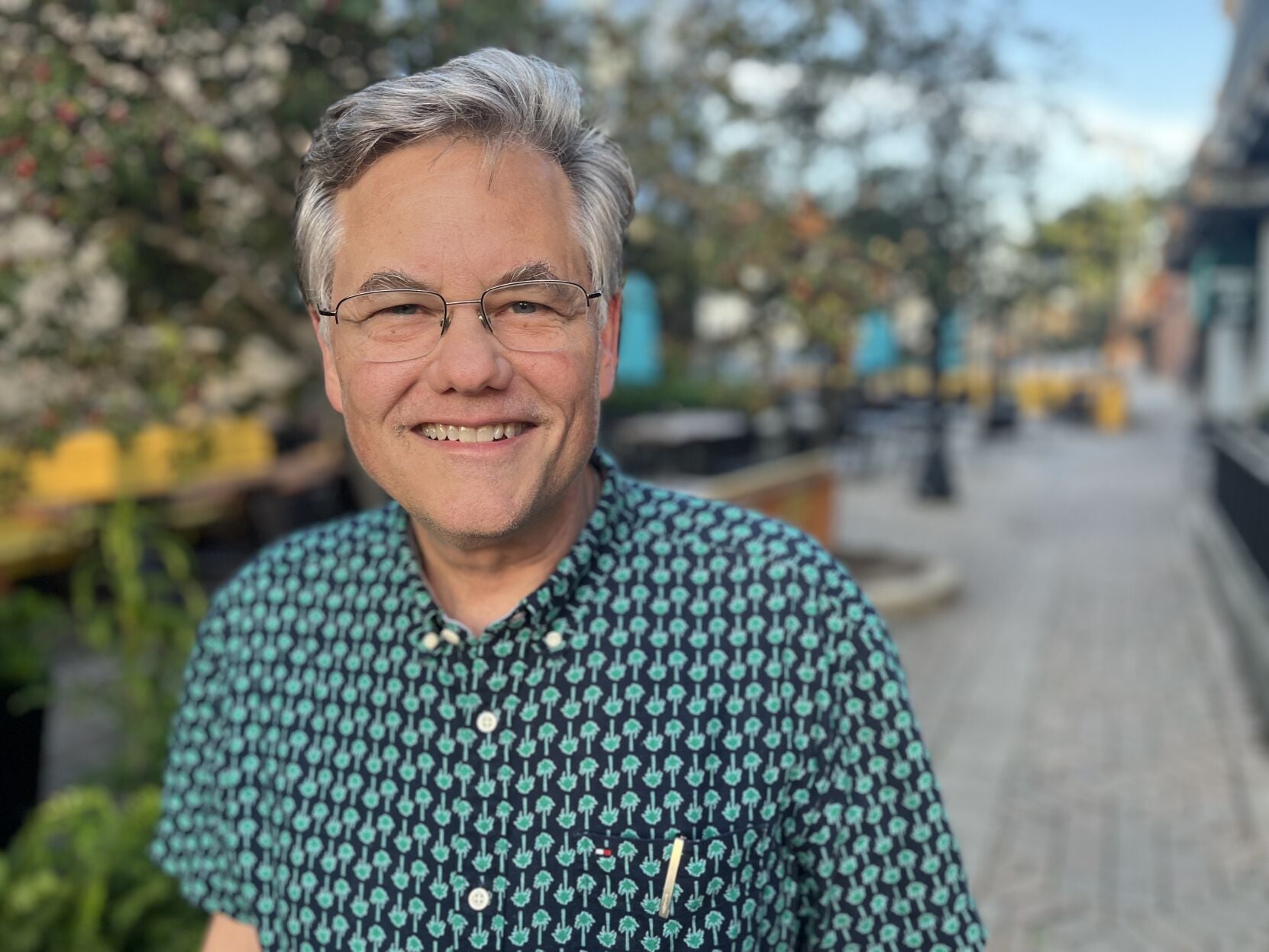
Dr. David Streater is the director of education for Foundation Forward, 501(c)(3). He is a retired college instructor/administrator and a retired probation and parole officer/administrator. In addition, David is a criminologist with an acute history interest, served in the Navy, and is a resident of Burke County.















(0) comments
Welcome to the discussion.
Log In
Keep it Clean. Please avoid obscene, vulgar, lewd, racist or sexually-oriented language.
PLEASE TURN OFF YOUR CAPS LOCK.
Don't Threaten. Threats of harming another person will not be tolerated.
Be Truthful. Don't knowingly lie about anyone or anything.
Be Nice. No racism, sexism or any sort of -ism that is degrading to another person.
Be Proactive. Use the 'Report' link on each comment to let us know of abusive posts.
Share with Us. We'd love to hear eyewitness accounts, the history behind an article.