

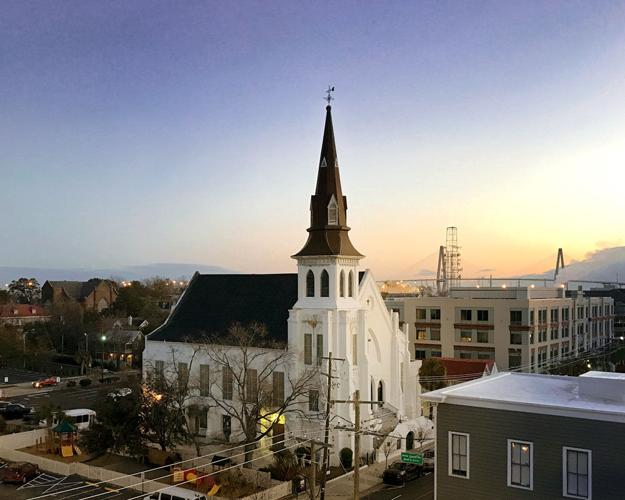


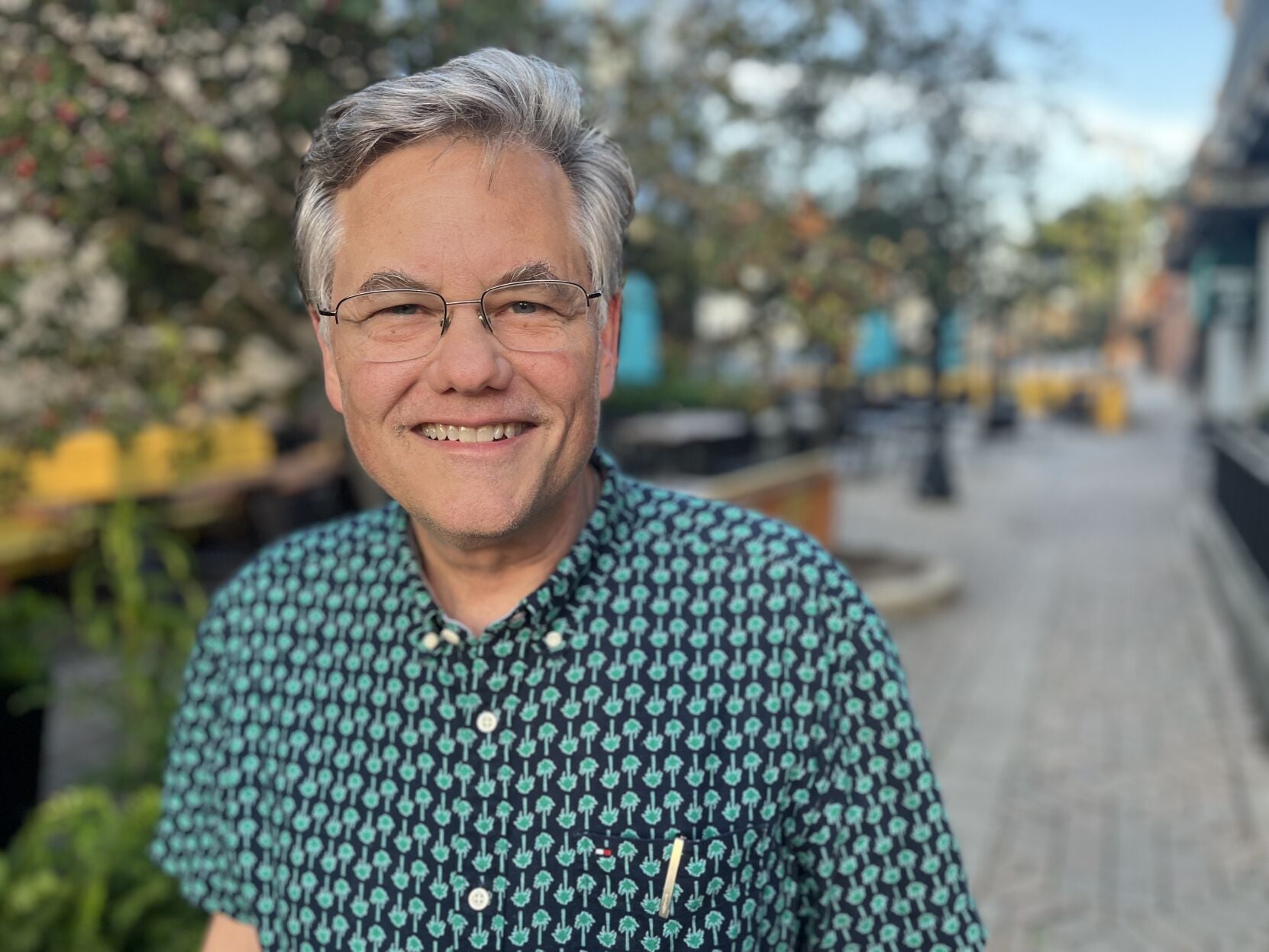
EDITOR’S NOTE: As we begin 2026, we thought it appropriate to take a moment and give another look to a couple of our favorite columns from 2025. This column from Matt Matthews is a poignant remembrance of the day he stood in line to honor the life of slain S.C. Sen. Clementa Pickney, a pastor at Mother Emmanuel AME Church in Charleston.
A decade ago, on business in Columbia, S.C., I decided to stroll around the grounds of the S.C. State House. On the sidewalk at Sumter and Senate streets, when I first saw the green hearse and funeral car, I remembered with a pang that Clementa Pinckney, senator and pastor, was lying in state beneath the rotunda.
I froze.
That week’s horror roared back to life in my brain — the manhunt for the white killer and his subsequent arrest, the killer’s hope of igniting a race war, retraced histories of racial violence in the South, images of flowers heaped on the steps of Mother Emmanuel church, weeping people holding hands, singing songs.
Only seven days before — June 17, 2015 — the Rev. Pinckney and eight church members were assassinated after Bible study at Charleston’s Emmanuel African Methodist Episcopal Church. Much of the world was shaken and sick.
One week later, I found myself at the end of a serpentine line of hundreds of mourners that wound through manicured grounds and disappeared into a Capitol side door. I could not not join this pilgrimage.
Most of the people were black. Many wore Sunday threads: black suits, black neckties, white shirts. Women carried umbrellas to beat the heat, but there was no beating this afternoon scorcher. The relative heat index would climb above 100. Both the sky and ground radiated punishing temps. An occasional breeze carried humid clouds of molasses air.
The line radiated its own heat. For nearly three hours, we shuffled in and out of hot shade to the Capitol where we would empty damp pockets and pass through metal detectors into hushed hallways.
An EMT attended a woman slumped on the bumper of an ambulance parked in the shade. Six more EMT’s wandered the line asking if we were okay. A woman a block ahead of me conked out and sat dazed on the sidewalk in her long black dress. Bystanders fanned her with their hands.
The man behind me rode a motorized wheelchair. A Disabled American Veterans hat shaded his eyes. In a moment, another man joined us at the back of the line. These two black men chatted. The younger man — 78-years-old, he said — fought in Vietnam. The older man in the wheelchair, 84, fought in Korea.
The line crept forward. They shared war stories.
The older man got frostbite in Korea. They hadn’t received what he called their waterproof “Mickey Mouse” boots by the time they sent his unit to the front. Their feet froze. I told him my dad got frostbite in World War II, in Germany. The old man sized me up. He admitted Germany was cold, but Korea was colder. Cold is cold, I thought, but what did I know of war, of winter?
The younger old man said when he returned from Vietnam he couldn’t sleep through the night for a decade. “The term PTSD didn’t exist when I got out,” he said. “They didn’t know what to call it. I thought I was crazy. And I was. I was.”
Elderly Red Cross volunteers patrolled the line handing out bottles of water and baggies of ice. Uniformed State Troopers cinched in bullet proof vests did the same, as did National Park Service employees, and the white and black ladies from Trinity Cathedral across Sumter. People offered to buy the iced water a sweating woman from the Methodist Church tugged in a rolling cooler. “It’s free,” she said, happily. “I’m not taking today. I’m giving.”
Those words rang like a bell.
When these water-bearers approached my neighbor in the wheelchair, cops and rangers tipped their hats when they saw his DAV hat. “Thank you for your service,” they said. They didn’t know to thank the other man because he wore no hat to suggest he sacrificed anything, or bled, or paced the floors for his country.
After a silent while, the old man pointed to the hundreds of people in front of us, and to the large crowd collecting behind us. “You know what’s missing here?” he asked. “Young people. This place should be filled with young people.”
The two older women in front of me were office mates, one white, one black. The black woman knew the Pinckneys and had telephoned their home after the murders. “Mrs. Pinckney answered the phone,” she said. “I heard her voice, and I started crying right away. And she comforted me. That’s the kind of woman she is. Trying to be strong for others.”
A tall man decked out in a navy-blue three-piece suit and fedora stood in front of the women in front of me. He flashed a genuine smile. As people exited the Capitol and walked past our line, many of their eyes lit up when they spotted him. They’d lean in for a glad hug. It was too hot to hug, but they hugged anyway. This went on for 90-minutes. The women in front of me finally asked, “What did you do to become so famous?”
The man smiled. “I’ve got a lot of friends.”
I reached out my hand to shake his. “Now you have one more,” I said. I meant it, though our friendship would last only until this line delivered us to our destination.
I hadn’t noticed the young man in a grey three-piece suit. He’d been standing all along and all alone behind the old men. He was not only quiet, but still, like a pond. As we approached the Capitol doors, the old men drew him into conversation. He mentioned the word seminary, and I dreaded the thought of another young black minister slain while leading Bible study.
He had just graduated from the Interdenominational Theological Center in Atlanta. An alumnus of Morehouse, he was headed for a doctorate at Howard. I prayed for this quiet young man, albeit briefly, because the Capitol doors loomed, and for a second, I got scared.
We had come a long way in a slow line.
For the first thirty or so minutes I felt like I did not belong. Rev. Pinckney was neither my senator nor pastor. I was one of few white people among predominantly black faces.
But after enduring that solemn line all afternoon and quietly chatting with the people near me, I felt kinship. For a long, hot while, we all belonged. And numbers mattered.
Seek Justice, the prophet said. Love Kindness. Walk Humbly with God. We were creeping forward ever so deliberately. Racial hatred beneath the Confederate battle flag had wreaked such damage in the suffering South. Seek justice. Love kindness. Make change. This line bore witness to unity. This line drew a line against hate.
At the threshold into the Capitol, faces of the men behind me became smooth stone. The women in front of me wept freely, no longer bothering to wipe their faces. The lips of the smiling man became an obsidian line. The seminarian buttoned his suit jacket, stood fully erect, then took the stairs one by one.
Stepping inside the stairwell to the rotunda, there was no getting out of this line. Moving forward was the only option. The only direction was forward. And up.
Together.










(0) comments
Welcome to the discussion.
Log In
Keep it Clean. Please avoid obscene, vulgar, lewd, racist or sexually-oriented language.
PLEASE TURN OFF YOUR CAPS LOCK.
Don't Threaten. Threats of harming another person will not be tolerated.
Be Truthful. Don't knowingly lie about anyone or anything.
Be Nice. No racism, sexism or any sort of -ism that is degrading to another person.
Be Proactive. Use the 'Report' link on each comment to let us know of abusive posts.
Share with Us. We'd love to hear eyewitness accounts, the history behind an article.