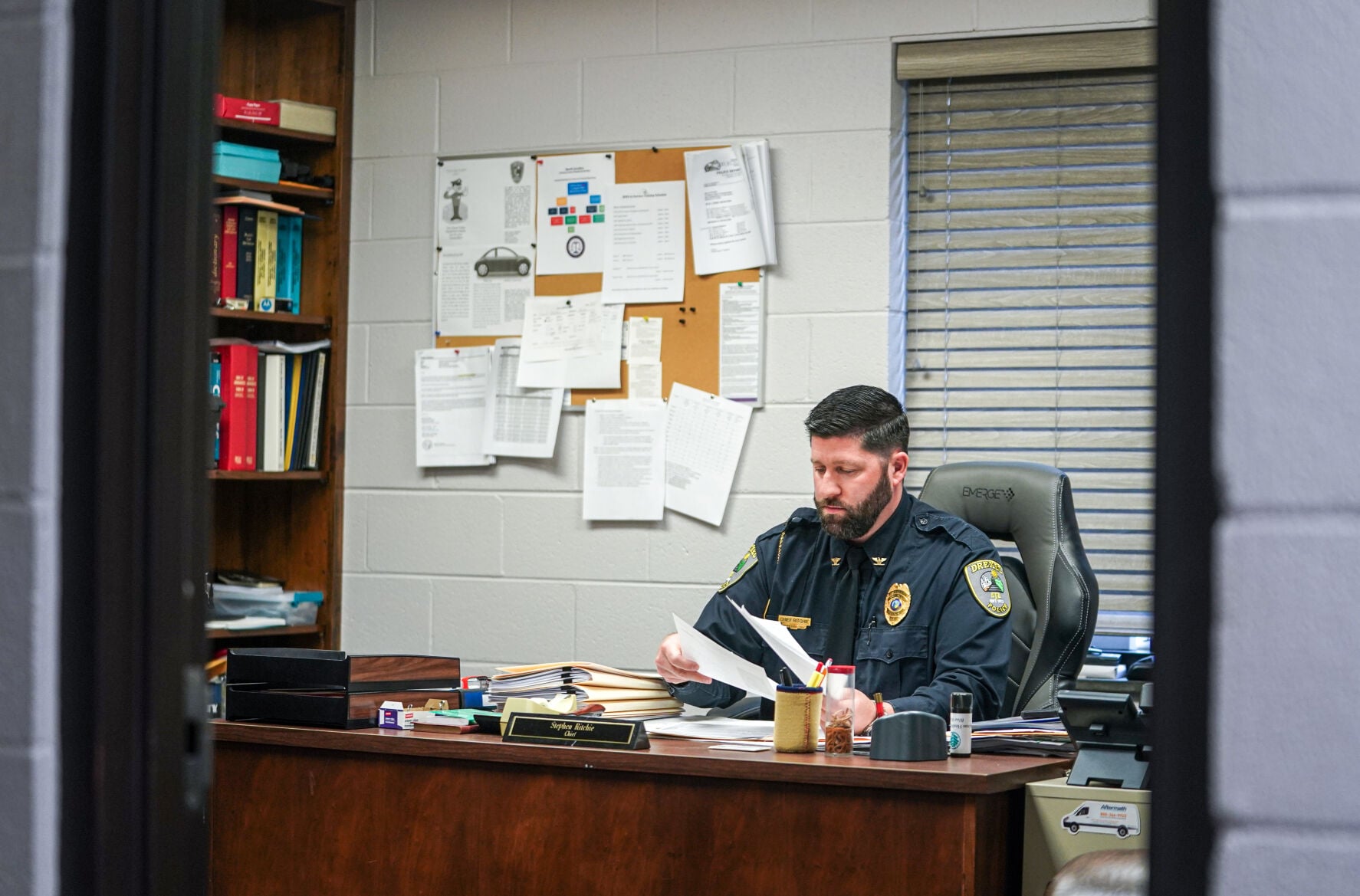
Drexel Police Chief Stephen Ritchie is on his second year of sending a candidate to Basic Law Enforcement Training through a paid sponsorship. He became the first out of Burke’s smaller departments to pay officers while they’re in training.
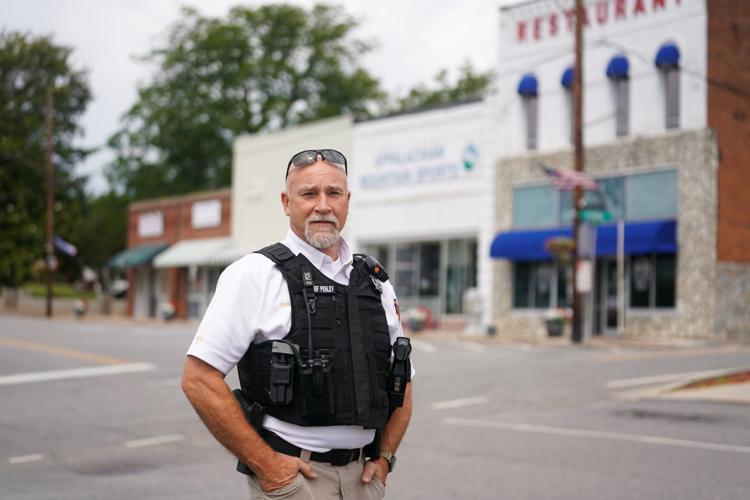
Glen Alpine Police Chief Kirk Penley has been able to raise the starting pay for officers in Glen Alpine with approval from the board of aldermen, but he said the department still lags behind the rest of the county.
After struggling to retain officers due to low pay, Valdese Police Chief Marc Sharpe has now bumped starting pay from about $41,000 to above $50,000 annually with approval from the town council.
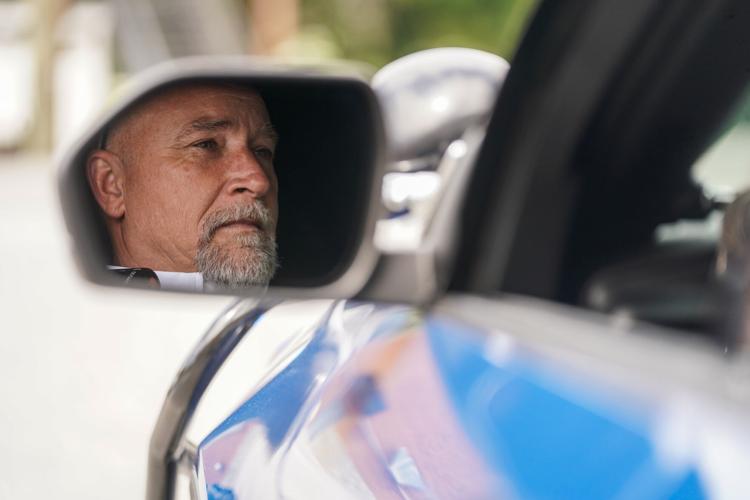
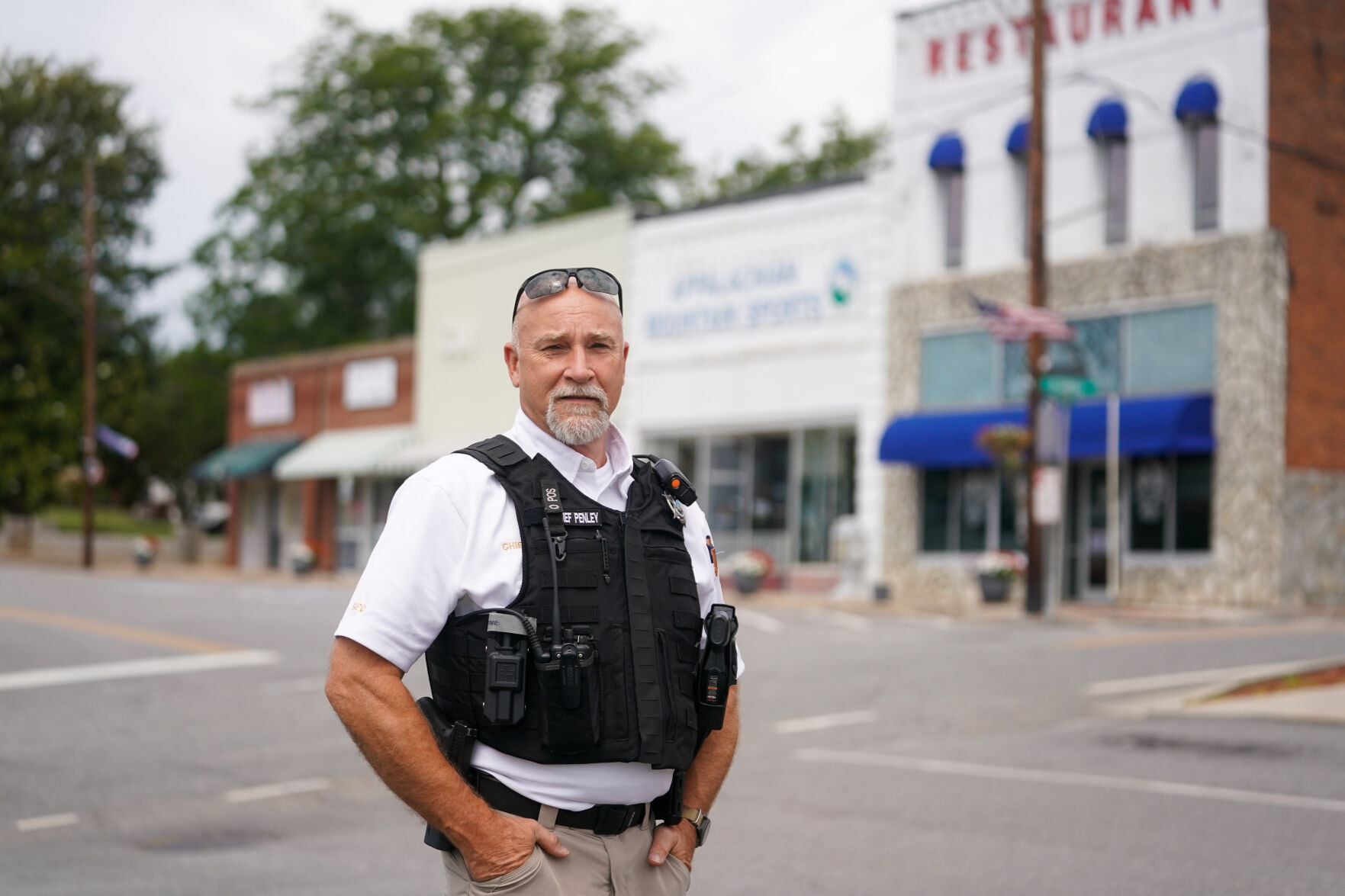
When Kirk Penley took his position as Glen Alpine police chief in 2024, his mission was to fulfill residents’ requests for 24/7 police protection. However, with two unfilled full-time positions recently cut by the board of aldermen, it’s uncertain whether around-the-clock coverage is in the town’s future.
Glen Alpine Police Chief Kirk Penley has been able to raise the starting pay for officers in Glen Alpine with approval from the board of aldermen, but he said the department still lags behind the rest of the county.
In many small towns, the police officers responding to calls aren’t strangers. They’re the familiar faces that direct traffic at the annual July Fourth parade, work security at the summer fair, and respond to residents’ calls on their worst days.
However, police chiefs in Drexel, Glen Alpine, and Valdese say that fewer people are stepping up to wear the badge than they did in past decades. With smaller pools of candidates entering law enforcement, small-town departments are finding themselves having to level up to attract and keep talented officers who are also eyeing larger departments.
COMPETING FOR OFFICERS
In Valdese, which has the largest population of the three towns and largest police department, Chief Marc Sharpe said the department has struggled with retention because the town has historically lagged far behind other agencies in pay. The department currently has 13 full-time officers, including Sharpe and Assistant Chief James Buchanan.
A recent pay study for town employees found that starting officer pay was about 22% below market value. Recruits often left for Morganton Department of Public Safety, which starts at about $52,000, according to Chief Ryan Lander, after the six-month probationary period following Basic Law Enforcement Training (BLET); the Burke County Sheriff’s Office, which starts at about $54,000 for a patrol deputy, according to the county’s website; or, most recently, losing an officer to Drexel’s smaller police department.
To improve competitiveness, Sharpe said the department has raised starting pay from about $41,000 to above $50,000 annually, effective July 1.
“That was just catching up with everybody else,” Sharpe said. “Had we not had this pay study come through, I would have lost a lot of people.”
Valdese also increased reserve officer pay from $17 per hour to $27 per hour. Sharpe said the department had been struggling to compete with security jobs at hospitals that could pay about double that amount.
After struggling to retain officers due to low pay, Valdese Police Chief Marc Sharpe has now bumped starting pay from about $41,000 to above $50,000 annually with approval from the town council.
LISA PRICE / THE PAPER
“What we were becoming is a training ground,” Sharpe said. “You get somebody out of rookie school, they come, they get comfortable, they get on their feet, and they’re going to go where the money is once they see that they can be successful doing the job.”
Low salaries also hurt Glen Alpine’s ability to recruit and keep officers, Police Chief Kirk Penley said. The department currently has four officers, including Penley, Capt. Shane Trull, and two full-time officers. A fifth officer could be coming onboard soon. When he became chief in 2024, Penley’s goal was to restore 24/7 protection to Glen Alpine’s residents, but he still hasn’t been able to make it happen due to recruitment issues and a position cut.
The board recently cut one vacant full-time position that Penley was having trouble filling.
He said the town’s base pay is still lagging behind others in the county, even though he recently secured an increase in starting salaries from $46,000 to $48,000. He said that though he has advocated for higher salaries to recruit the positions needed for around-the-clock coverage, the board of aldermen has the final say.
“Glen Alpine used to be one of the highest paying police departments around, and they let years go by without keeping up with other departments, and now we’re the lowest and hurting,” Penley said. “But it’s an easy fix.”
When Kirk Penley took his position as Glen Alpine police chief in 2024, his mission was to fulfill residents’ requests for 24/7 police protection. However, with two unfilled full-time positions recently cut by the board of aldermen, it’s uncertain whether around-the-clock coverage is in the town’s future.
LISA PRICE / THE PAPER
The issue is compounded by the lack of a sliding pay scale for experienced officers.
“You want to hire somebody who’s got five years of experience, you just can’t do it,” Penley said.
During Glen Alpine’s budget workshops, Penley used Drexel’s police department as a model for what he would like the town to strive for, with higher pay and 24/7 coverage.
Chief Stephen Ritchie said he has been fortunate not to have many issues with recruitment and retention in Drexel. He attributes that to consistent pay raises, including cost-of-living and merit, while also having a sliding pay scale for officers with prior experience or a bachelor’s degree. In the town’s recently approved budget, an entry level officer would make $50,237 annually with bonuses, according to Town Manager Bill Carroll.
“You can’t throw money at every problem, but if we don’t stay competitive, we’re going to create problems and we want to stay ahead of that,” Ritchie said. “That ties into morale.”
The department currently has six full-time officers, including Chief Ritchie. Another officer is preparing to begin BLET.
A SMALLER RECRUITMENT POOL
Even as departments work to increase salaries, they are drawing from a smaller pool of applicants than in previous decades. Fewer people are entering law enforcement than 20 to 30 years ago, according to Bryan Christy, director of the BLET program at Western Piedmont Community College.
Though the field isn’t as robust as it used to be, Christy said he has seen recent improvement in enrollment at WPCC. Christy, who spent 25 years in law enforcement and began teaching at WPCC in 1993, said his current class will have 16 graduates.
“We did see a dip in enrollment for a while,” Christy said. “Now that the pay has started to get a little bit better for law enforcement, officers are viewing it as a career they can actually support a family on now,” Christy said. “Most officers before this usually worked in law enforcement and another job to make ends meet, so the pay is a bit more competitive.”
A 2024 study commissioned by the Governor’s Crime Commission found BLET leadership across North Carolina reported declines in annual enrollment over the previous four years. Recruits cited pay, benefits, perception of the career path, hiring standards, and training as key concerns.
CHALLENGES BEYOND PAY
While pay remains the biggest factor in attracting and keeping officers, chiefs say departments also compete through benefits, workplace culture, and long-term career investment.
The 2024 study found successful recruitment efforts often include take-home vehicles, mental health resources, tuition reimbursement, childcare assistance, gym memberships, affordable housing initiatives, and flexible scheduling.
Sharpe said Valdese has some of those incentives, including a take-home car program, equipment upgrades, and improved patrol vehicles. He added that he expects having a new public safety facility will also attract candidates to Valdese.
The department has been spread throughout town hall after leaving its former facility on Faet Street because of building safety issues. Sharpe said the arrangement has created inefficiencies, though plans for the new facility are moving forward.
Another challenge has been the department’s inability to offer paid BLET sponsorships. While Valdese has sponsored recruits through training by vouching for them, Sharpe said some graduates ultimately accept higher-paying jobs elsewhere.
In Drexel, the town is entering its second year of paying a BLET candidate to complete training. One officer completed the program last fall while receiving an hourly wage from the town, and another candidate recently started the program.
Drexel Police Chief Stephen Ritchie is on his second year of sending a candidate to Basic Law Enforcement Training through a paid sponsorship. He became the first out of Burke’s smaller departments to pay officers while they’re in training.
LISA PRICE / THE PAPER
The department also operates on 12-hour shifts and allows officers to use compensatory time earned through overtime, helping provide additional time off without touching vacation leave. Trust and high morale are also key components in keeping a healthy police department, Ritchie and Carroll said. That doesn’t just come from the chief, but also from the manager and the board of aldermen.
“In general, if there’s a lack of trust between line-level staff, chief of police, management, and board, if any one of those pegs breaks down, you’ve got a problem,” Carroll said.
“Transparency is key to trust,” Ritchie said. “I tell my guys what I’m planning, working towards, two years before. I’m very clear on that, the training I’m expecting them to get, where I’m working to get their pay.”
Chief Penley in Glen Alpine is working to launch a paid BLET sponsorship program, with funding included in the proposed budget. Originally, the board of aldermen was considering cutting two unfilled officer positions, but Mayor Kevin Herron said they decided to keep one position for the BLET officer once they complete their training. Penley has also been advocating for merit raises, which Glen Alpine does not currently offer, instead of only an annual cost-of-living raise, but the board has not agreed to that expense.
Christy said that paid sponsorships have become increasingly attractive to recruits because they allow students to earn an income while completing the six-month training program. Smaller departments that cannot afford paid sponsorships often compete at a disadvantage with larger agencies that can guarantee employment and a paycheck during training.
“When an officer comes through, and he’s not being paid to be here, most of the time he has got to work and support himself while he’s going,” Christy said. “There’s 39 blocks in BLET, and they’re almost always studying for a test or taking a test. Over a 24-week period, working really taxes an officer. It’s hard to take six months out of your life to pursue a passion.”
Though law enforcement agencies are recruiting from a smaller pool of applicants than in previous decades, Christy said enrollment has begun to rebound as departments improve pay and benefits. For smaller towns like Drexel, Glen Alpine, and Valdese, chiefs say keeping up with those changes may determine whether they can attract and retain the officers needed to serve their communities.
Keep it Clean. Please avoid obscene, vulgar, lewd,
racist or sexually-oriented language. PLEASE TURN OFF YOUR CAPS LOCK. Don't Threaten. Threats of harming another
person will not be tolerated. Be Truthful. Don't knowingly lie about anyone
or anything. Be Nice. No racism, sexism or any sort of -ism
that is degrading to another person. Be Proactive. Use the 'Report' link on
each comment to let us know of abusive posts. Share with Us. We'd love to hear eyewitness
accounts, the history behind an article.
































(0) comments
Welcome to the discussion.
Log In
Keep it Clean. Please avoid obscene, vulgar, lewd, racist or sexually-oriented language.
PLEASE TURN OFF YOUR CAPS LOCK.
Don't Threaten. Threats of harming another person will not be tolerated.
Be Truthful. Don't knowingly lie about anyone or anything.
Be Nice. No racism, sexism or any sort of -ism that is degrading to another person.
Be Proactive. Use the 'Report' link on each comment to let us know of abusive posts.
Share with Us. We'd love to hear eyewitness accounts, the history behind an article.