



Hello again, Burke County! As I said in my last column, I hope my name becomes familiar to you as The Paper has agreed to let me keep writing! Only the future will tell if this was a smart decision by Editor Bill Poteat.
Regardless, I now have the joy of being your newest columnist and I must thank y’all. Folks have already asked me questions regarding chaplaincy, grief, and other related topics.
However, the most common question focused on what is a chaplain? And how does a chaplain differ from a minister?
The short answer is as follows; chaplains are religious professionals in nonreligious settings. Ministers are religious professionals in religious settings.
Chaplains serve everyone and ministers serve members of their faiths. Chaplains serve people of all faiths and people of no faiths. I have helped baptize babies and set up humanist meetings. I’ve reserved rooms for Midnight Mass on Christmas and Maypoles on Midsummer.
Most chaplains tend to show up in one of three fields; education, healthcare, or the military. If you have ever been a patient, a student or a member of the armed forces, you certainly remember being near folks who do not believe, worship or act as you do. To serve everyone in those environments we, as chaplains, make sure not to push our theology onto anyone. We help people find their personal theology.
The long answer is the rest of this column.
Many years ago, when I was working as a hospital chaplain in Virginia, I was paged to a patient’s room. I was told there was a family disturbance and a patient near death. Besides that, all I knew was the patient was a grandfather, with his wife, kids, and adult grandkids in the room.
Well! Imagine my surprise when I opened the door to find a full-on theological debate erupting next to Grandpa’s bedside. As this poor man lay on his bed gasp after gasp, barely grasping onto life, two of his grandsons had decided it was time to convert Grandpa.
You see, both grandsons had become pastors of two different denominations and decided that the time of Grandpa’s hospitalization was the time to finally get the family to choose a unified affiliation.
Once I came in, I helped wrangle the family and got everyone calmed down. I was then able to determine that spiritually, everyone in that room, including Grandpa, was quite content with their own spiritual affiliation. And there was quite a breadth of traditions.
If I recall correctly, in that room were three Christian denominations, an atheist, and a Jewish son-in-law. Before I left, I extracted a promise of no more theological councils, synods, or schisms, performed an interfaith prayer everyone seemed to agree was acceptable, and got folks reminiscing about some well-worn, funny, family lore.
This story illuminates my favorite difference between ministers and chaplains. A minister gives you answers to your spiritual questions, a chaplain asks you more questions!
The grandsons were doing an excellent job being pastors. They had found sacred answers to life’s hard questions and sought to preach those answers.
During the great bedside debate, I heard several answers to queries including: How to avoid hell? What is the nature of a baptism? How important is the divinity of Jesus?
However, this moment called for a chaplain, someone to say, “My spiritual answers are not important right now. What is important are your spiritual questions.”
The patient was not seeking any of the religious truths his grandsons were offering! His main question was whether or not his family was present with him at the end of his life.
That’s chaplaincy. To figure out what spiritual questions the patient has and help them find their own answers. I have helped patients realize they need to beg forgiveness and helped others realize they have nothing to apologize for. I have helped patients figure out how to pray again and have helped others figure out they don’t need to pray.
Now having given a short answer and a long answer, I’d like to muddy the waters. Many chaplains are ministers and many ministers are chaplains.
These are just two roles the same person can perform. However, the difference once again comes down to whose answers are being privileged.
In the pulpit, the minister’s answers are the most important. Sacred truths to be spread to as many listeners as possible. But at the bedside, the patient's answers are the most important.
So, there you have it! Ministers help shepherd groups of people to shared beliefs and chaplains help you find your own beliefs.
Thank you so much for your questions and I encourage you, as always, to reach out to me by email at wwilliamson@amoremsupport.org, if you would like a chaplain’s perspective on anything related to all faiths or no faiths!
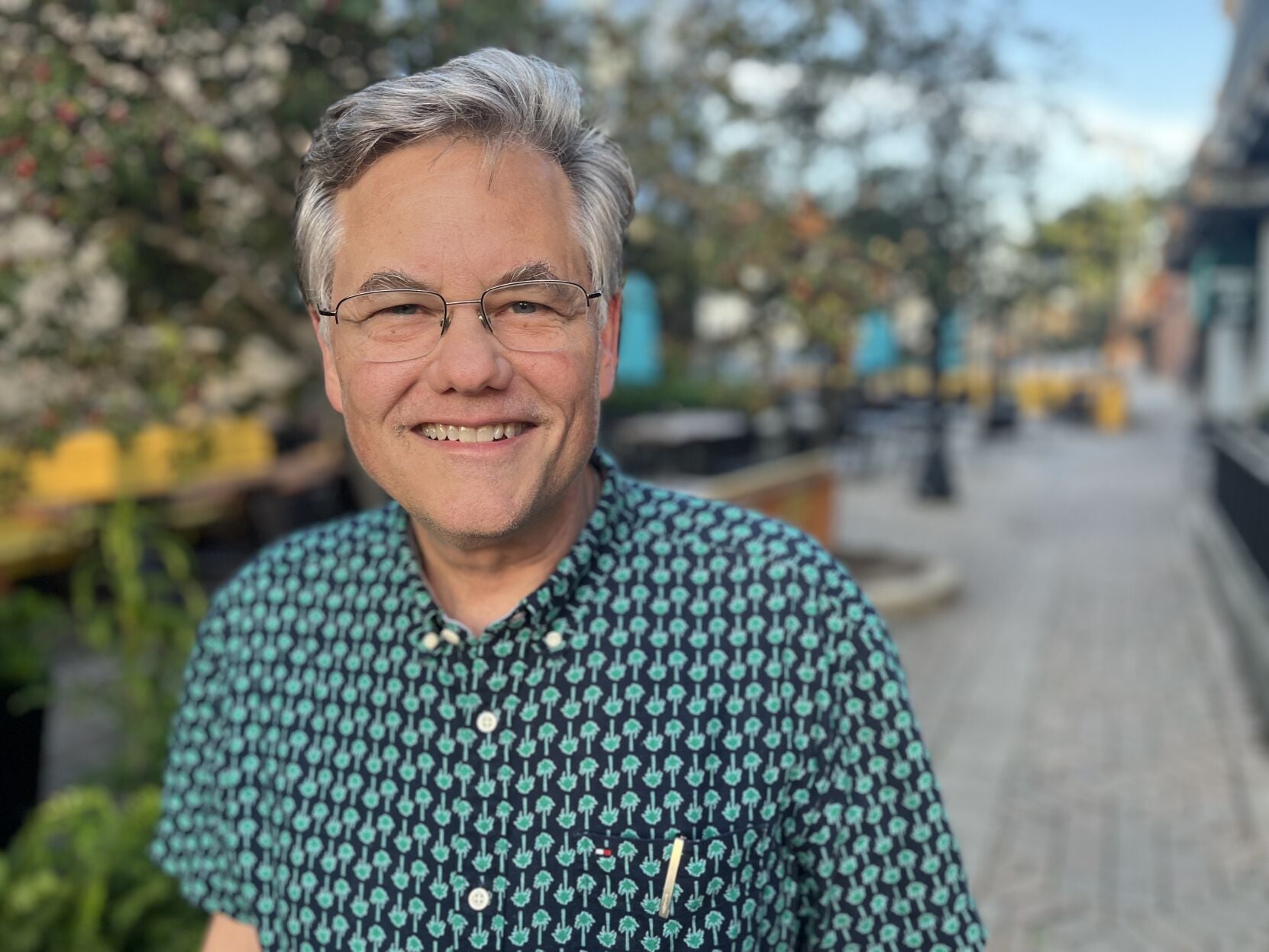
William Williamson is the director of faith outreach at AMOREM and a monthly columnist for The Paper. He may be reached at wwilliamson@amoremsupport.org.






















(0) comments
Welcome to the discussion.
Log In
Keep it Clean. Please avoid obscene, vulgar, lewd, racist or sexually-oriented language.
PLEASE TURN OFF YOUR CAPS LOCK.
Don't Threaten. Threats of harming another person will not be tolerated.
Be Truthful. Don't knowingly lie about anyone or anything.
Be Nice. No racism, sexism or any sort of -ism that is degrading to another person.
Be Proactive. Use the 'Report' link on each comment to let us know of abusive posts.
Share with Us. We'd love to hear eyewitness accounts, the history behind an article.