

The new Valdese Town Manager Todd Herms offered a different take on the public safety building project: Separate the scope for the police and fire departments so one does not weigh down the other.
This way, if either department encounters an obstacle, the other one will not be held up in the process.
On Thursday, May 22, the Valdese Town Council and staff spent four hours listening to the pitches of the top three contractor firms selected for the project. Moss-Marlow, D.R. Reynolds Company, and Wharton-Smith were interviewed and recommended by the review committee.
Based on the drafted design-build contract, the chosen firm will evaluate and present the findings for the following options for the public safety project:
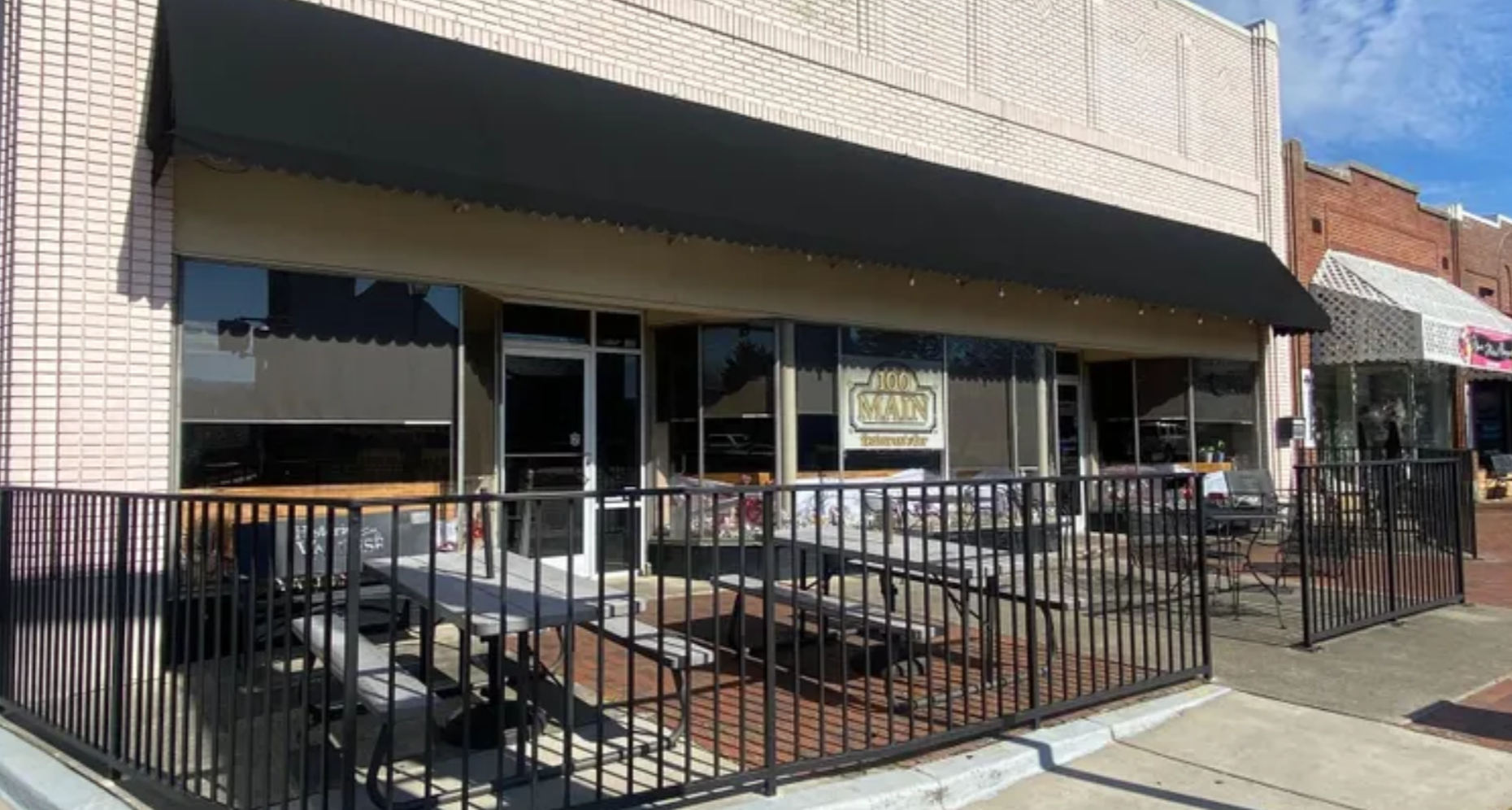
- Renovate the 215 Main St. E for a police station
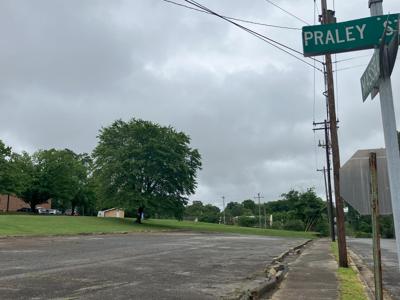
- Build a new fire department on the vacant, town-purchased lot at 200 Massel Ave. SW
- Build a combined police and fire department on the Massel lot
In Herms’ suggestion to council during the pre-agenda meeting on Tuesday, May 27, he explained that the town and the chosen contractor could instead:
- Complete preliminary work for the Massel lot where the fire department will ultimately go; this includes the environmental study, soil sampling, paperwork, etc.
- Simultaneously, research the options for the police department — either renovating 215 Main St. E or combining the two departments on Massel
The Massel lot must be prepped for construction, regardless of whether the parcel will house only the fire department or a combined public safety facility.
Mayor Charlie Watts said he liked this idea because it addresses the problem at hand.
“We’re not waiting on one and holding up another,” Watts said. “We’re taking action and we’re not, to coin a phrase I like to use, we’re not kicking it down the road and putting it off again and again. One of the reasons we hired this manager was his vast experience in construction projects.”
Councilman Glenn Harvey brought up the concern of the lower level in the 215 Main St. E building not being usable, which was pointed out by Wharton-Smith. Wharton-Smith toured the building, along with the firm Moss-Marlow.
C-Design Architect Joe Humphrey, working with Wharton-Smith, told the council during the presentation that the building’s clearances and “head heights” could be a challenge, something they would study if hired.
“I feel if that’s the case, then the phase one, as we’ve defined it with three options, doesn’t have three options. It really has one option,” Harvey said. “I’m sure any general contractor we give this contract to is going to get into that quickly. It seems to me we ought to run that one down before we pick a general contractor.”
Harvey also suggested having the general contractor look at the Valdese Town Hall, and if there are ways to make it more efficient, with the police department eventually moving out.
“This space that’s sitting here, we still owe over $2 million on it. It’s not a free space, it’s a space that taxpayers will be paying on for the next 20-some years,” he said.
Herms explained that the current contract would have to exhaust the current agreed-upon options and negotiate with the contractor to add another option.
Councilwoman Rexanna Lowman asked whether the current state of the fire department could impact fire ratings and insurance. Herms could not say one way or another but said it could impact it.
PERSONAL USE OF VEHICLES
Harvey requested that the council consider the staff’s personal use of town-owned vehicles and review the related policy. Harvey said the town invests in the vehicles and fuel, but some employees use them for personal purposes, such as daily commuting.
“I think we need to tighten down and stop the use of personal use of town vehicles,” Harvey said.
“I don’t have a problem with personal use but commuting back and forth if they’re on call or a department head is standard operating procedure,” Herms said.
While pointing at the managers, Harvey asked why they should let department heads who live farther away than Herms (Maiden) or Assistant Manager Bo Weichel (Conover) to use the vehicle or town fuel to report to work when the managers do not.
After a moment of pause from Herms, Harvey said, “You don’t want to address it.”
Herms explained that the vehicles are for the on-call employees such as emergency, utility, and department head personnel. An IRS fee is deducted from the employees’ paychecks, and the vehicle use is written into their negotiated contracts.
The council will consider the design-build contract and the personal use debate at the regular meeting on Monday, June 2, at 6 p.m. at Town Hall.
















(0) comments
Welcome to the discussion.
Log In
Keep it Clean. Please avoid obscene, vulgar, lewd, racist or sexually-oriented language.
PLEASE TURN OFF YOUR CAPS LOCK.
Don't Threaten. Threats of harming another person will not be tolerated.
Be Truthful. Don't knowingly lie about anyone or anything.
Be Nice. No racism, sexism or any sort of -ism that is degrading to another person.
Be Proactive. Use the 'Report' link on each comment to let us know of abusive posts.
Share with Us. We'd love to hear eyewitness accounts, the history behind an article.