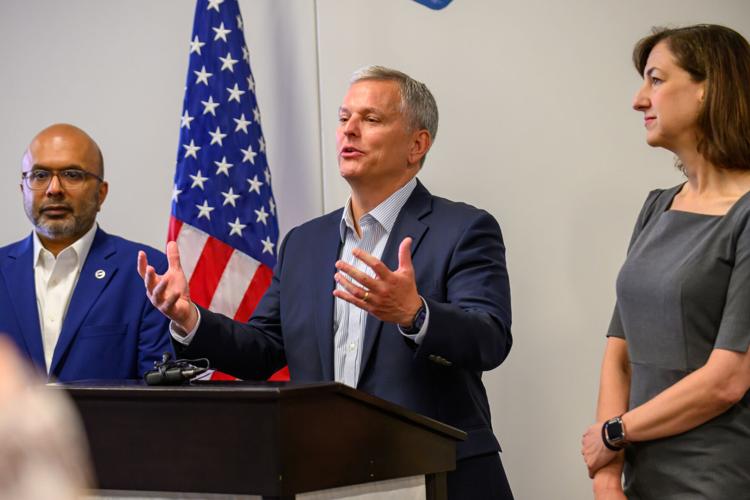
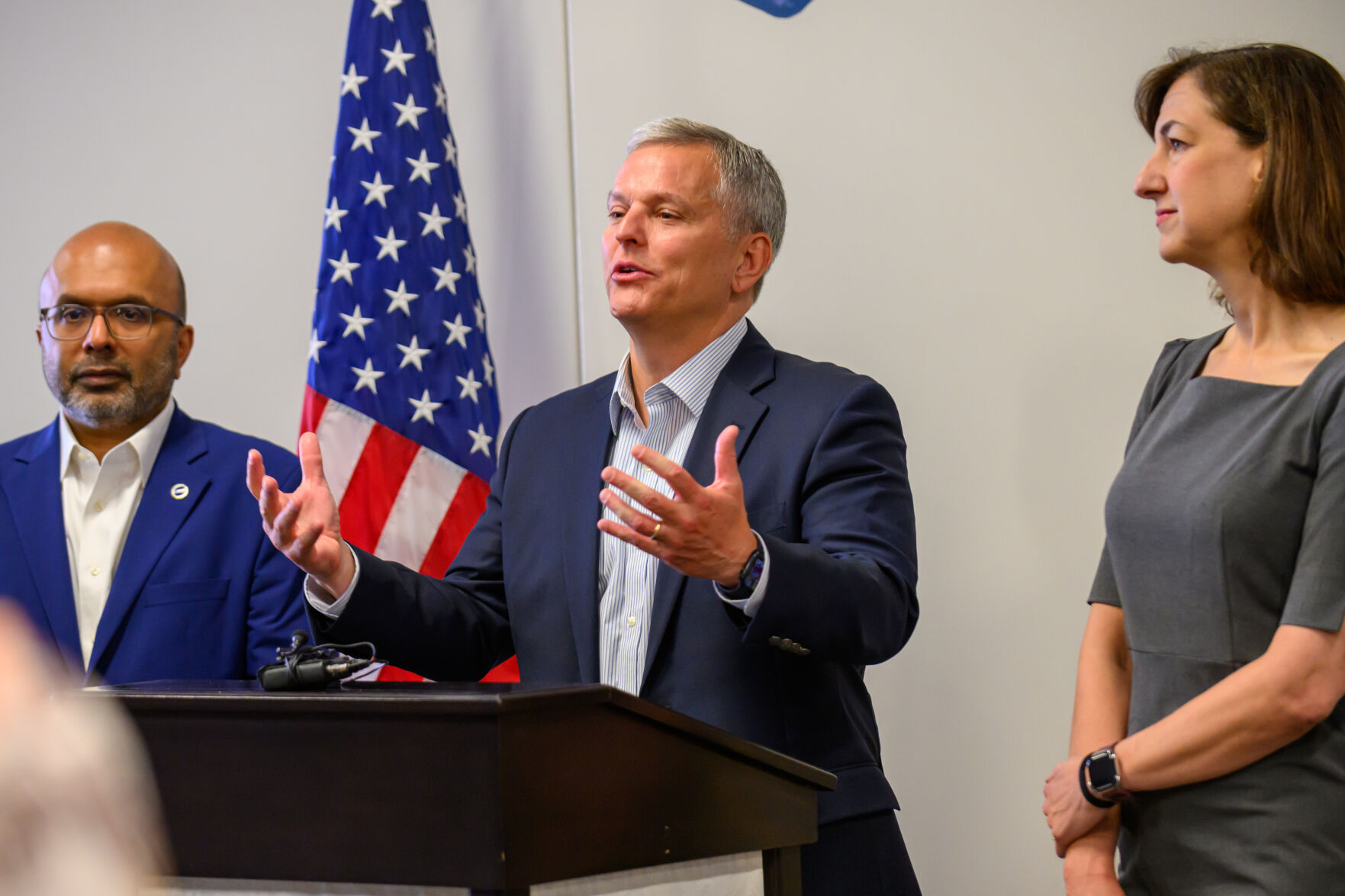
Stein reiterates the shortcomings of pay for behavioral health workers in the state, emphasizing a need to offer more competitive salaries. From left, NC DHHS Secretary Dr. Devdutta ‘Dev’ Sangvai, Gov. Josh Stein, and NC DHHS Deputy Secretary for Facilities and Behavioral Health Dr. Carrie Brown.
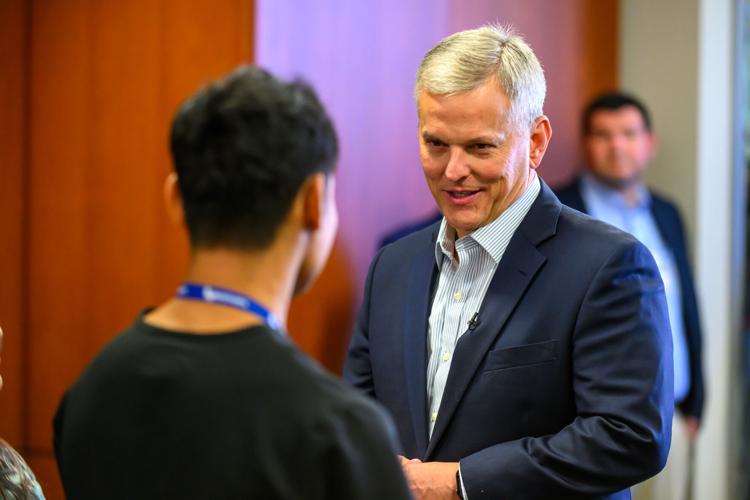
Gov. Josh Stein stopped in at Broughton Hospital on Thursday to announce the statewide STEP-NC program aimed at combatting the mental health staffing crisis.
STEP-NC allows adult learners and students fresh out of high school to begin training under hospital leadership, providing a pathway to healthcare careers.
“We are facing a critical shortage of healthcare workers in North Carolina, especially in our state-operated facilities,” Stein said. “STEP-NC cultivates a sustainable workforce pipeline starting as early as high school. Through this program, students can qualify for free tuition, learn new skills, and jump-start their careers — all while helping North Carolina become safer and healthier.”
STEP-NC apprentices learn about behavioral health services, participate in clinical operations, and develop the skills necessary for careers in healthcare.
While STEP-NC standardizes apprenticeship, Broughton is leading the charge in pre-apprenticeship training.
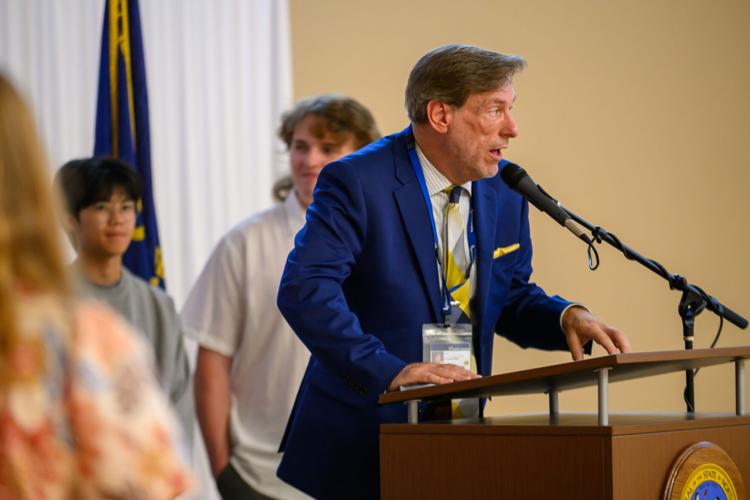
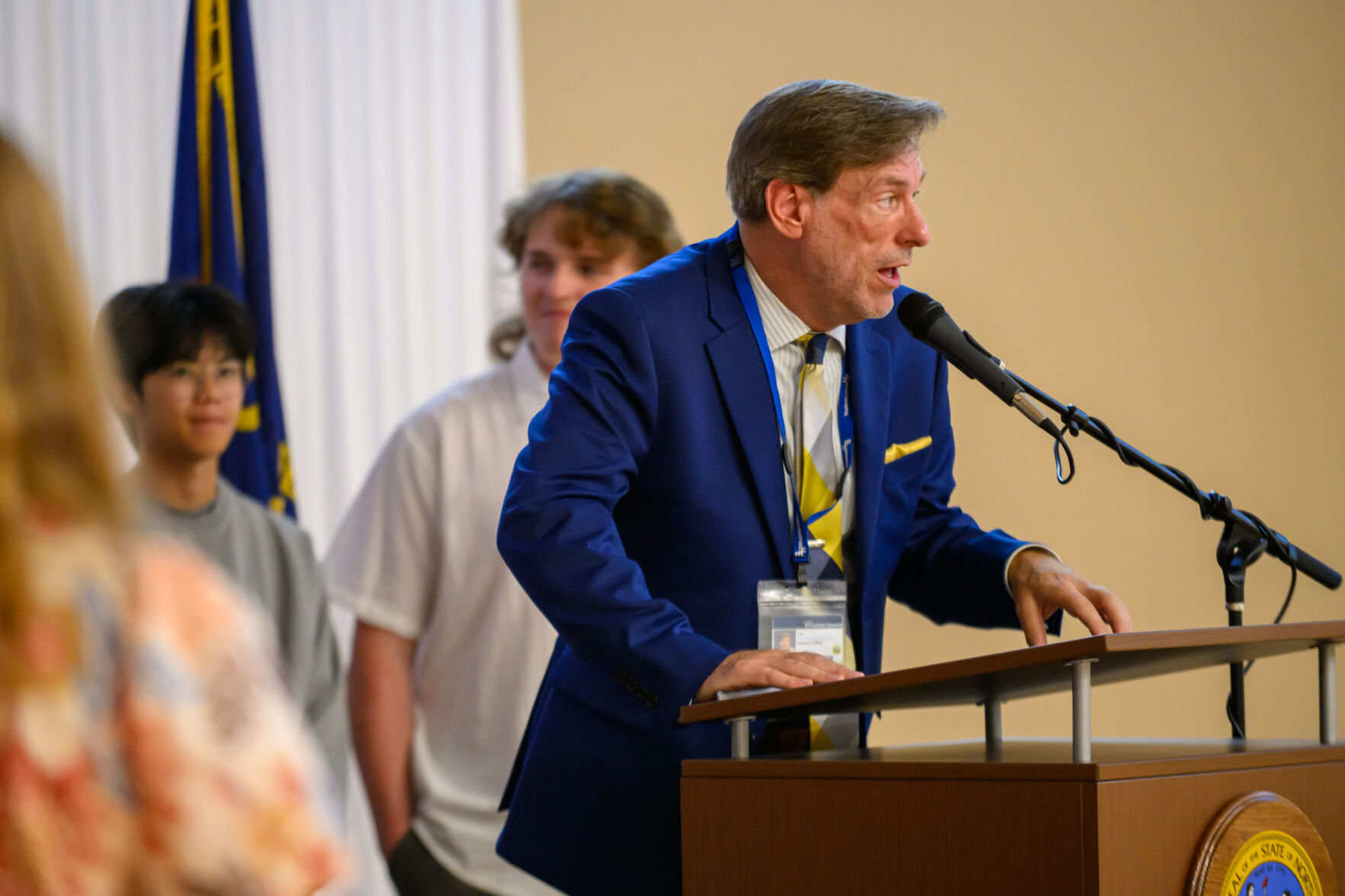
Broughton CEO Tim Miller explained the STEP-NC apprenticeship program.
JACOB CHRISTOPHER / THE PAPER
“This model has the potential to serve as the blueprint for other agencies across the state,” said Broughton CEO Tim Miller, pointing out that Broughton Hospital and J. Iverson Riddle Developmental Center stand among the first facilities in North Carolina to launch this style of program.
The first cohort from Burke County Public Schools includes six high school graduates working across both mental health facilities — three at each.
According to Miller, all three of the pre-apprentices at Broughton are enrolled in the CNA certification program, meaning that at the end of the program, they will already hold the certifications necessary to work while they attend Western Piedmont Community College.
WHY NOW?
The governor recapped the state’s progress this year in mental health legislation, referencing a bill he signed in February, prioritizing efforts to improve behavioral health and public safety initiatives across the state.
Although the signs for job fairs at Broughton pop up frequently across Morganton, the governor explained that a quarter of inpatient staff positions in North Carolina sit empty, and Broughton has struggled to recruit employees for years.
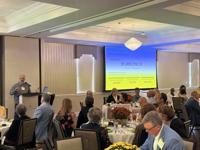
“Here at Broughton, there are more empty beds than there are filled beds,” Stein told the crowd of locals and hospital staff gathered in the gym at Broughton. “We have a desperate need to treat people with mental care and yet we are not.
“We have a great facility, a beautiful facility. We have the rooms. We have it all built, but we can’t use what we’ve built because we don’t have the staff to serve those beds. It is a travesty and it deserves our attention.”
Stein explained that even though the General Assembly’s budget included some raises for behavioral health employees, it was not enough, and that they are still making less in real dollars today than two years ago.
Stein reiterates the shortcomings of pay for behavioral health workers in the state, emphasizing a need to offer more competitive salaries. From left, NC DHHS Secretary Dr. Devdutta ‘Dev’ Sangvai, Gov. Josh Stein, and NC DHHS Deputy Secretary for Facilities and Behavioral Health Dr. Carrie Brown.
JACOB CHRISTOPHER / THE PAPER
“If we are serious about keeping the people of North Carolina healthy, keeping the people of North Carolina safe, we are moving in the wrong direction,” he said, referring to the recent budget passed last week.
With the implementation of STEP-NC and apprenticeship opportunities, Stein hopes to cover that gap.
“It’s really simple,” Stein said. “More people trained means more people working, which means more people served.”
Later, Stein told a reporter that the goal for ensuring these apprentices return after their time in college comes down to pay differences. Stein wants to be competitive with the private sector — not necessarily the same but “there cannot be this huge disparity.”
From Miller’s perspective, he hopes working at the hospital is what inspires the apprentices to come back.
“All six of them are going into a healthcare field, which is very promising and helpful,” he said. “Being able to open that up for them to see what we’re like hopefully encourages them to come back. Like (one of the apprentices), he will most likely continue working here while he is at Western Piedmont. That’s what we’re looking for.”
Keep it Clean. Please avoid obscene, vulgar, lewd,
racist or sexually-oriented language. PLEASE TURN OFF YOUR CAPS LOCK. Don't Threaten. Threats of harming another
person will not be tolerated. Be Truthful. Don't knowingly lie about anyone
or anything. Be Nice. No racism, sexism or any sort of -ism
that is degrading to another person. Be Proactive. Use the 'Report' link on
each comment to let us know of abusive posts. Share with Us. We'd love to hear eyewitness
accounts, the history behind an article.



























(0) comments
Welcome to the discussion.
Log In
Keep it Clean. Please avoid obscene, vulgar, lewd, racist or sexually-oriented language.
PLEASE TURN OFF YOUR CAPS LOCK.
Don't Threaten. Threats of harming another person will not be tolerated.
Be Truthful. Don't knowingly lie about anyone or anything.
Be Nice. No racism, sexism or any sort of -ism that is degrading to another person.
Be Proactive. Use the 'Report' link on each comment to let us know of abusive posts.
Share with Us. We'd love to hear eyewitness accounts, the history behind an article.