

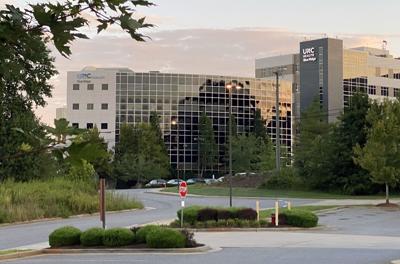
State lawmakers are considering proposals that could significantly reduce tax breaks for nonprofit hospitals like UNC Health Blue Ridge. If passed, millions of dollars could be diverted back to local government budgets, and health care officials fear the changes could put a strain on rural hospitals.
The House Select Committee on Property Tax Reduction and Reform has introduced two draft bills. One would reduce property tax exemptions for nonprofit hospitals from 100% to 50% on real and personal property they own. The second would lower state and local caps on sales tax refunds for nonprofit hospitals, public hospitals, and a selection of other entities.
These proposals come as the committee, created in December 2025, explores ways to reduce tax burdens on North Carolina residents as property values continue to rise. Members of the committee have also discussed putting a cap on how much local governments can raise their property taxes.
UNC Health Blue Ridge, which operates two campuses in Morganton and Valdese, is recognized by the Internal Revenue Service as a not-for-profit community based hospital within the Blue Ridge Hospitals, Inc. 501(c)(3) organization.
The hospital benefits from a management relationship with UNC Health, the State of North Carolina’s public hospital system. However, financial and operational decisions are governed by a local, community-appointed board of directors, who reside in the community.
As of 2024, Blue Ridge Hospitals Inc. provided 35,779 days of care to 8,006 patients admitted, according to the nonprofit’s Form 990.
Nonprofit hospitals receive tax exemptions and are expected to provide community benefits in return. In 2025, the UNC Health Blue Ridge’s total value of uncompensated care and community benefits, at $116 million, represented more than 32% of its operating expenses.
“These resources directly support access to care, help keep services available locally, and reduce financial barriers for the patients we serve,” UNC Health Blue Ridge officials said in a statement.
Local hospital leaders say nonprofit hospitals rely on tax exemptions to support services that may not otherwise be financially sustainable in rural areas.
Stephanie Strickland with the North Carolina Healthcare Association shared a similar concern for rural hospitals throughout the state.
“Many hospitals in North Carolina, particularly those serving rural and underserved communities, operate on very small margins,” Strickland said. “Proposals that further strain hospital resources raise serious concerns about the potential impact on patients, access to care, and the hospitals’ ability to reinvest in critical services both within their facilities and in the communities they serve.”
Rep. Hugh Blackwell noted that proposed legislation is still a work in progress and said it requires a smart approach.
“I think we just need to be sure that we don’t unintentionally undermine the stability of local, rural hospitals such as ours,” Blackwell said.
One possible solution could include the state stepping up to pay some money to local governments in lieu of the property tax they’re not collecting from smaller hospitals, he said.
However, he acknowledged that taxpayers throughout the state are footing the bill for public services like law enforcement, fire protection, and more that serve the hospitals. He added that he believes larger hospitals are doing well and are fully capable of paying for those services.
Legislative reports show nonprofit hospitals account for one of the largest sources of lost local revenue statewide. Nonprofit hospital property exemptions represent the fourth largest category of foregone local revenue, totaling an estimated $130 million annually across 75 counties, including Burke County.
Statewide, $13.7 billion worth of property is excluded from tax due to the hospital exemption. In Burke County, $200 million is excluded, according to the legislative report. In counties like Mecklenburg and Wake, those numbers surge to $3 billion and $1.2 billion respectively.
The proposed sales tax changes would be applicable to more than just public and nonprofit hospitals. Volunteer fire departments, EMS squads, certain churches, private colleges, arts organizations, and charities providing shelter and food would also be in the mix.
In the draft bill on sales tax refunds, the state refund cap could be lowered from $31.7 million to $10 million. The local refund cap would be lowered from $13.3 million to $4.2 million. The changes would also prevent nonprofit and public hospitals from bypassing refund caps by applying through affiliated organizations.
“Each parent organization of a nonprofit hospital system, including all of its affiliate corporations, would be eligible collectively, but not individually, for up to the aggregate annual refund amounts,” the draft bill states.
As lawmakers continue to review the proposal, the debate highlights broader questions about how hospitals use tax exemptions and whether communities are receiving enough benefit in return. The committee is expected to meet again at 10 a.m. on Wednesday, April 15.





















(0) comments
Welcome to the discussion.
Log In
Keep it Clean. Please avoid obscene, vulgar, lewd, racist or sexually-oriented language.
PLEASE TURN OFF YOUR CAPS LOCK.
Don't Threaten. Threats of harming another person will not be tolerated.
Be Truthful. Don't knowingly lie about anyone or anything.
Be Nice. No racism, sexism or any sort of -ism that is degrading to another person.
Be Proactive. Use the 'Report' link on each comment to let us know of abusive posts.
Share with Us. We'd love to hear eyewitness accounts, the history behind an article.