

More than a year removed from Hurricane Helene, local governments throughout Western North Carolina are still struggling to recoup the millions they lost in damaged assets. The City of Morganton is no different, and with several projects stalled, some may wonder ‘what’s the hold up?’
Morganton is still waiting on tens of millions of dollars in FEMA reimbursement — a delay fueled by a generally tedious process to begin with, but accompanied by new federal oversight rules that add more hoops to jump through. Reimbursement amounts for larger, long-term projects are still uncertain as they go through project development.
FEDERAL OVERSIGHT
To receive reimbursement from FEMA, local governments have to submit applications, which then go through a lengthy series of checks, which has been a normal part of the process. But under the Trump Administration, some steps have been added to the process.
“It’s the most tedious process I have ever been through,” City Manager Sally Sandy said, referring to the typical FEMA process. “It is the amount and level of detail that they require, the multiple levels of review, the information that you give to them, and it doesn’t even seem like they even read it sometimes.”
Sandy said the city has been assigned four different Public Assistant Program Delivery Managers from FEMA since Hurricane Helene. The individual is assigned to help the city navigate through the process, and Sandy said staff communicate with them at least weekly if not daily.
For more oversight, Homeland Security Secretary Kristi Noem created a rule where she must personally sign off on all FEMA contracts exceeding $100,000, said Matt Calabria, director of the Governor’s Recovery Office for Western North Carolina. Then, state Emergency Management has to resubmit documentation for approval by the Department of Government Efficiency (DOGE).
“Honeslty, I don’t know how much that’s added to the process because we’ve never done it without that to this scale,” Sandy said. “It’s always been a tedious process, even on a small basis when we’ve had an ice storm or a smaller event.”
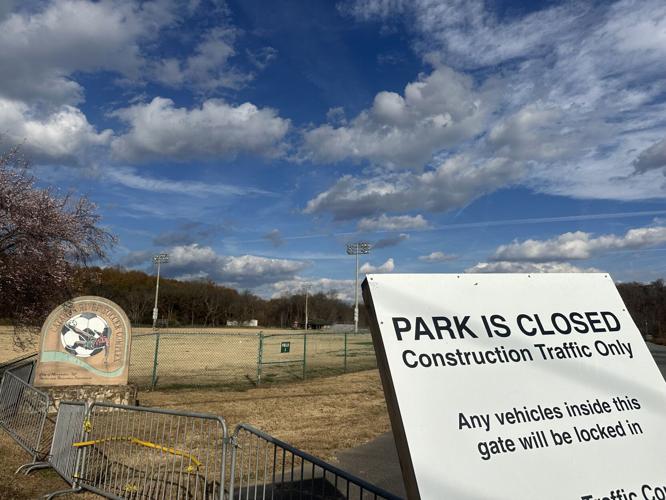
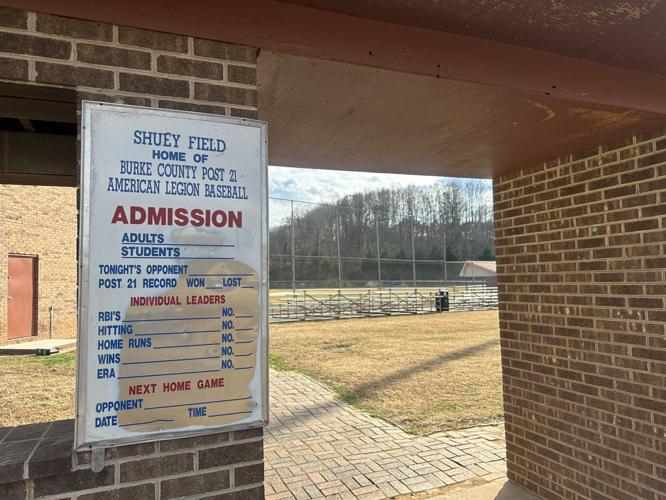
Morganton has received 11 FEMA reimbursements, totalling $3.5 million. These reimbursements were for debris removal, emergency protective measures, repairs for roads and bridges, utility restoration, and Shuey Park damages. Five different transactions for reimbursement are obligated and waiting state review and fund distribution. Those reimbursements total $659,609, and are for emergency protective measures, engineering for creek restoration at Bethel Park, and boardwalk demolition.
The amount of reimbursement for 10 different repair, replacement, or restoration projects is still uncertain as they are in the initial stages. Those projects include the watershed dam/weir, city wide electrical repair and components, lift station damages, water treatment plant, wastewater treatment plant effluent pump station, Rocky Ford Access of the Greenway, and Catawba Meadows Park/Catawba River Soccer Complex facility damages, and are all projects that are pending initial project development.
The recreation maintenance building project is pending scope and cost development, and the Silver Creek Pump Station is pending damage, description, and dimension completion. The boardwalk replacement, which is expected to cost $3 million, is obligated, and is awaiting final design work before a construction bid goes out.
The city’s total FEMA claim is $42,425,462.84 and those long-term projects that are still in the initial process make up approximately $38 million of the claim.
Sandy said that some projects have been questioned heavier than others. Those include the Silver Creek Lift Station project and electric distribution system restoration. Questioning for the work at the water treatment plant and park restoration remains up in the air.
“We’re making progress, of course, I mean it’s 15 months later so we should be,” Sandy said. “We’re making progress and we’re getting there. There’s still a lot of frustration.”
The City of Morganton has been working diligently to apply for grants, one of which the city received to help repair the Catawba River Greenway boardwalk connector. The Small Business Infrastructure Grant Program (SmBIZ), which supports rebuilding infrastructure that directly affects local businesses, awarded $1 million in funding—enough to cover about a third of the total cost.
SECURING GRANTS
When it comes to seeking grants, city staff are challenged with “making the case.” Many of Morganton’s projects are outdoor recreation-related and Calabria, who works in partnership with Morganton native and Chief Deputy Director Emily Gangi, said it’s important to advocate for those projects.
“There are things for which there is much less funding than we would like,” Calabria said. “Recreational facilities and parks and greenways can sometimes be tougher, but it’s incumbent upon us to make the best case that we can about how not only does this impact quality of life, but it impacts the economy of the area, and really is a vital part of rebuilding our communities.”
LOST TOURISM DOLLARS
Sandy said that in the current fiscal year, she budgeted for an expected $400,000-$500,000 loss in revenue from field rentals and concessions. Morganton has had tournament-level softball and baseball fields, as well as the soccer complex that has drawn visitors from all over the region, as well as from out of state.
“One thing that is important, I find, is to make the case that especially in a region whose economy has a disproportionately large tourism sector, it’s critical that we emphasize that parks and recreation facilities are an important part of the economy,” Calabria said.
Those visitors stay in hotels, eat in restaurants, and stroll downtown, shopping in local businesses. So, when the recreation facilities are unavailable due to disaster, it has an economic impact on small businesses as well. “And so, we’ve got to do a lot of educating policymakers that this isn’t just about quality of life and amenities,” Gangi said.
“In Western North Carolina, our natural resources and our recreation facilities are a big driver in the economy,” Gangi said.
Calabria said that even though people may not always be able to see the work that’s being done to help bring these facilities back to life, it is happening. “It is very clear to me that even if folks don’t always see the work that is being done by the local and state leaders every day, there are literally thousands of people who wake up worrying about them,” Calabria said, “and that’s our job, and we’re glad to do it, and we’re going to stick it out through this recovery until it’s done.”





















(0) comments
Welcome to the discussion.
Log In
Keep it Clean. Please avoid obscene, vulgar, lewd, racist or sexually-oriented language.
PLEASE TURN OFF YOUR CAPS LOCK.
Don't Threaten. Threats of harming another person will not be tolerated.
Be Truthful. Don't knowingly lie about anyone or anything.
Be Nice. No racism, sexism or any sort of -ism that is degrading to another person.
Be Proactive. Use the 'Report' link on each comment to let us know of abusive posts.
Share with Us. We'd love to hear eyewitness accounts, the history behind an article.